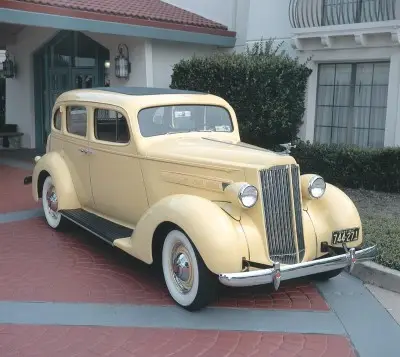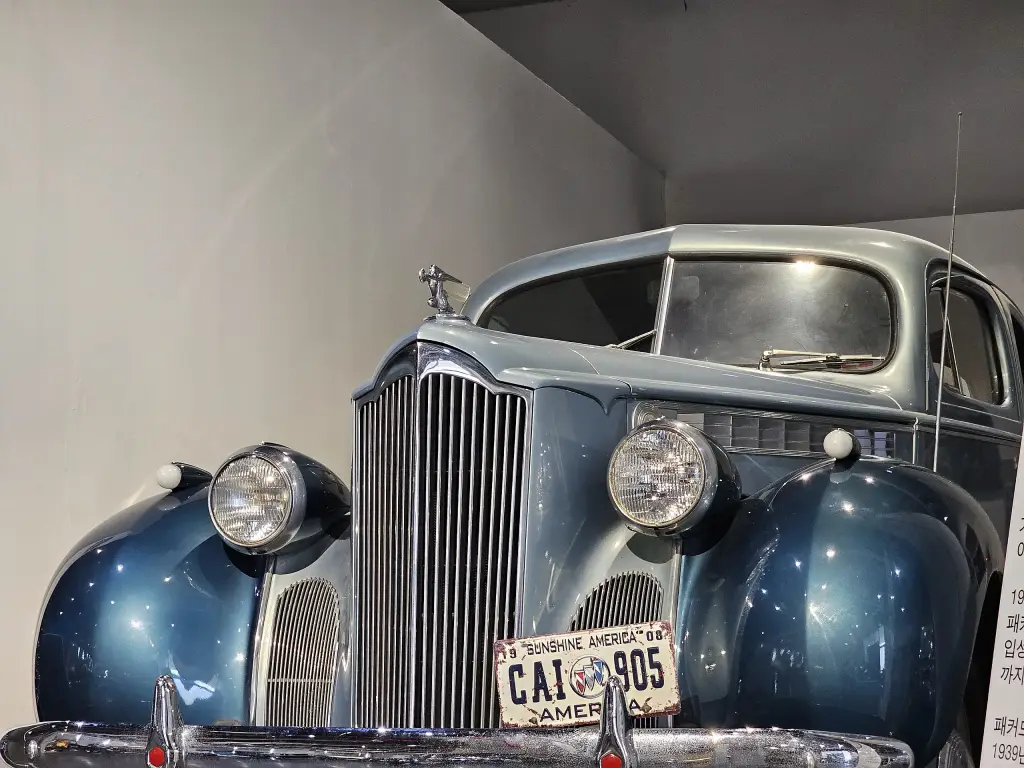
The Packard One-Ten was the company’s six-cylinder entry model for the 1940 and 1941 model years, renamed from the Fifteenth Series Six. It did not offer more power than the car it replaced, but it did put the Packard name on a cheap car at exactly the moment Packard needed volume, and it sold 62,300 units in its first year.
Packard One-Ten at a glance
| Maker | Packard Motor Car Company, Detroit |
|---|---|
| Production | model years 1940–1941 |
| Previously | Packard Fifteenth Series Six, model 115-C |
| Introduced | August 1939 |
| Wheelbase | the same as the One-Twenty |
| Bodies | two- and four-door sedans, station wagon, convertible |
| Price range | US$867 business coupé to US$1,200 station wagon |
| Built 1940 | 62,300 |
| New for 1941 | Deluxe trim level and a taxi line |
| Options | heater, radio, spotlight and air conditioning |
| From 1942 | the name reverted to Packard Six |
Based on one source, the English Wikipedia article on the Packard One-Ten.
History of the Packard One-Ten
A six to keep Packard alive
Packard brought six-cylinder cars back in 1937 after a ten-year gap, as a response to the Depression and the slow recovery that followed. As an independent maker it had no cheaper division to support its luxury cars, so the Six, and later the One-Ten, were needed to bring in volume until better times came. The One-Ten was introduced in August 1939 and shared the One-Twenty’s wheelbase, taking its name from its position as the entry-level product rather than from its dimensions.
What it cost and what it offered
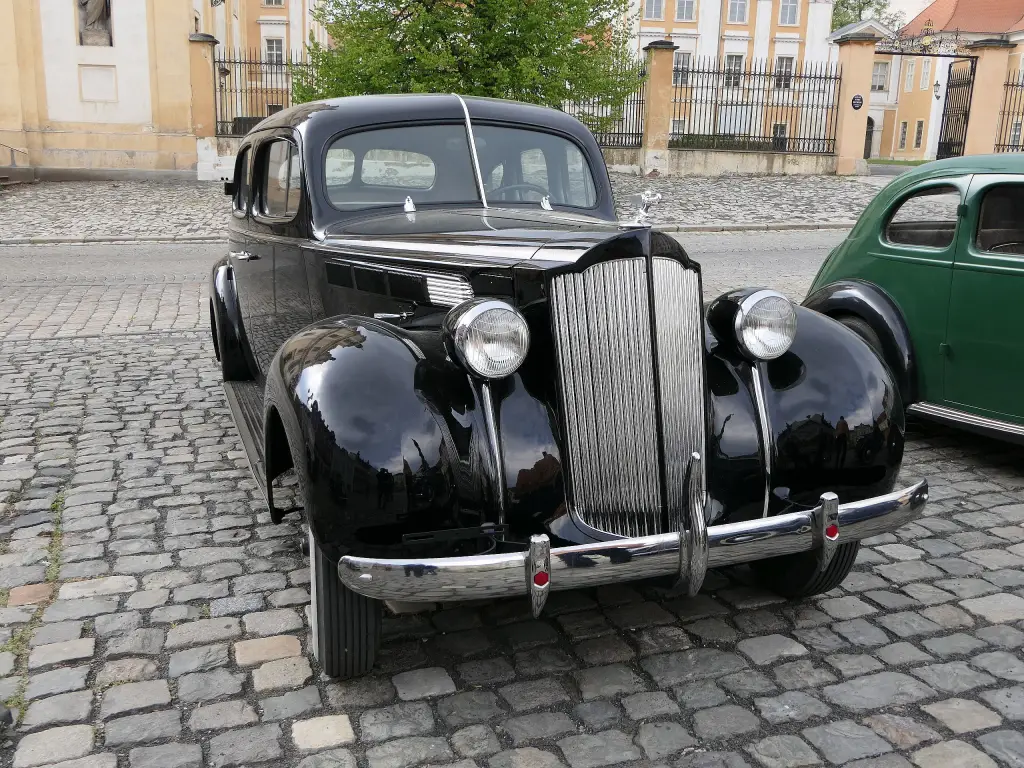
Prices ran from US$867 for the business coupé to US$1,200 for the station wagon, and the car came as two- and four-door sedans, a station wagon and a convertible. Buyers could add a heater, a radio and a spotlight, and, despite the car’s low-line status, air conditioning. Total output for 1940 was 62,300 units.
1941 and the revival of the Six
The One-Ten’s success led Packard to expand the range for 1941, adding a second trim level called Deluxe and a taxi line within the same model family. For 1942 the company kept numeric designations for its senior line and the One-Ten went back to being called the Packard Six.
The argument about the cheap Packards
Critics of the Six and the One-Ten have long argued that they damaged Packard’s reputation as America’s leading luxury make, and Packard enthusiasts see the launch of the One-Twenty and the Six as the beginning of that decline. The counter-argument is simply that the cheaper cars were needed to survive, and that they arrived just before the 1938 recession, when they gave the company customers it could not otherwise have reached.
Design and features
- Entry-level Packard: the cheapest way into a new Packard in 1940.
- Full body range: from a business coupé to a station wagon and a convertible.
- Air conditioning: available even on this low-line model.
- Volume model: 62,300 cars in the 1940 model year.
Packard One-Ten versions
- One-Ten (1940): sedans, coupé, station wagon and convertible.
- One-Ten Deluxe (1941): the new second trim level.
- One-Ten taxi (1941): a separate line for fleet buyers.
- Packard Six (1942): the model under its old name.
The One-Ten grew out of the Packard Six and shared its wheelbase with the eight-cylinder One-Twenty; both were replaced by the 200 in 1951. More Packards are in the Packard collection.
Sources
- Packard One-Ten, English Wikipedia: launch, bodies, prices, production, 1941 changes