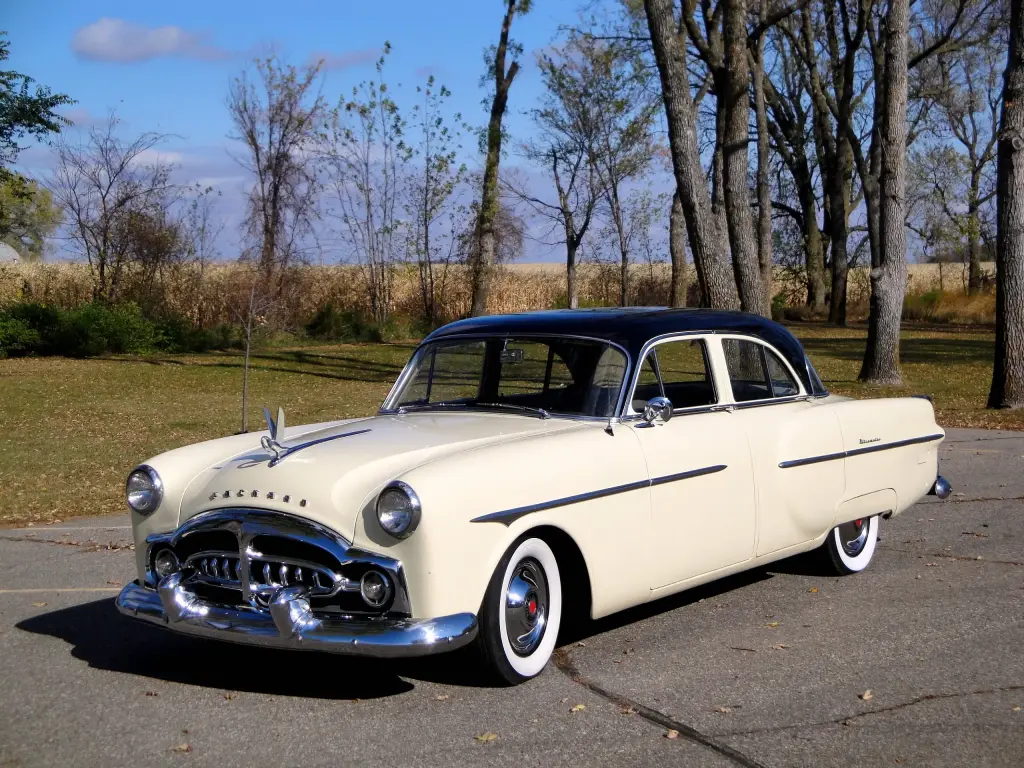
The Packard 300 was the middle of Packard’s 1951 range, above the 200 and the 250 and below the Patrician 400. It came only as a four-door sedan, used the 327 cu in Thunderbolt straight-eight and was the model that replaced the Super Eight. After two years and 22,309 cars it was renamed the Cavalier.
Packard 300 at a glance
| Maker | Packard Motor Car Company, Detroit |
|---|---|
| Production | model years 1951–1952 |
| Predecessor | Packard Super Eight |
| Successor | Packard Cavalier (1953) |
| Body | four-door sedan only |
| Wheelbase | 127 in (3,200 mm) |
| Engine | 327 cu in (5,360 cc) Thunderbolt straight-eight |
| Transmission | three-speed manual standard, Ultramatic optional |
| Trim | tinted windows, robe rail, striped fabrics, full wheel covers |
| Price 1951 | US$3,034 |
| Built | 22,309 (15,309 in 1951) |
History of the Packard 300
Position in the range
For 1951 Packard sorted its range by numbers: the 200 and 250 were the junior cars, the 300 the upper mid-range model, and the Patrician 400 the senior car. The 300 replaced the Super Eight and was aimed at the Buick Roadmaster, Cadillac Series 61, Chrysler Saratoga and Lincoln Cosmopolitan. It was sold only as a four-door sedan, on the 127 in wheelbase that the senior cars used.
Equipment
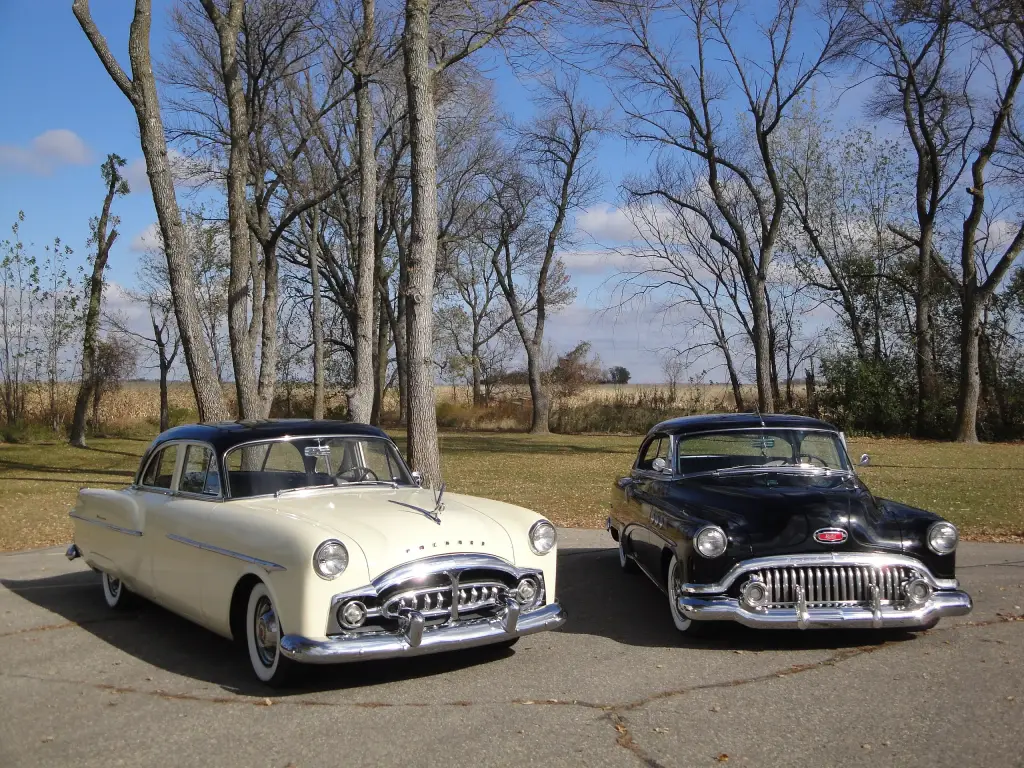
Inside, the 300 had tinted windows, a robe rail for rear passengers and striped interior fabrics. Outside it carried full wheel covers and Packard’s “Winged Goddess” cormorant hood ornament, the badge that separated a senior Packard from the junior 200. It also had the wrap-around rear window shared with the Patrician, and from 1951 all Packards had their exterior door handles set into the stainless steel beltline that ran along the base of the windscreen and the side and rear windows.
Mechanical specification
Power came from Packard’s 327 cu in Thunderbolt straight-eight, the engine shared with the 250. A three-speed manual gearbox was standard and the Ultramatic automatic was optional. The car cost US$3,034, with heater and defroster, a signal-seeking AM radio, windscreen washers, rear wheel spats, wheel trim rings, full wheel covers and white sidewall tyres all on the extra-cost list.
From 300 to Cavalier
Packard built 22,309 examples of the 300 in two years, 15,309 of them in 1951. For 1953 the car was renamed the Cavalier as Packard moved away from numbers, and neither “300” nor “Cavalier” appeared anywhere on the body. The Cavalier of 1953 and 1954 was again a four-door sedan only, identified by a chrome side spear and a “fishtail” chrome fin on the tail light. In 1953 it headed a sub-series that also took in the Caribbean, the Mayfair and a cheaper convertible; in 1954 the sub-series went, and the Cavalier used the Patrician’s 127 in wheelbase with the 327 straight-eight, a four-barrel Carter carburettor and 185 hp. The name was retired for 1955, when the line was absorbed into the Clipper Custom.
Design and features
- One body only: the 300 was never offered as a coupé or convertible.
- 327 Thunderbolt: the big straight-eight shared with the 250 and the Patrician.
- Senior details: cormorant hood ornament, full wheel covers and a wraparound rear window.
- A short life: two model years, then renamed Cavalier.
Packard 300 versions
- 300 (1951–1952): the four-door sedan with the 327 engine.
- Cavalier (1953–1954): the renamed car, with side spear and fishtail tail light.
- Cavalier sub-series (1953): Caribbean, Mayfair and a cheaper convertible grouped under the name.
- Cavalier 1954: 185 hp from a four-barrel 327 on the longer Patrician wheelbase.
The 300 stood between the cheaper 200 and the senior Patrician. More Packards are in the Packard collection.
Sources
- Packard 300, English Wikipedia: range position, equipment, engine, prices, production