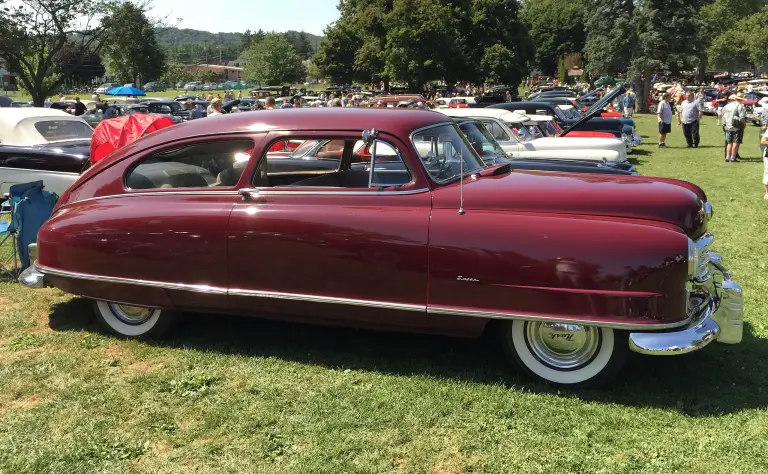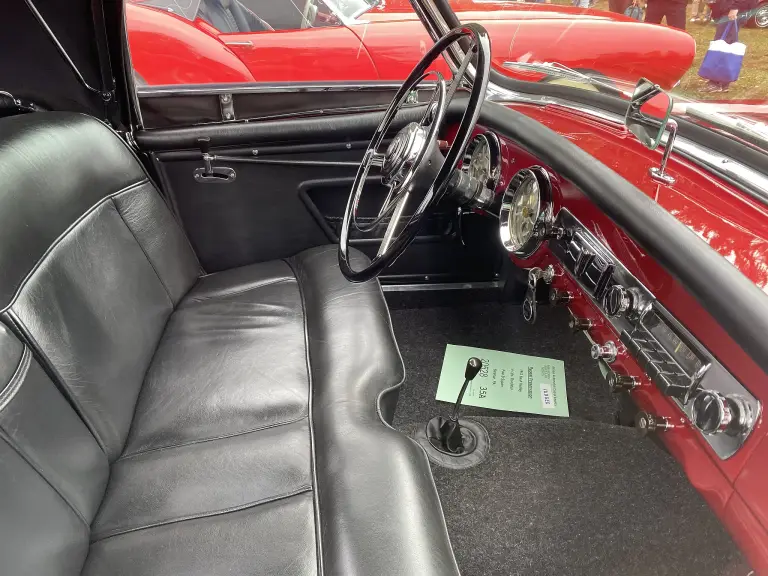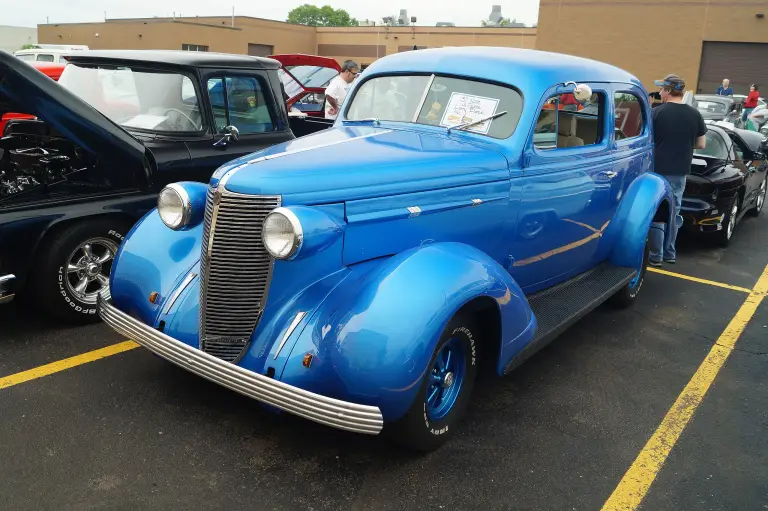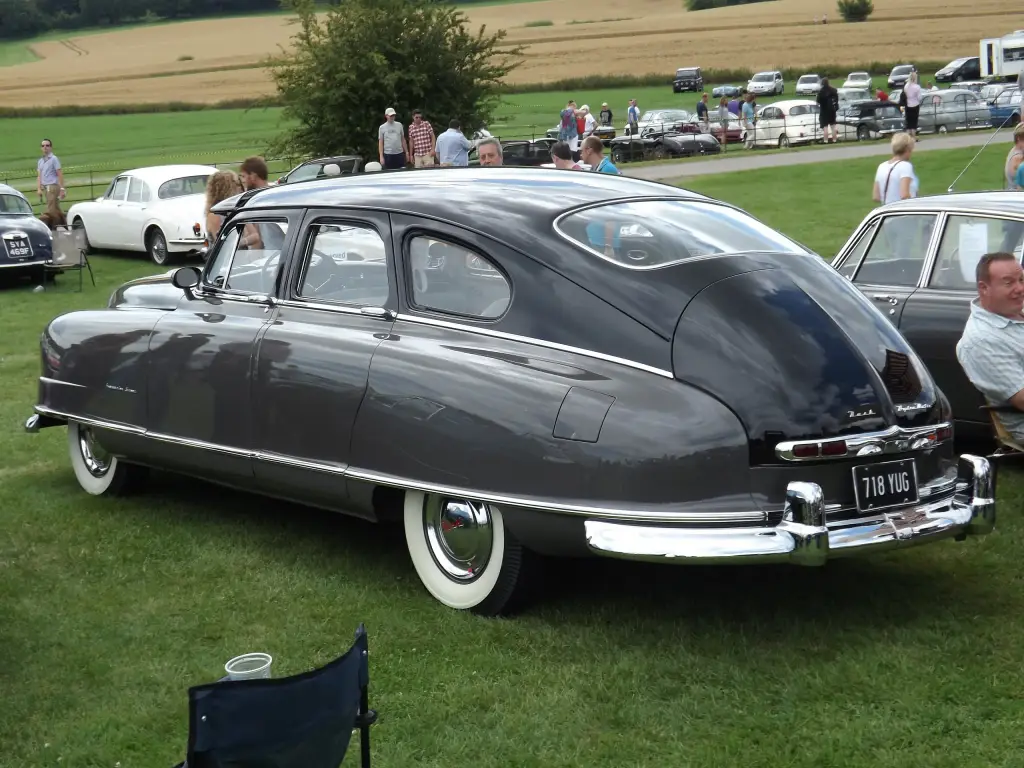
Airflyte was the name Nash used for its post-war aerodynamic bodies from 1949 until 1955. Developed in a wind tunnel, the rounded shape with enclosed front wheels was applied to the 600, Statesman, Ambassador, Rambler and Metropolitan, and gave the cars their “bathtub” nickname.
Nash Airflyte at a glance
| Name used | 1949–1955 |
|---|---|
| Designer | Nils Wahlberg |
| First model | 1949 Nash 600 |
| Models | 600/Statesman, Ambassador, Rambler, Metropolitan |
| Body | Wind-tunnel developed ponton shape |
| Wheels | Front wheels fully enclosed |
| 1952 restyle | “Golden Airflyte” for Nash’s 50th anniversary |
| 1955 change | Front wheel arches opened |
| Magazine | Nash Airflyte Magazine, 1950s |
History of the Nash Airflyte
The Airflyte was Nash’s first attempt at a streamlined car and its first all-new design after the Second World War. Following Nils Wahlberg’s theories, an aerodynamic ponton body was developed in a wind tunnel. It was rounder, wider and lower than earlier Nashes, with integrated front fenders and no wheel cutouts at all, so that the air met no sharp edge. The first model to use it, from 1949, was the Nash 600; the larger Ambassador received the same body. The cars’ shape reminded people of an upturned bathtub, and “Nash Bathtub” became a common nickname.
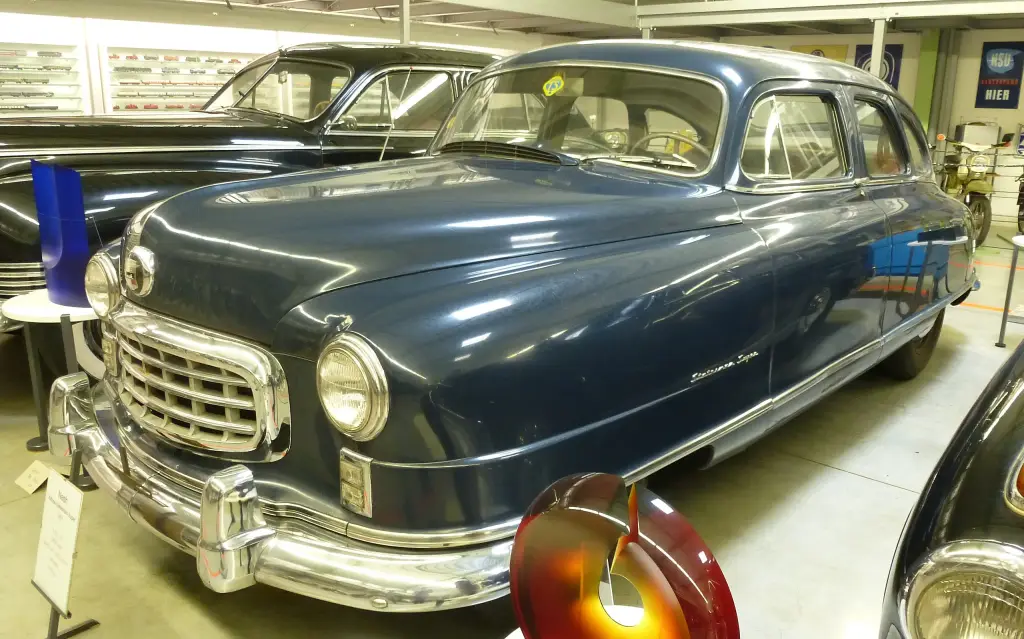
For 1950 the 600 was renamed Statesman, the compact Rambler joined the range, and a three-door wagon called the Greenbrier followed in 1951. The second series arrived in 1952: the grille grew, the body became squarer, small tailfins appeared at the rear and the larger cars adopted a panoramic rear window and a notchback boot. Nash marketed these cars as Golden Airflytes to mark its 50th anniversary. In 1954 the Metropolitan appeared with an Airflyte-style body designed in America and British mechanicals.
The third series came in 1955 and 1956. The most visible change was the opening of the front wheel arches, later followed at the rear, because the fully enclosed wheels had made the turning circle much larger than that of rival cars. After the 1954 merger with Hudson the Airflyte styling also reached the last Hudson models, and the 1958 Rambler American still showed echoes of it before the rounded shapes went out of fashion in the early 1960s. Nash also published the Nash Airflyte Magazine for owners in the 1950s.
Design and features
- Wind-tunnel body: a rounded ponton shape developed with Nils Wahlberg’s aerodynamic theories.
- Enclosed wheels: front wheels were completely covered to reduce drag, at the cost of a wide turning circle.
- Unit construction: the Airflyte bodies were built on Nash’s welded unit structure.
- Family styling: the same look was used from the compact Rambler to the Ambassador.
- Owner magazine: the Nash Airflyte Magazine covered cars, travel and lifestyle.
Nash Airflyte versions
- First series (1949–1951): Nash 600 and Ambassador, with the original rounded body.
- Golden Airflyte (1952–1954): squarer body, larger grille, tailfins and panoramic rear window.
- Third series (1955–1956): opened front wheel arches and revised styling.
- Rambler Airflyte: the compact Rambler used the same styling language.
- Metropolitan: the 1954 small car with an Airflyte-style body.
The Airflyte body was used on the Nash 600, Nash Statesman, Nash Ambassador and Nash Rambler. More cars are in the Nash collection.
Video: 1950 Nash Airflyte Ambassador Super Test Drive Viva Las Vegas Autos
Video by Viva Las Vegas Autos, Inc. on YouTube.
Sources
- Nash Airflyte, English Wikipedia: models, Golden Airflyte, magazine
- Nash Airflyte, German Wikipedia: design, series, wheel arches