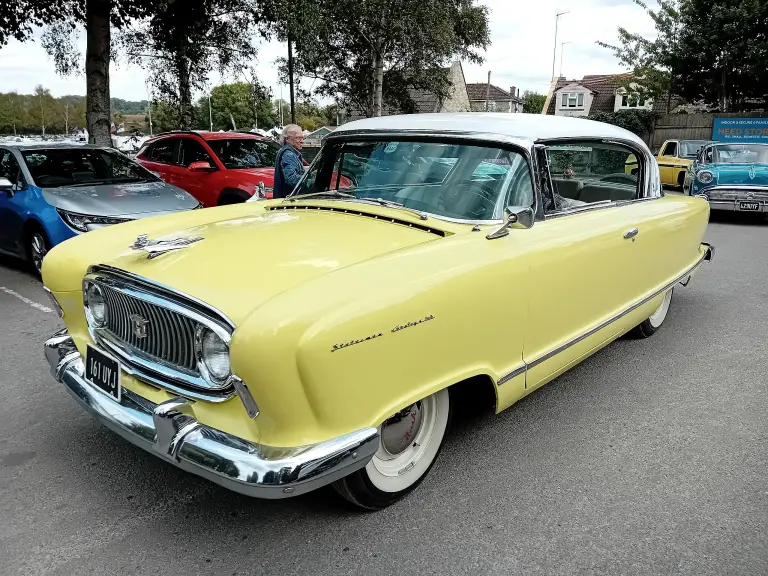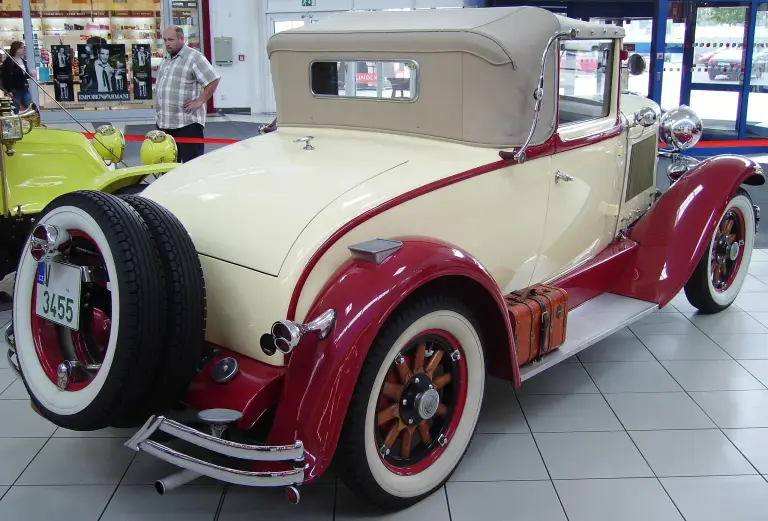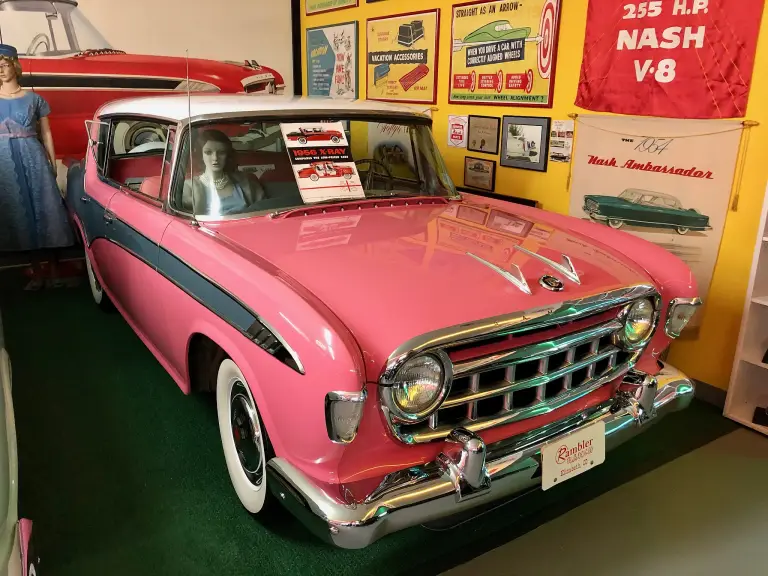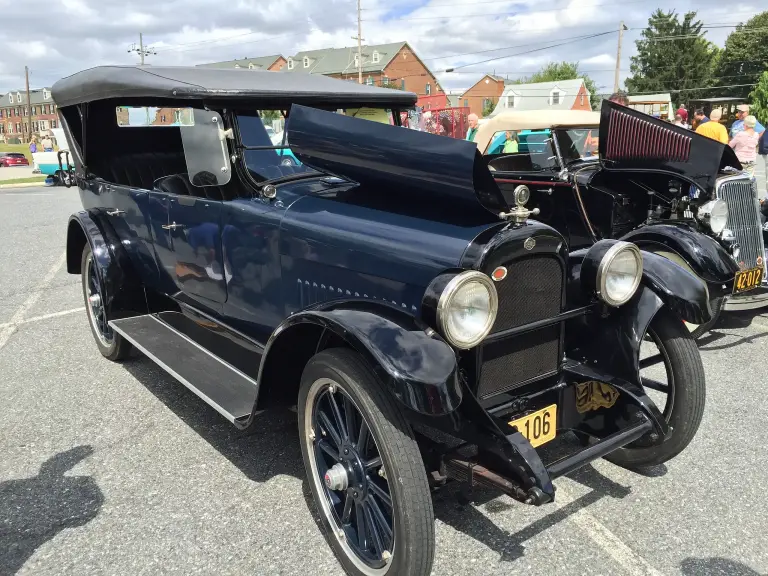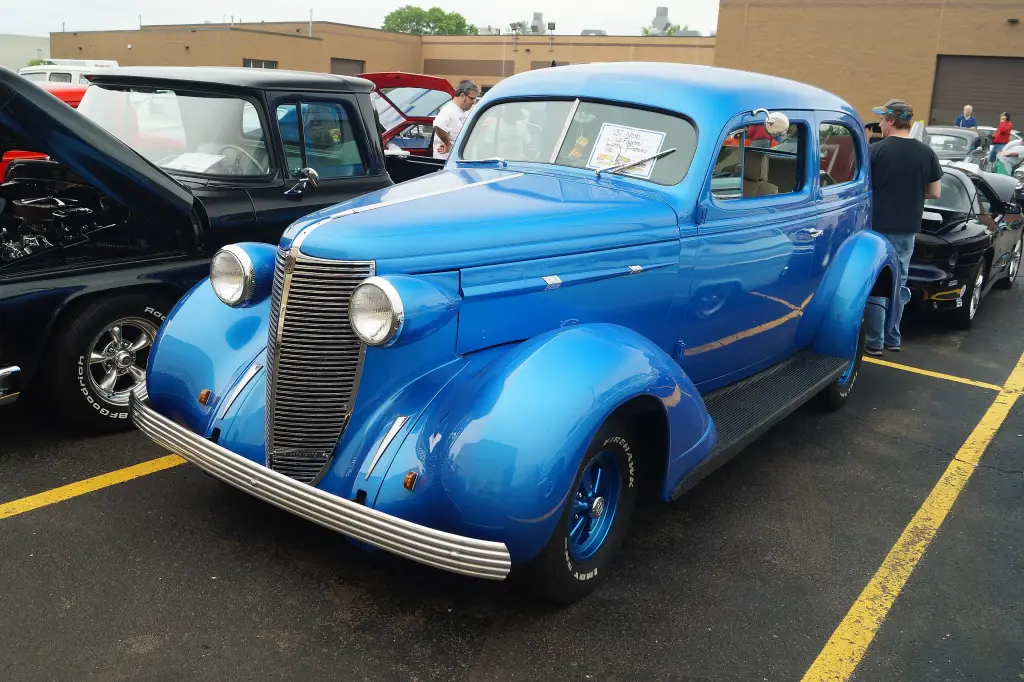
The Nash LaFayette was Nash’s smaller six-cylinder range from 1934 to 1940. It revived the name of the LaFayette company Nash had bought in 1924, was merged with the Nash 400 for 1937 and was replaced by the Ambassador 600 in 1941.
Nash LaFayette at a glance
| Production | 1934–1940 |
|---|---|
| Models | 110 (1934), 3510 (1935), 3610 (1936), 3710 LaFayette 400 (1937), 3810 (1938), 3910 (1939), 4010 (1940) |
| Wheelbase | 2,870 mm (1934–36), 2,972 mm (1937) |
| Engine | 3,569 cc side-valve six, 75 bhp (1934) |
| 1937 engine | 3,848 cc six, 90 bhp |
| Power | 80 bhp (1935), 83 bhp (1936), 95 bhp (1938), 99 bhp (1939) |
| Gearbox | Three-speed manual |
| Brakes | Mechanical, hydraulic from 1936 |
| Position | below the Big Six |
| Replaced by | Ambassador 600 in 1941 |
There is no English Wikipedia article on the LaFayette; this page is based on the German article, which cites the Standard Catalog of American Cars.
History of the Nash LaFayette
In 1934 Nash revived the name of LaFayette Motors, which it had bought in 1924 and closed in 1925 in favour of the Ajax. The new small six sat below the Big Six and was sold as a brand of its own within Nash-Kelvinator until 1937. The 1934 model 110 had a 2,870 mm wheelbase and a 3,569 cc side-valve six of 75 bhp at 3,200 rpm. Drive went through a single-plate dry clutch and a three-speed gearbox to a live rear axle, and all four wheels had mechanical brakes. There were open and closed bodies for two to five seats, with four-door luxury versions called Brougham. The 1935 model 3510 brought little change apart from a rise to 80 bhp.
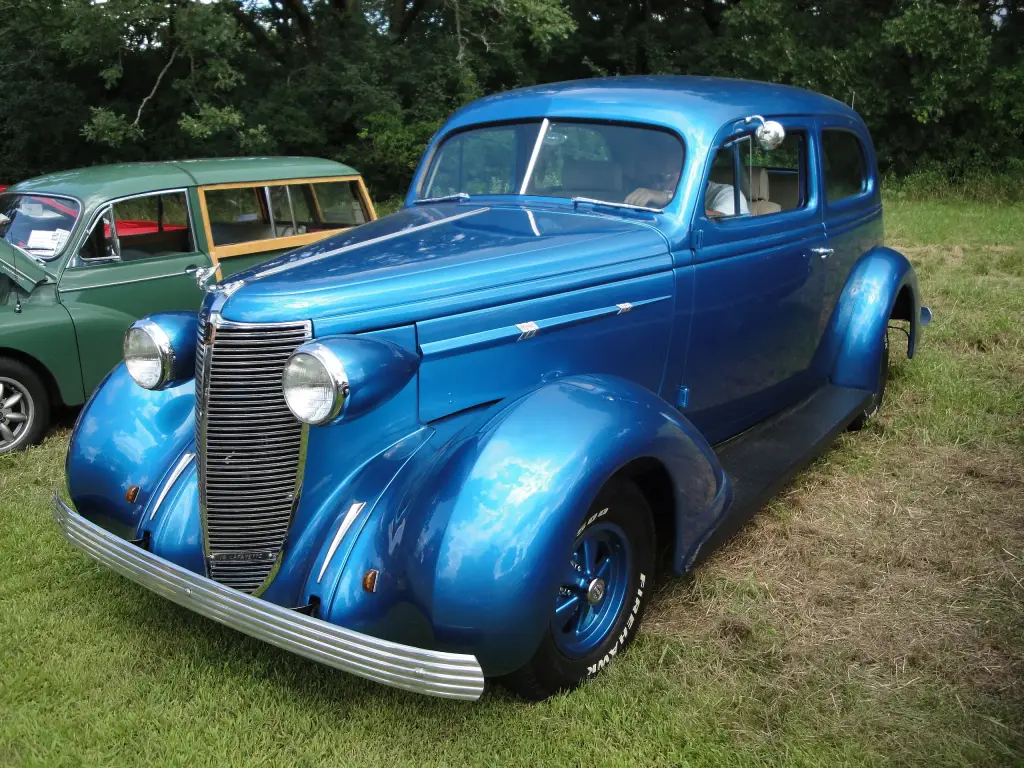
For 1936 the model 3610 was restyled with cleaner lines, a pressed-steel grille with vertical bars and, later, a chromed die-cast version. It followed the styling of the new Nash 400 but kept a split bonnet hinged in the middle. Power rose to 83 bhp and hydraulic brakes replaced the mechanical system. Because the Nash 400 and the LaFayette seemed too similar, the management combined them for 1937 as the Nash LaFayette 400. The model 3710 took the 400’s larger 3,848 cc six of 90 bhp and its 2,972 mm wheelbase, and adopted the styling of that year’s Ambassadors, with a grille curved forward in the centre and a split windscreen.
For 1938 the model 3810 was simply called Nash LaFayette and its unchanged engine produced 95 bhp. The chromed Rainfall grille with vertical bars gave way to one with a vertical centre bar and horizontal bars, as on other Nashes. The 1939 cars were completely restyled with an alligator bonnet, a narrow tall grille with horizontal bars and rectangular headlights set into the front wings; the LaFayette, model 3910, now had 99 bhp. In 1940 the model 4010 received squarer front wings, round headlights and a grille flanked by two large Rainfall panels, but was mechanically unchanged in its last year. The Ambassador 600 replaced it in 1941.
Design and features
- Small six: a cheaper six-cylinder Nash below the Big Six, with 75 to 99 bhp over the years.
- Brougham bodies: four-door luxury versions alongside the open and closed models.
- Shared styling: from 1936 the LaFayette followed the look of the larger Nash models.
- LaFayette 400: the 1937 merge with the Nash 400 brought the bigger 3,848 cc engine.
- Annual development: hydraulic brakes in 1936 and a full restyle in 1939.
Nash LaFayette versions
- 1934 model 110: the first LaFayette, with a 3,569 cc six.
- 1935 model 3510: minor changes and 80 bhp.
- 1936 model 3610: restyled body, hydraulic brakes, 83 bhp.
- 1937 LaFayette 400: 3,848 cc engine and the Ambassador look.
- 1938–1940: models 3810, 3910 and 4010 with yearly styling changes.
The LaFayette was merged with the Nash 400 in 1937, and it was replaced by the Nash 600 in 1941. More cars are in the Nash collection.
Video: 1937 Nash Lafayette Street Rod Test Drive in Sonoma Wine Country
Video by Left Coast Classics on YouTube.
Sources
- Nash LaFayette, German Wikipedia: models, engines, styling, production years