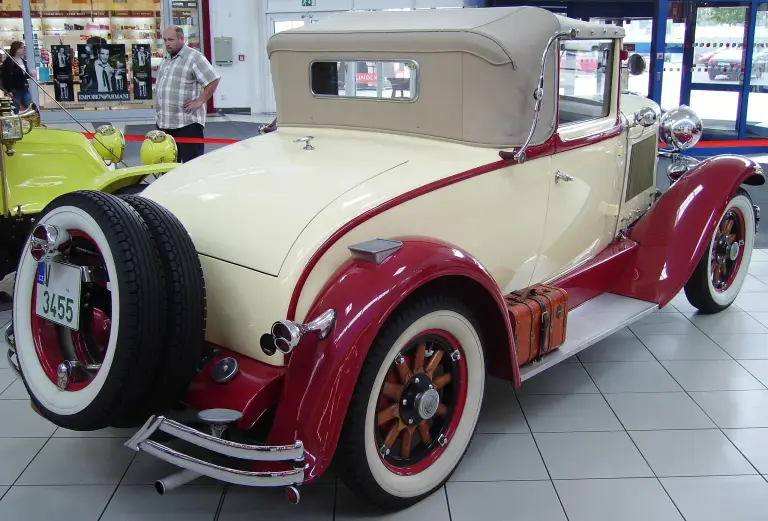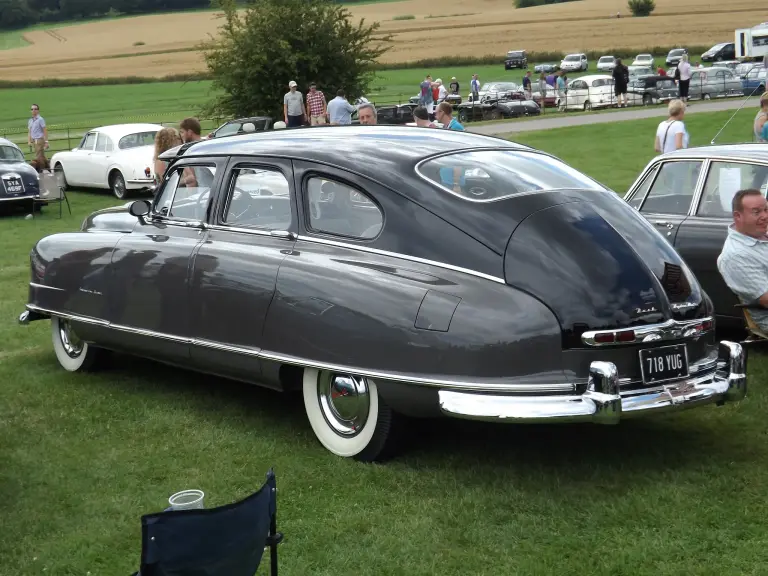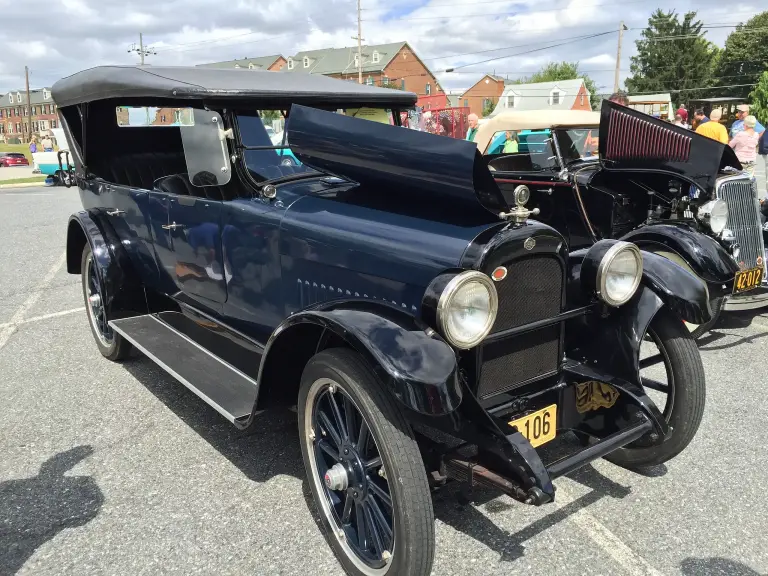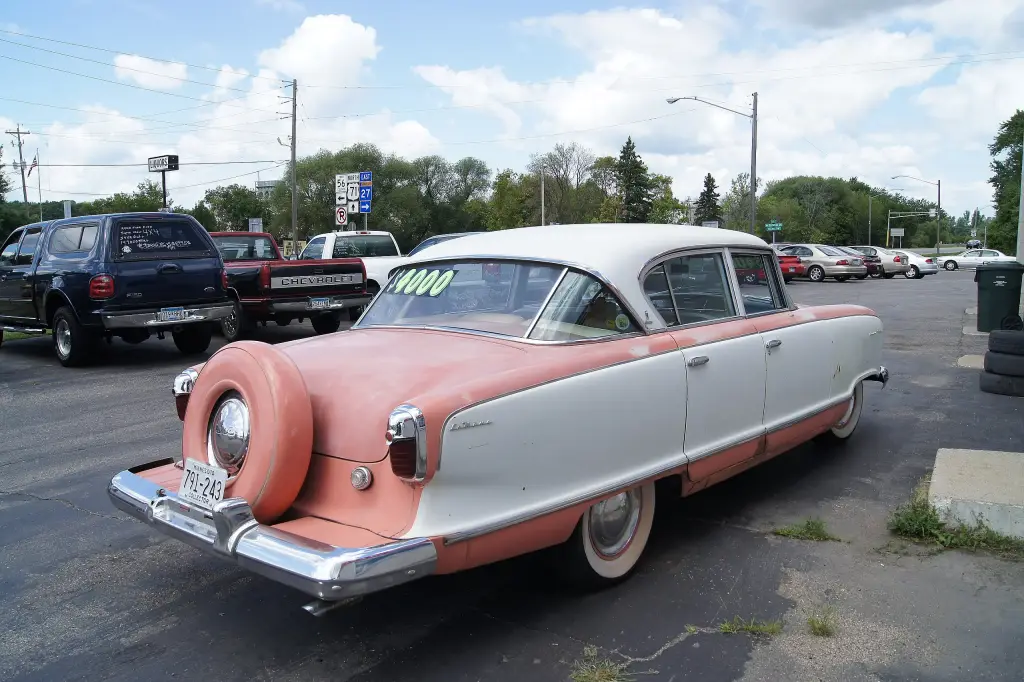
The Nash Ambassador was the company’s top model for three decades. It started in 1927 as a specially trimmed version of the Advanced Six, became a stand-alone luxury range in 1932 and remained Nash’s flagship until 1957.
Nash Ambassador at a glance
| Maker | Nash Motors / Nash-Kelvinator, Kenosha, Wisconsin |
|---|---|
| Production | 1927–1957 |
| First model | 1927 Advanced Six club sedan, model 267 |
| Stand-alone range | from mid-1932 |
| 1932 Ambassador Eight | 322 cu in (5.3 L) twin-ignition straight-eight, 125 hp |
| 1936 Ambassador Six | 234.8 cu in (3.8 L) straight-six |
| Post-war engine | 3,850 cc OHV six, 112 hp (1950), 115 hp (1952) |
| Wheelbase | 3,073 mm (post-war) |
| Gearbox | Three-speed manual with overdrive; Hydramatic optional from 1950 |
| Nickname | the Kenosha Duesenberg |
History of the Nash Ambassador
Nash first used the Ambassador name for the 1927 model year on a specially trimmed four-door, five-passenger club sedan of the Advanced Six range, model 267. It was unveiled in January at the National Automobile Show in New York and, as the most expensive car in the line, cost $2,090. The lavish trim earned the cars the nickname “Kenosha Duesenberg”. Nash sold 109,979 cars in the 1927 model year, and exports took almost eleven percent of production; among the buyers were several royal families. In 1929 the Ambassador lost its place as the most expensive Nash to a new seven-passenger sedan and limousine, which remained available through 1934. In 1931 the model was renamed Eight-90.
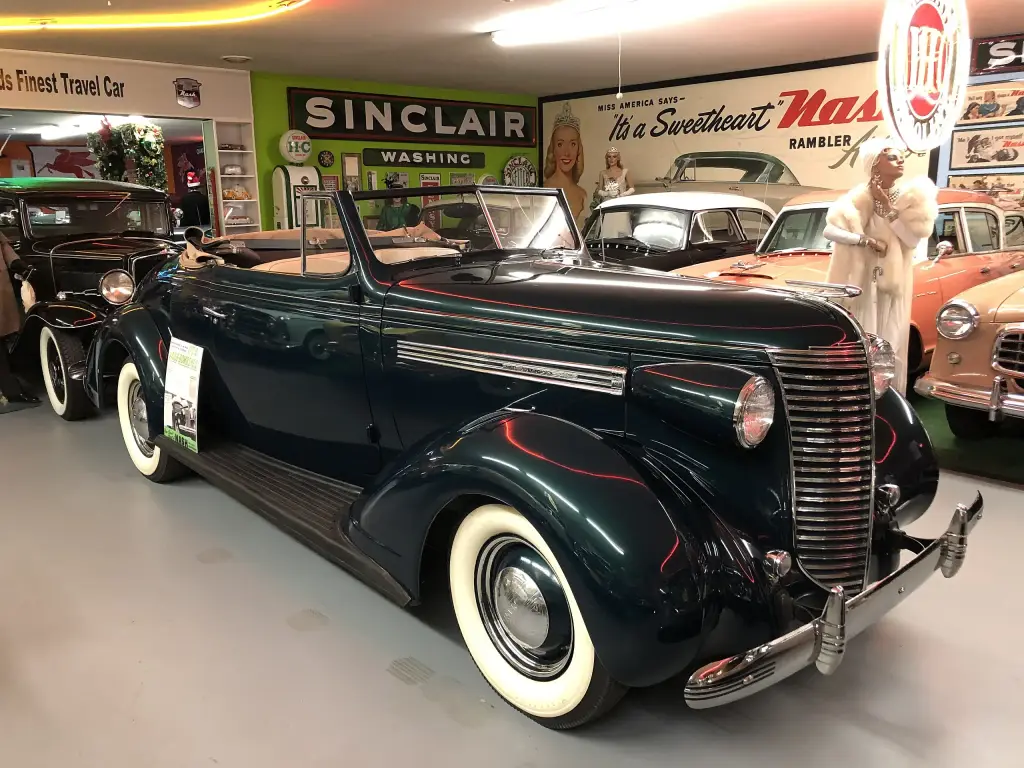
In mid-1932 Nash made the Ambassador Eight a separate range, with coupes and victorias as well as sedans on 133-inch or 142-inch wheelbases. It used a 322 cu in (5.3 L) twin-ignition overhead-valve straight-eight of 125 hp. Nash was one of the few American makers to make a profit in 1932. The 1934 cars wore the “Speedstream” styling with Art Deco mouldings, bullet headlights and rear-wheel spats, and 1935 brought the “Aeroform” body on a shorter 125-inch wheelbase. For 1936 the Ambassador Six added Nash’s largest six, a 234.8 cu in unit in a 121-inch wheelbase. Coupes and convertibles returned in 1937, the year Nash merged with Kelvinator.
For 1941 every Nash model, on long or short chassis, carried the Ambassador name. After the war the 1946 Ambassador Six was the largest Nash. The Airflyte body arrived for 1949, and until 1951 the Ambassador was offered only as a two- or four-door sedan. Its 3,850 cc overhead-valve six produced 112 hp in 1950 and 115 hp in 1952, with a three-speed manual and optional overdrive. The 1950 Ambassador was the first non-General Motors car offered with the optional GM Hydramatic automatic. In 1955 the Ambassador and Statesman adopted a Nash-Healey-inspired grille with inboard headlights. The Nash Ambassador was built until 1957, after which the name continued under American Motors.
Design and features
- Luxury flagship: the best trim and equipment Nash offered, hence the Kenosha Duesenberg nickname.
- Straight-eight power: the 1932 Ambassador Eight used a 125 hp twin-ignition eight.
- Airflyte styling: the post-war body with enclosed front wheels and a rounded ponton shape.
- Unibody construction: the 1941–1948 Ambassadors used Nash’s welded unit structure.
- Automatic option: from 1950 buyers could order the GM Hydramatic.
Nash Ambassador versions
- 1927 club sedan: model 267, the first Ambassador.
- 1932 Ambassador Eight: a separate luxury range with a 125 hp straight-eight.
- 1934 Speedstream: Art Deco mouldings and spatted rear wheels.
- 1936 Ambassador Six: the largest Nash six in a shorter chassis.
- 1949–1951 Airflyte: two- and four-door sedans with the new rounded body.
- 1955 facelift: Nash-Healey-style grille with inboard headlights.
The Ambassador’s cheaper relatives were the Nash 600 and the Nash Statesman, and its body style is described in the Nash Airflyte article. More cars are in the Nash collection.
Video: 1950 Nash Ambassador Custom – Jay Leno’s Garage
Video by Jay Leno’s Garage on YouTube.
Sources
- Nash Ambassador, English Wikipedia: history, models, engines
- Nash Ambassador, German Wikipedia: post-war models, Hydramatic, dimensions