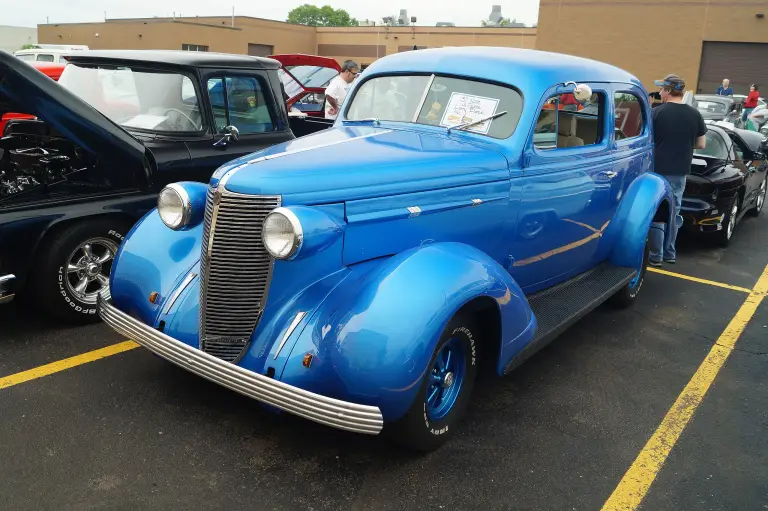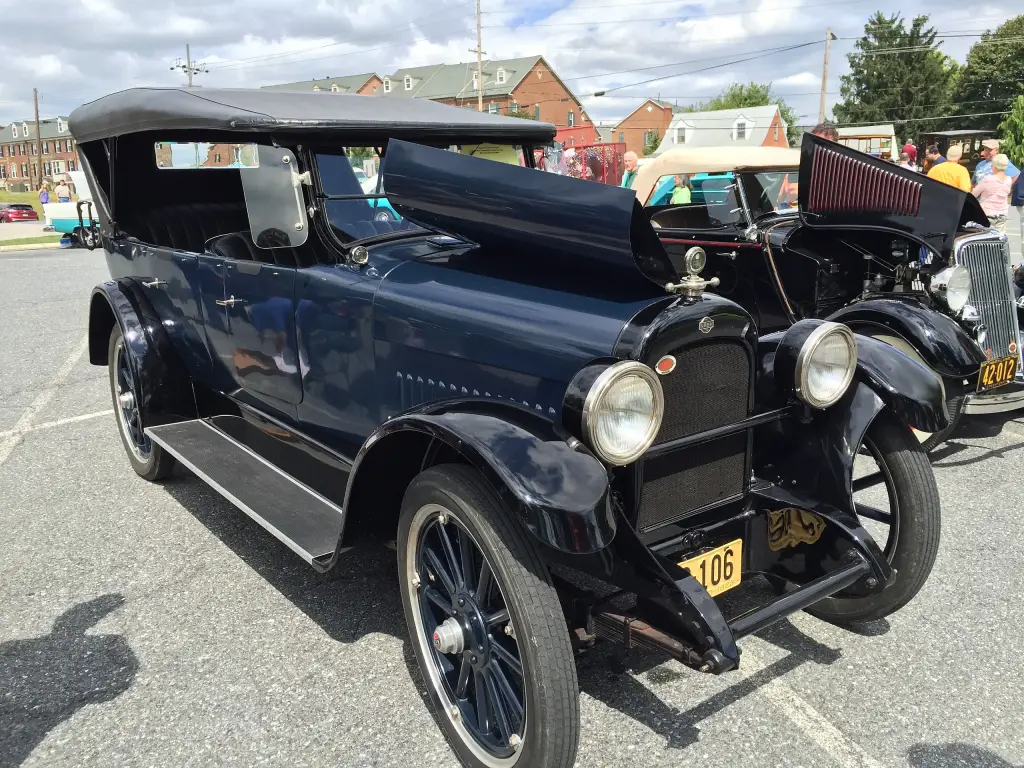
The Nash Six was the model 690 built from 1922 to 1924. It followed the Nash 680 with almost no mechanical change, and in 1925 the Advanced Six and Special Six replaced the pair.
Nash Six at a glance
| Production | 1922–1924 |
|---|---|
| Model | 690 |
| Predecessor | Nash 680 (1918–1921) |
| Wheelbase | 3,073 mm or 3,226 mm, as on the 680 |
| Engine | 4,079 cc overhead-valve six, 55 bhp at 2,400 rpm |
| Gearbox | Three-speed manual |
| Clutch | Single-plate dry |
| Brakes | Mechanical, on the rear wheels |
| Bodies | roadster, coupé, four-door sedan and touring car |
| Replaced by | Advanced Six and Special Six in 1925 |
The Nash Six is described in the German Wikipedia article on the Nash 680; this page is based on that one source.
History of the Nash Six
The Nash 680 was Nash Motors’ first model of its own, presented in 1918 and built until 1921. Its successor, the Nash Six, was almost unchanged: the radiator was slightly taller, and from 1923 disc wheels could be ordered instead of wire wheels. The chassis came with wheelbases of 3,073 mm or 3,226 mm, and power came from an overhead-valve 4,079 cc six with a bore and stroke of 82.6 by 127 mm, producing 55 bhp at 2,400 rpm. A single-plate dry clutch and a three-speed gearbox with a central lever drove the rear wheels, and the mechanical brakes acted on the rear axle only.
The 680 had been offered as a two-door roadster, a two-door coupé, a four-door sedan and a four-door touring car with five or seven seats, and the Six carried on the same range. In 1925 the thoroughly revised Advanced Six and Special Six replaced the 680 and 690.
Design and features
- Overhead-valve six: a 4.1 litre engine of 55 bhp at 2,400 rpm.
- Carry-over design: almost identical to the Nash 680 apart from a taller radiator.
- Disc wheels: available on request from 1923 instead of wire wheels.
- Coachwork choice: roadster, coupé, sedan and five- or seven-seat touring car.
Nash Six versions
- Model 690: the Nash Six, offered in the same body styles as the 680.
The Six followed the 680 and preceded the Nash Single Six and Nash 400 lines. More cars are in the Nash collection.
Sources
- Nash 680, German Wikipedia: the 680 and its Nash Six (690) successor