Mazda’s Wankel engines are a family of rotary combustion engines produced by Mazda, based on the design invented in the 1950s by the German engineer Felix Wankel. They have a reputation for being small and powerful at the expense of poor fuel efficiency, and for decades they were the technology that most clearly set Mazda apart from other carmakers.
Mazda Wankel engine at a glance
| Invented by | Felix Wankel, in the 1950s |
|---|---|
| First Mazda prototype | 40A, a single-rotor test engine |
| First car engine | L8A, 798 cc two-rotor, for the Cosmo prototype |
| Common dimensions | 105 mm rotor radius, 15 mm crank offset |
| Exceptions | 13A with a 120 mm radius and 17.5 mm offset; 8C based on the 13A |
| Strengths | light, compact, high power-to-weight ratio, easy to tune |
| Weaknesses | poor fuel efficiency |
| Used in | kit cars, hot rods and light aircraft |
| After 2012 | racing only, the Star Mazda series until 2017 |
| Return | 2023, as a generator in the MX-30 e-Skyactiv R-EV |
This page is about the engine family rather than one car.
History of the Mazda Wankel engine
Wankel engines were invented in the 1950s by Felix Wankel, and over the years Mazda increased their displacement and added turbocharging. Their reputation for being relatively small and powerful at the expense of poor fuel efficiency made them popular with kit-car builders, hot rodders and in light aircraft, because of their light weight, compact size, tuning potential and inherently high power-to-weight ratio.
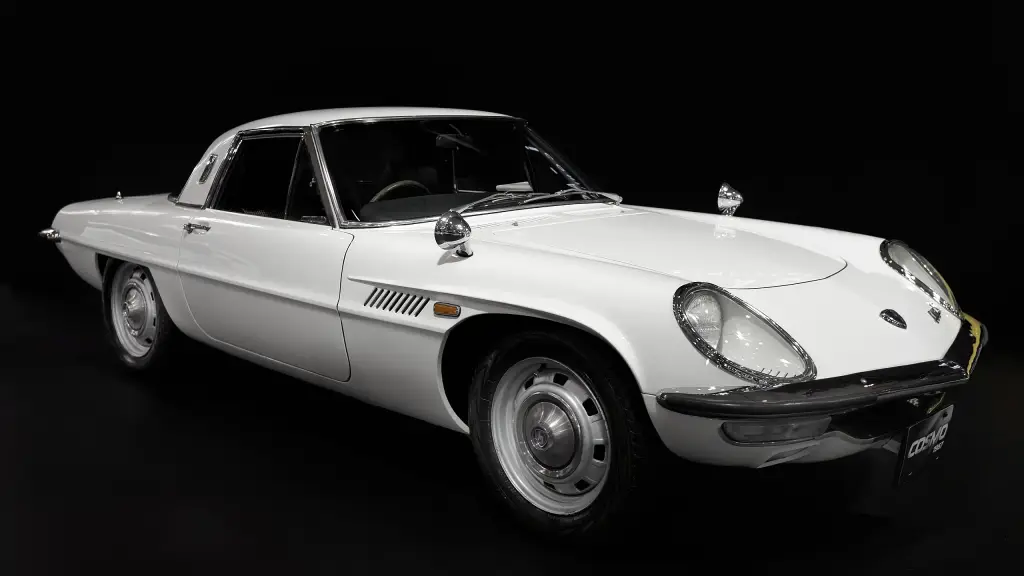
Mazda’s first prototype Wankel was the 40A, a single-rotor engine very much like the NSU KKM400. It was never produced in volume but was a valuable testbed, and it quickly showed two serious challenges: chatter marks in the housing, nicknamed the devil’s fingernails and caused by the tip seal vibrating at its natural frequency, and heavy oil consumption, which was addressed with heat-resistant rubber oil seals at the sides of the rotors. The 40A had a rotor radius of 90 mm, an offset of 14 mm and a depth of 59 mm. The very first Mazda Cosmo prototype then used the L8A, a 798 cc two-rotor Wankel shown with the car at the 1963 Tokyo Motor Show; its hollow cast-iron apex seals reduced vibration by changing their resonance frequency and eliminated chatter marks, and it used dry-sump lubrication with a rotor radius increased to 98 mm.
Nearly all Mazda production Wankel engines share a single rotor radius of 105 mm and a crankshaft offset of 15 mm. The only engine to diverge from that formula was the rare 13A, with a 120 mm rotor radius and a 17.5 mm offset, and the 8C, which was based on the 13A but with a larger 76 mm depth. Working out displacement is complicated because the rotor turns at one third of the crankshaft speed and only one face of each rotor produces a power stroke per output revolution, roughly like a two-stroke of similar single-face displacement; most racing organisations therefore doubled the quoted displacement of Wankel engines rather than halve that of piston cars.
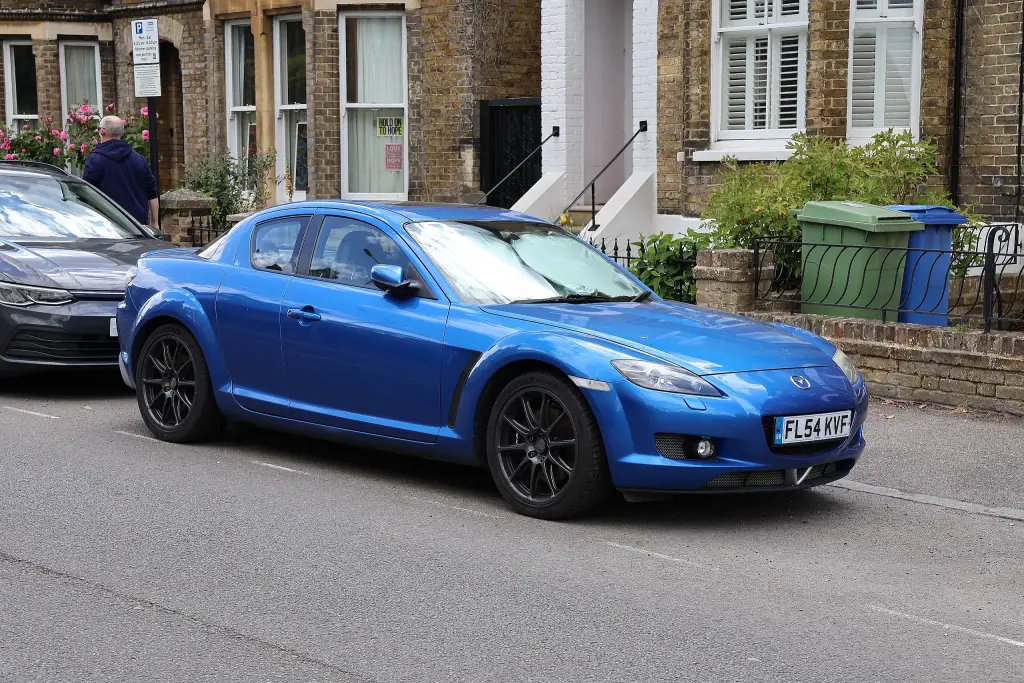
Mazda’s rotary cars ran from the Cosmo and R100 through the RX-2, RX-3, RX-4, RX-5 and RX-7 to the RX-8. Since RX-8 production ended in 2012 the engine was made only for single-seater racing, with the one-make Star Mazda Championship using a Wankel until 2017, when the series moved to a Mazda-branded piston engine and production temporarily stopped. In 2023 Mazda brought the engine back as a generator for the MX-30 e-Skyactiv R-EV plug-in hybrid.
Design and features
- Light and compact: a high power-to-weight ratio and easy tuning.
- Racing displacement: series doubled the quoted size to compare with piston engines.
- Common geometry: 105 mm rotor radius and 15 mm offset for almost all Mazda engines.
- Modern return: a rotary generator in the 2023 MX-30 R-EV.
Mazda Wankel engine versions
- 40A: single-rotor prototype and testbed.
- L8A: 798 cc two-rotor for the first Cosmo prototype.
- 13A and 8C: the engines that used a different geometry.
The engine powered the Mazda Cosmo, the RX-7 and the RX-8, and it won Le Mans in the 787B. More Mazdas are in the Mazda collection.
Sources
- Mazda Wankel engine, English Wikipedia: history, 40A, L8A, geometry, displacement, 2023 return