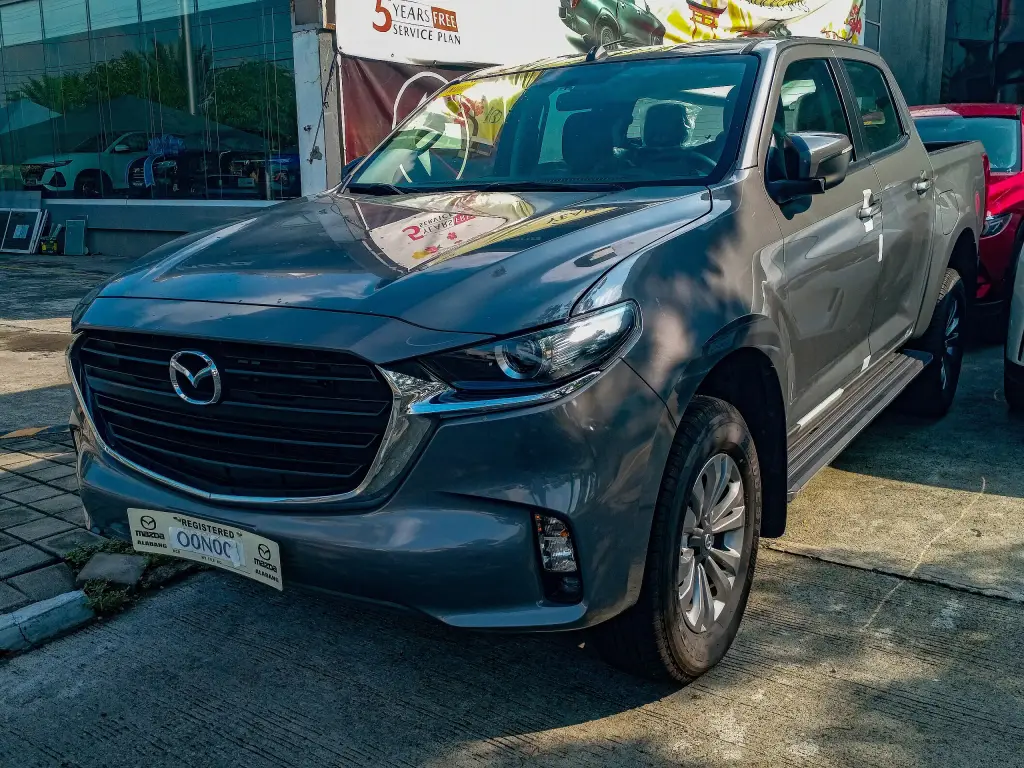
The Mazda BT-50 is Mazda’s pickup, launched in 2006 as a larger replacement for the B series. It is not sold or built in Japan. The first two generations were developed with Ford and shared the Ford Ranger’s platform, while the third generation of 2020 is based on the Isuzu D-Max.
Mazda BT-50 at a glance
| On sale since | 2006 |
|---|---|
| Replaced | Mazda B series |
| First generation | UN, launched at the Bangkok motor show on 22 March 2006 |
| First-generation engines | 2.5 and 3.0-litre Duratorq/MZR-CD diesels, shared with the Ford Ranger |
| Second generation | UP/UR, revealed in October 2010, based on the Ford Ranger T6 |
| Third generation | TF, unveiled in Australia on 17 June 2020, based on the Isuzu D-Max |
| Built in | Thailand, South Africa, Colombia (first generation); Thailand (third generation) |
| Not sold in | Japan and North America |
History of the Mazda BT-50
The BT-50 was launched at the Bangkok International Motor Show on 22 March 2006. It shared its 2.5- and 3.0-litre Duratorq/MZR-CD diesel fours with the Ford Ranger, and in late November 2006 gained a five-speed automatic transmission with a Borg Warner transfer case as well as side airbags. A minor redesign in the first quarter of 2008 revised the interior and made several optional items standard. In Mexico and Central and South America the range also included a 2.6-litre four in four-wheel drive, a 2.2-litre entry model and a 2.5 diesel in two- or four-wheel drive.
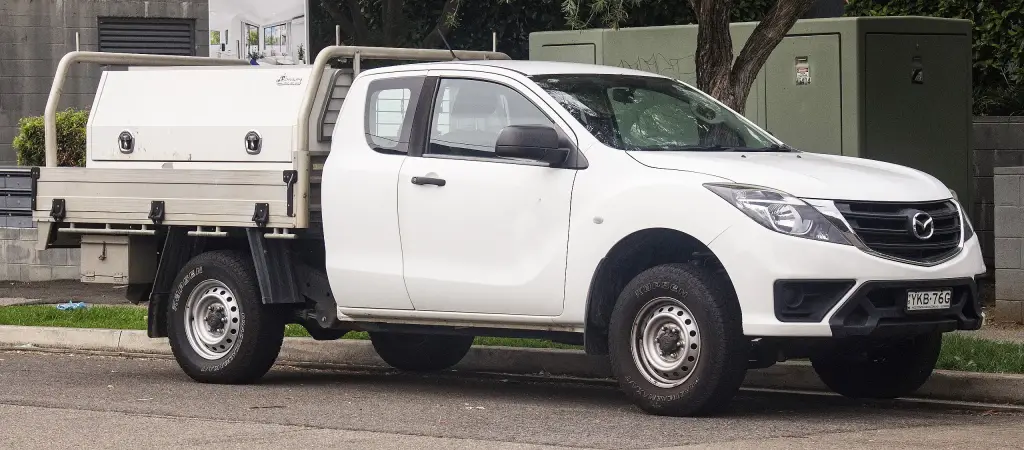
European and Thai models of the BT-50 and Ford Ranger were built in Thailand, South African models in Pretoria, and Latin American BT-50s in Colombia until the Ford Ranger T6 built in Argentina replaced them in 2012. The BT-50 was also assembled by Willowvale Mazda Motor Industries in Zimbabwe from 2007 to 2010. It was neither sold nor built in Japan.
The second generation was revealed in October 2010 at the Australian International Motor Show and was based on the Ford Ranger T6. Although the BT-50 was designed by a Mazda team at Ford Australia’s design centre in Melbourne, Ford and Mazda worked independently, and of the exterior panels only the windscreen, roof and rear screen are common between the two. A revised BT-50 arrived for the 2016 model year, shown in July 2015 and launched in Australia that September, mainly a cosmetic update; another facelift for Australia in 2018 added Apple CarPlay and Android Auto. In November 2020 Mazda Philippines launched a BT-50 4×4 Pangolin Edition with a matte black grille, roof rack, roll bars and 17-inch Rota wheels to raise awareness of the endangered pangolin.
The third generation was unveiled in Australia on 17 June 2020 and, unlike its predecessors, was developed from the third-generation Isuzu D-Max after a tie-up between Mazda and Isuzu announced on 11 July 2016. It is built at Isuzu’s plant in Samrong, Thailand, and uses Mazda’s Kodo design language while sharing its base structure, body shell and mirrors with the D-Max.
Design and features
- Ford years: the first two generations were twins of the Ford Ranger.
- Diesel engines: 2.5 and 3.0-litre common-rail fours in the first generation.
- Isuzu base: from 2020 the BT-50 is built on the Isuzu D-Max.
- Not for Japan: the BT-50 has never been sold or built in Japan.
Mazda BT-50 versions
- UN (2006–2011): first generation, Ford Ranger twin, 2.5 and 3.0 diesels.
- UP/UR (2011–2020): second generation on the Ranger T6, facelifted in 2015 and 2018.
- Pangolin Edition (2020): Philippine special edition for pangolin conservation.
- TF (2020–): third generation based on the Isuzu D-Max.
The BT-50 replaced the Mazda B series and is Mazda’s largest pickup; the smaller Mazda Titan covers the commercial truck side. More Mazdas are in the Mazda collection.
Sources
- Mazda BT-50, English Wikipedia: generations, production, engines
- Mazda BT-50, German Wikipedia: European market
- マツダ・BT-50, Japanese Wikipedia: model history