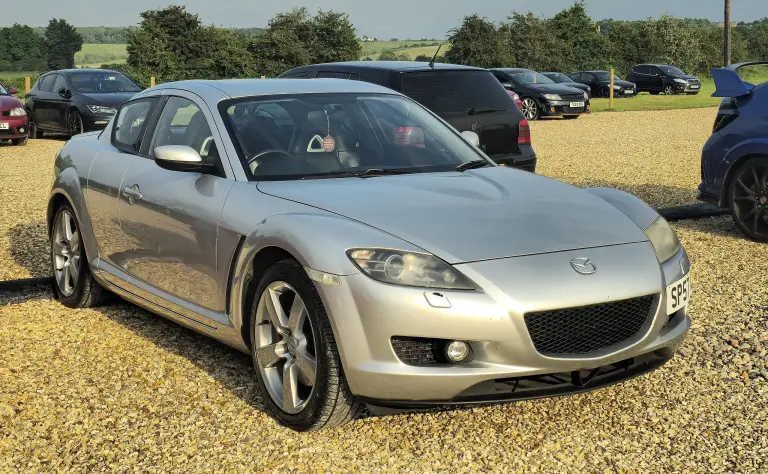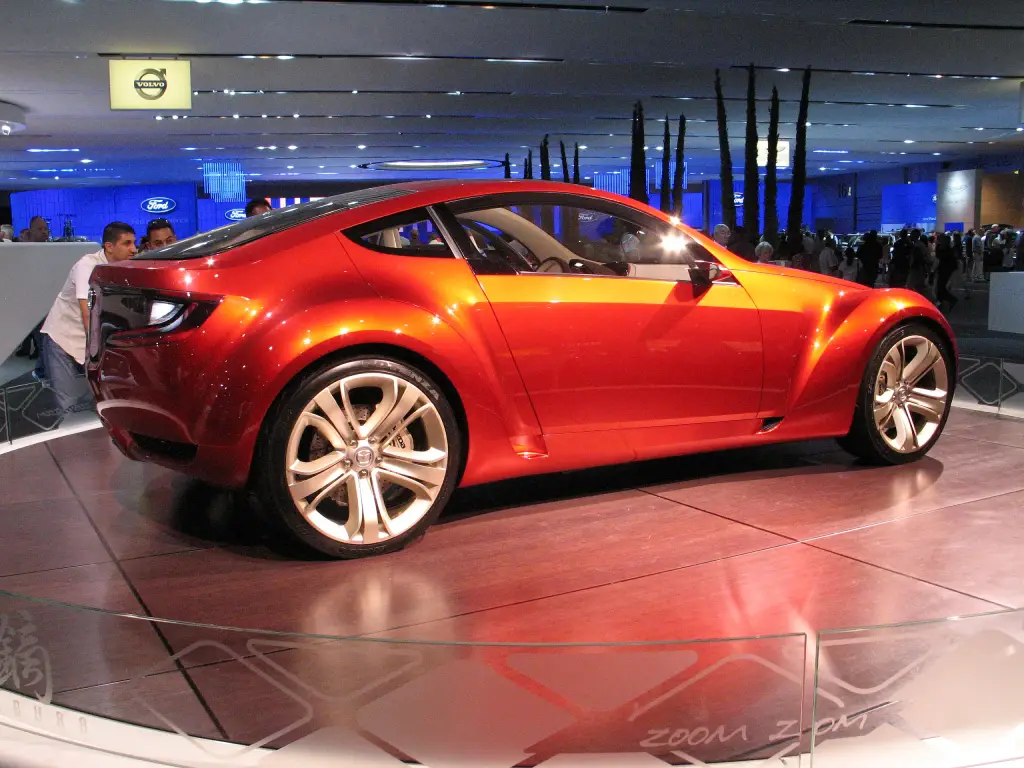
The Mazda Kabura was a concept car shown at the 2006 North American International Auto Show. A compact rear-wheel-drive coupe with an unusual 3+1 seating layout, it previewed styling themes and technologies for future Mazdas, but Mazda never announced a production version.
Mazda Kabura at a glance
| Shown | 2006 North American International Auto Show |
|---|---|
| Type | compact sports coupe concept |
| Designed at | Mazda’s Irvine, California studio |
| Designer | Franz von Holzhausen |
| Layout | front engine, rear-wheel drive |
| Engine | 2.0-litre MZR DOHC 16-valve four |
| Seating | 3+1 |
| Tyres | 245/35R19 front, 245/35R20 rear |
| Size | between the MX-3 and the RX-8 |
| Production | none announced |
History of the Mazda Kabura
The Kabura was introduced at the 2006 North American International Auto Show as a sport compact that showed styling themes and technologies which could appear in future production models. It was designed in Irvine, California, by Mazda of North America design chief Franz von Holzhausen, who had also designed the Pontiac Solstice. The car used a front-engine, rear-drive layout similar to the MX-5 and RX-8 and hinted at design characteristics of the RX-8 and the discontinued MX-3; its basic dimensions fell between those two cars, and as a sport compact it would have slotted below the RX-8.
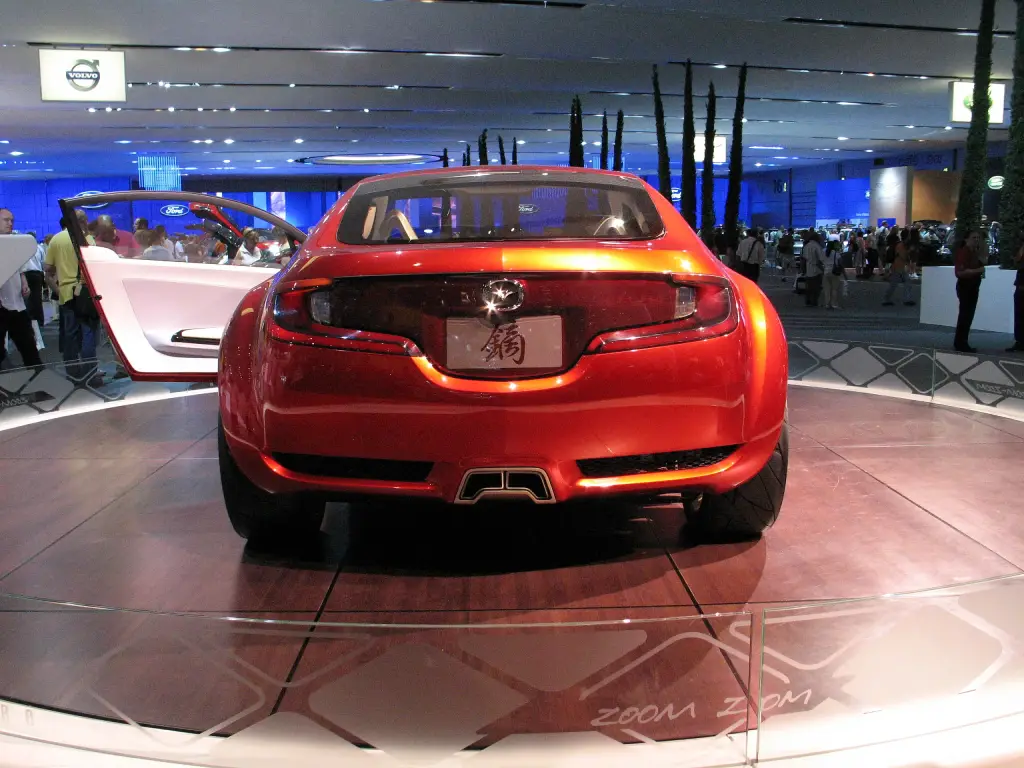
The name comes from kabura-ya, a Japanese arrow that makes a howling sound when fired and was historically used to signal the start of a battle. Mazda presented this first arrow into battle as representing its pursuit of unique styling themes and technologies, such as the rotary engine, and called the Kabura its first compact coupe for the 21st century. Power came from a 2.0-litre version of Mazda’s MZR DOHC 16-valve engine driving the rear wheels, on 245/35R19 Bridgestone Potenza front tyres and 245/35R20 rear tyres. Several MX-5 chassis components were used.
Instead of a typical 2+2 layout the Kabura had a 3+1 arrangement, giving more passenger space than a traditional coupe without growing in weight or size, and all passenger seats folded flat to make extra room for cargo. The driver’s door gave access to the driving position and the rear jump seat, while the other side was deliberately asymmetrical: with no glovebox and a minimised instrument panel the front passenger sat about six inches further forward, and the second passenger behind had roughly the same leg, shoulder and headroom. The windshield and the front of the roof formed one seamless glass surface with adjustable tint, and behind the B-pillar a two-piece glass hatch could pivot up to act as a roof spoiler and vent the interior, with a solar cell to help control temperature and charge the battery.
Design and features
- 3+1 seating: an asymmetrical layout that gave more space without a bigger body.
- Adjustable glass roof: the driver could change the tint from clear to opaque.
- Pivoting glass hatch: a motorised panel acted as a spoiler and vent.
- MX-5 parts: the concept used MX-5 chassis components with a 2.0 MZR engine.
Mazda Kabura versions
- Kabura concept (2006): the only example built.
The Kabura followed the MX-5 recipe in a coupe body and sat below the RX-8 in size; it was part of the same Nagare-era design push. More Mazdas are in the Mazda collection.
Sources
- Mazda Kabura, English Wikipedia: design, layout, interior, engine
- Mazda Kabura, German Wikipedia: concept car context