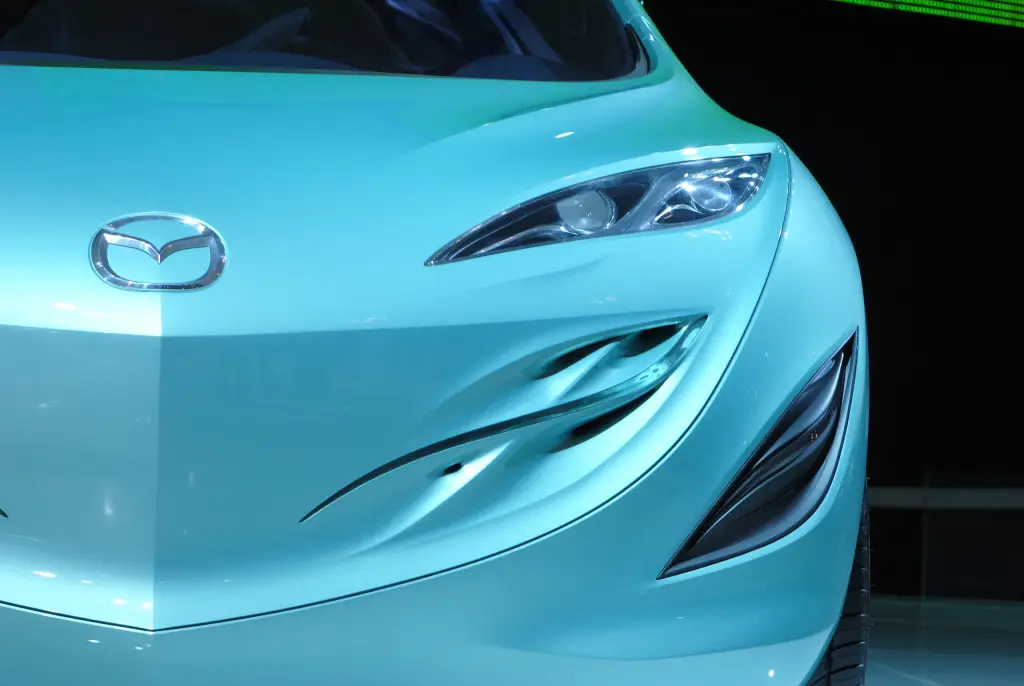
The Mazda Kiyora was a concept car introduced at the 2008 Paris Motor Show. It was a design study for the next generation of Mazda’s urban subcompact, intended to replace the Mazda 2, and an engineering study for a high-efficiency petrol engine. Its name roughly translates as pure.
Mazda Kiyora at a glance
| Shown | 2008 Paris Motor Show |
|---|---|
| Type | urban subcompact concept |
| Name | kiyora, roughly pure |
| Theme | water |
| Design | Mazda Japan and Europe, part of the Nagare series |
| Weight | 100 kg lighter than the Mazda 2 |
| Drag | 10 percent lower than the Mazda 2 |
| Body | carbon fibre, butterfly doors, glass roof |
| Engine | 1.3-litre direct-injection four with i-stop |
| Economy target | 32 km/l and no more than 90 g/km of CO2 |
History of the Mazda Kiyora
The Kiyora was first shown at the 2008 Paris Motor Show as a design study for a next-generation urban subcompact meant to replace the Mazda 2, and as an engineering study for a high-efficiency petrol engine. Its name roughly means pure, and the design used water as its theme. It was part of Mazda’s Nagare series of concept cars and a collaboration between the company’s core Japanese operations and its European branch.
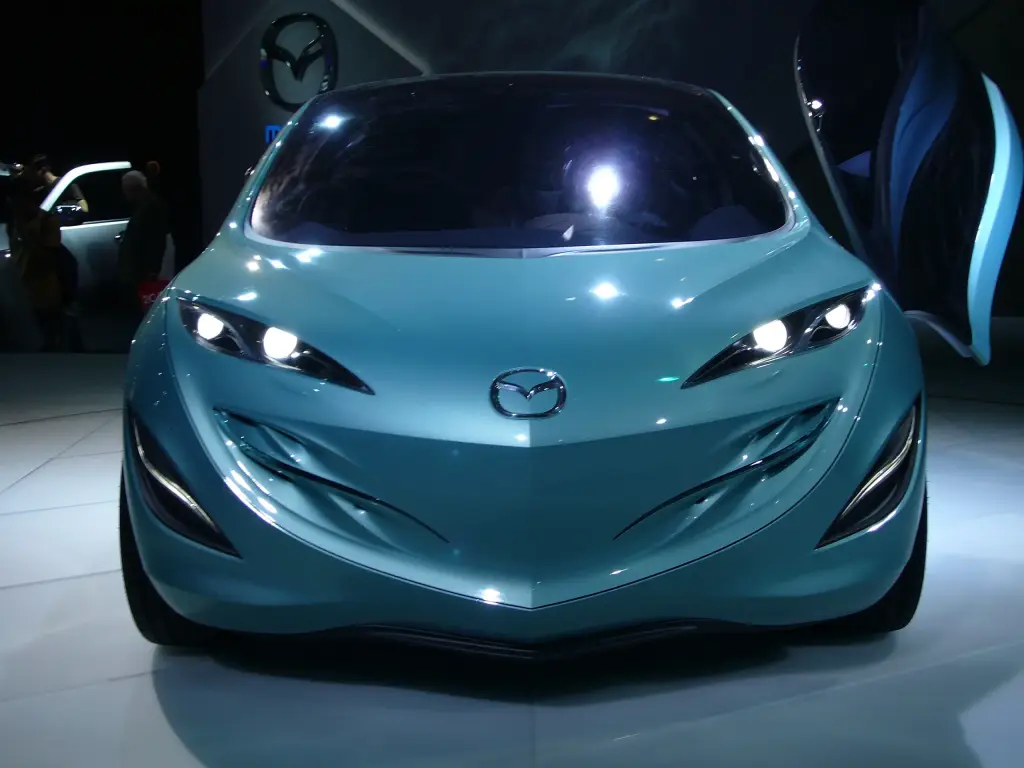
The hatchback body had two transparent plastic butterfly doors and a glass roof through which the structural elements were visible. The droplet-like shape was completed by a rear spoiler and an aerodynamic underbody that gave a drag coefficient 10 percent lower than the contemporary Mazda 2. Carbon fibre was used to cut weight, making the Kiyora 100 kg lighter than the Mazda 2. The roof carried solar cells to generate electricity, and a rainwater collection and filtration system fed a specially designed LifeSaver bottle for the passengers to drink from.
Inside, the Kiyora was a four-seater with two flexible rear seats. The dashboard was made with activated carbon for air purification and included a touchscreen running from the instrument cluster to the centre console and curving around the driver; it rippled like water when touched, with floating icons the driver could rearrange. The proposed powertrain was a 1.3-litre direct-injection four-cylinder using Mazda’s i-stop stop-start system and a more efficient six-speed automatic transmission, with regenerative braking charging the battery. Mazda estimated that the combination of the lightweight body and the efficient drivetrain would give 32 km/l and no more than 90 g/km of CO2.
Design and features
- Water theme: the droplet shape, rippling touchscreen and rainwater collection all referred to water.
- Butterfly doors: transparent plastic doors and a glass roof showed the structure inside.
- i-stop: the concept previewed Mazda’s stop-start system in a 1.3 direct-injection engine.
- Lightweight: carbon fibre made it 100 kg lighter than the production Mazda 2.
Mazda Kiyora versions
- Kiyora concept (2008): the only example built.
The Kiyora was intended as a future Mazda 2 and belongs to the Nagare concept family. More Mazdas are in the Mazda collection.
Sources
- Mazda Kiyora, English Wikipedia: design, materials, powertrain, targets
- Mazda Kiyora, German Wikipedia: concept car context