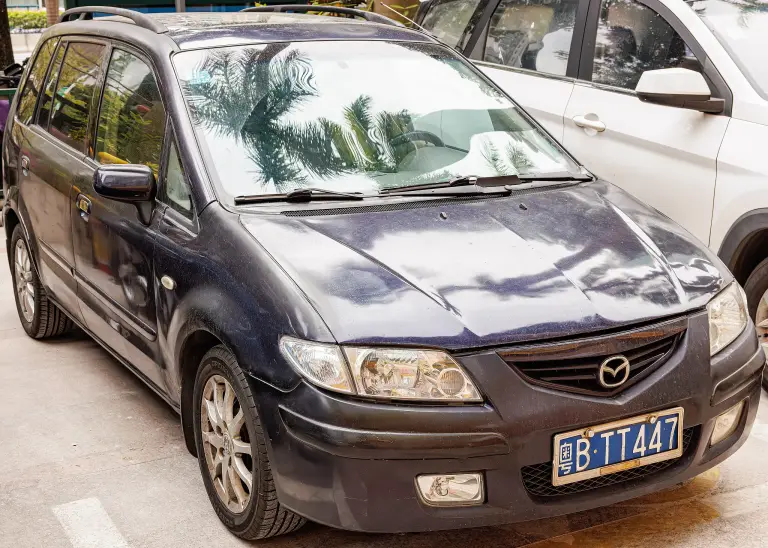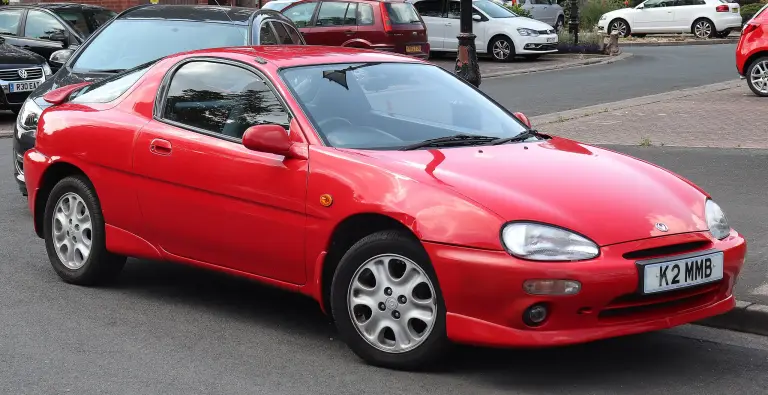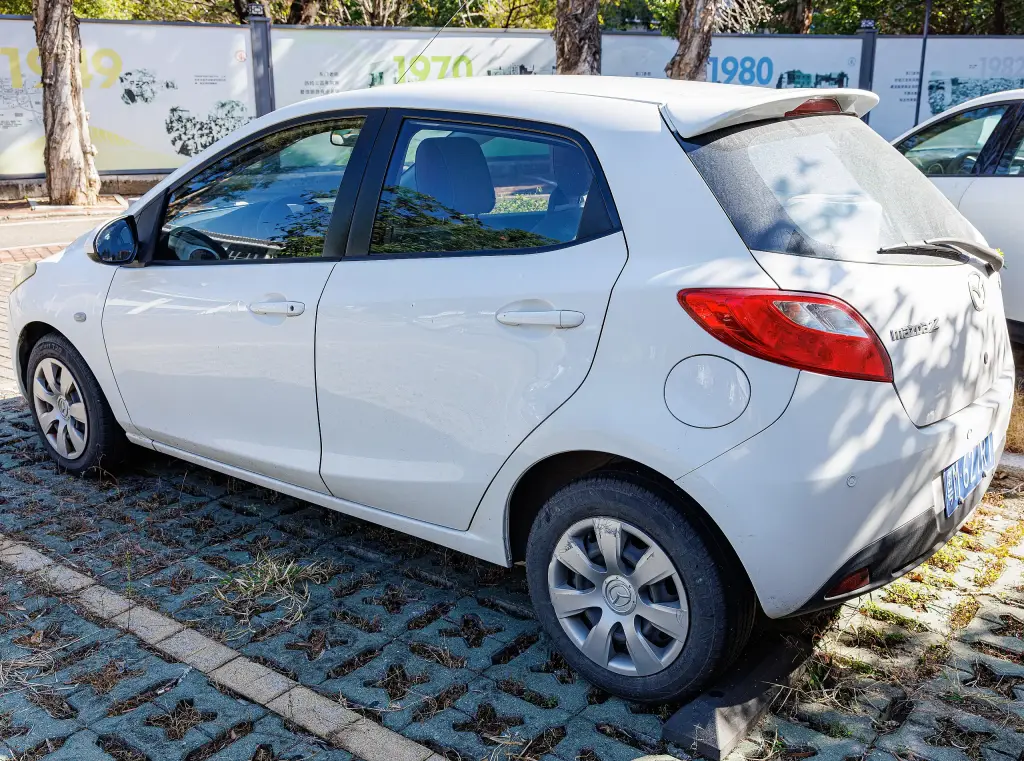
The Mazda 2 is Mazda’s supermini, introduced in 2002 and now in its third generation. In Japan it was sold as the Demio until 2019, and its predecessor in export markets was the Mazda 121. The second generation was named 2008 World Car of the Year.
Mazda 2 at a glance
| On sale since | 2002 |
|---|---|
| Japanese name | Mazda Demio, until 2019 |
| Predecessor | Mazda 121 |
| First generation | DY, 2002, on the Ford B3 platform |
| European production | Ford’s Almussafes plant in Valencia, Spain, from 20 January 2003 |
| Second generation | DE/DH, launched at the 2007 Geneva Motor Show |
| Awards | 2008 World Car of the Year; 2014–2015 Japanese Car of the Year |
| North American version | Scion iA and Toyota Yaris iA/Yaris R |
| Hybrid | from 2022, based on the Toyota Yaris Hybrid |
History of the Mazda 2
The first-generation Mazda 2, the DY of 2002, was developed from Ford’s B-segment B3 platform, shared with the fifth-generation Ford Fiesta. Development was led by chief engineer Kiyoshi Fujiwara, who also oversaw the B3 platform at Ford’s European R&D. European production was assigned to Ford’s Almussafes plant in Valencia from 20 January 2003, and the European car used a Ford Fiesta pedal box with a 4×10⁸ bolt pattern instead of Mazda’s 4×100.
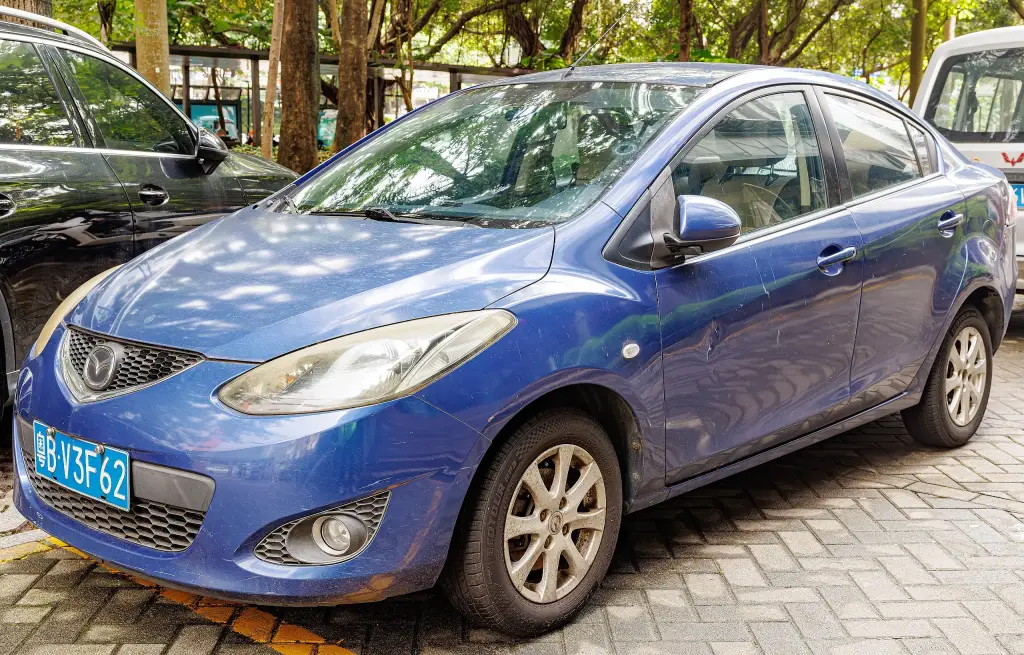
All versions had ABS and electronic brake distribution, with stability control optional. Japan got an unusual e-4WD system that used an electric motor to drive the rear wheels as a traction aid. Trim levels differed by market, and in New Zealand the car used a 1.5-litre ZY-VE engine. The Demio was facelifted on 13 April 2005, and in 2004 Mazda added the upmarket Verisa on the same basis.
The second generation, the DE, was launched at the 2007 Geneva Motor Show on a platform similar to the sixth-generation Ford Fiesta. It dropped the tall body of its predecessor for a more conventional hatchback shape; the lead designer was Ikuo Maeda. Japanese sales began on 5 July 2007, production in Japan reached 100,000 at the end of January 2008, and a three-door for Europe followed at the 2008 Geneva show. Engines were the MZR 1.3 and 1.5 petrol units and the 1.4 MZ-CD turbodiesel, with a factory LPG option in countries such as the Netherlands. A Chinese four-door saloon went on sale in January 2008, and by August 2010 400,000 had been sold in Europe, Australia and Japan. The second generation took the 2008 World Car of the Year title.
The third generation arrived in 2013 and won the 2014–2015 Japanese Car of the Year. In North America it was sold as the Scion iA and then as the Toyota Yaris iA and Yaris R, and from 2022 a separate Mazda 2 based on the Toyota Yaris Hybrid has been sold in Europe alongside it.
Design and features
- Ford platforms: the first two generations were developed alongside the Ford Fiesta.
- e-4WD: a Japanese-market system using an electric motor on the rear axle as a traction aid.
- Lightweight second generation: smaller overall dimensions and lightweight materials.
- Skyactiv and hybrid: later cars use Mazda’s Skyactiv engines, and the 2022 hybrid comes from Toyota.
Mazda 2 versions
- Mazda 2 DY (2002–2007): first generation, Ford B3 platform, built in Valencia for Europe.
- Mazda 2 DE/DH (2007–2014): second generation, 2008 World Car of the Year; three- and five-door and a Chinese saloon.
- Scion iA / Toyota Yaris iA: North American versions of the third generation.
- Mazda 2 Hybrid (2022): Toyota Yaris Hybrid-based model sold alongside the petrol car.
The Mazda 2 sits below the Mazda 3 in the range and replaced the Mazda 121. More Mazdas are in the Mazda collection.
Sources
- Mazda2, English Wikipedia: generations, platforms, awards
- Mazda2, German Wikipedia: European versions and production
- マツダ・デミオ, Japanese Wikipedia: Demio name and Japanese market