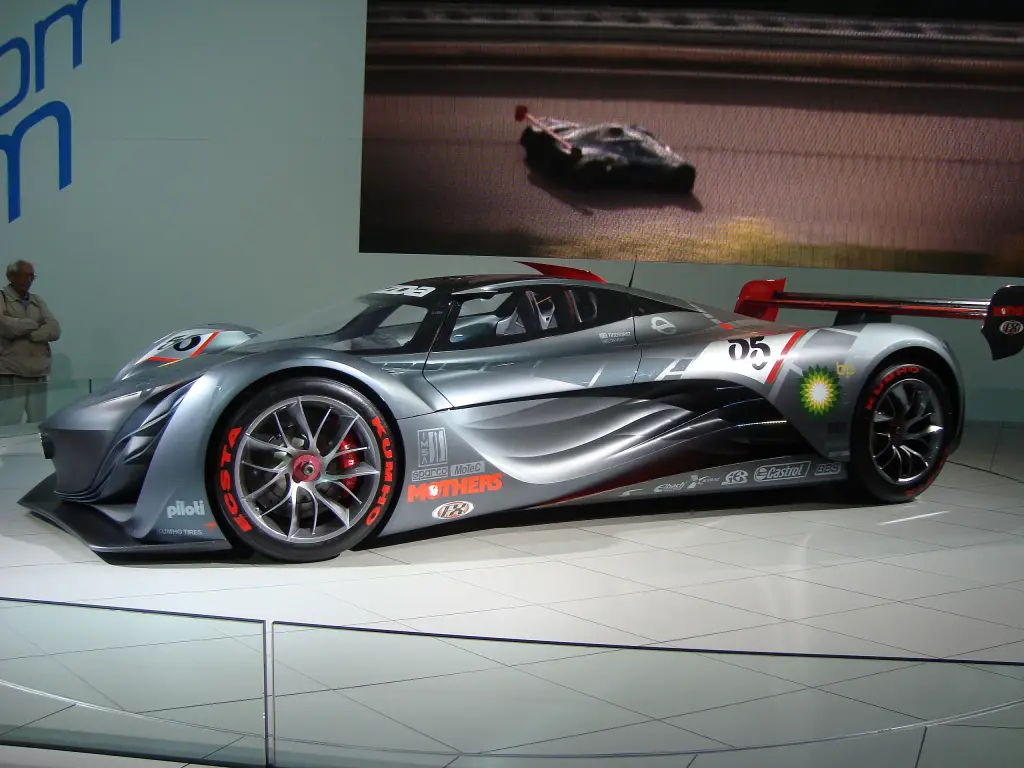
The Mazda Furai was a concept car revealed on 27 December 2007 and shown publicly at the 2008 North American International Auto Show in Detroit. Built on a Courage Compétition C65 Le Mans prototype chassis and powered by a three-rotor rotary engine, it was a fully working car rather than a static show model – and it was destroyed by fire later that year.
Mazda Furai at a glance
| Revealed | 27 December 2007 |
|---|---|
| Public debut | 2008 North American International Auto Show, Detroit |
| Design | Swift Engineering for Mazda |
| Name | furai, meaning sound of the wind |
| Place in the range | fifth and last of the Nagare concept cars |
| Chassis | Courage Compétition C65 Le Mans prototype |
| Engine | three-rotor 20B Wankel, 450 bhp (336 kW) |
| Fuel | E100 ethanol |
| Number | 55, that of the 1991 Le Mans-winning 787B |
| Destroyed | by fire on 19 August 2008 at Bentwaters Parks |
The prototype record is merged here: its video showed the same Furai.
History of the Mazda Furai
A teaser image of the Furai was released on 11 December 2007 and the car was revealed on 27 December, before its official debut at the 2008 Detroit show. Its name means the sound of the wind, and it was the fifth and last of Mazda’s Nagare line of concept cars, which began in 2006. The chassis was based on the Courage Compétition C65 Le Mans Prototype that Mazda had used in the American Le Mans Series two seasons earlier, and it was designed to run on E100 ethanol.
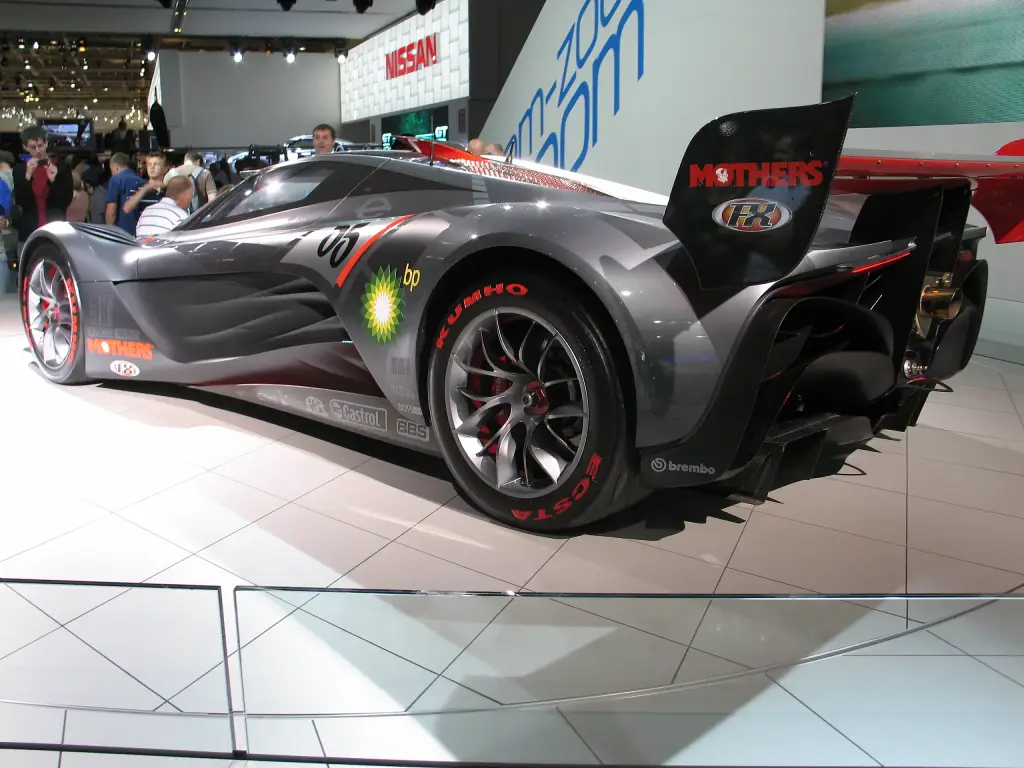
The engine was a heavily modified three-rotor 20B Wankel producing 336 kW (456 PS, 450 bhp), developed and built by the rotary tuner Racing Beat, which also made the car’s rotary-shaped muffler canister. The car carried the number 55 of its 1991 Le Mans-winning ancestor, the 787B. Unlike many concept cars, the Furai was fully functional and was tested at various tracks, including Laguna Seca and Buttonwillow. Its head designer, Laurens van den Acker, said in an interview with Top Gear that there could have been possibilities of racing it at Le Mans and that he hoped it might reach the market.
Those hopes ended on 19 August 2008. In September 2013 it was revealed that the car had caught fire during road tests by Top Gear. The magazine was allowed to publish the story on 29 November 2013: the Furai caught fire during a photography session at Bentwaters Parks at 11:52 am while driver Mark Ticehurst was at the wheel, the engine bay igniting as the car crested a hill on the back side of the track. Ticehurst escaped before the fire reached the cabin, but fire crews at the remote location took several minutes to arrive and the car was completely engulfed; it took about eight minutes to put out and the Furai was incinerated. Its remains were taken to Mazda’s Advanced Design Studio in Irvine, California, and their eventual fate is not publicly known.
Design and features
- Working concept: tested on real tracks rather than built as a show car.
- Three-rotor engine: a Racing Beat-prepared 20B with 450 bhp.
- E100 fuel: designed to run on pure ethanol.
- Le Mans chassis: based on the Courage C65 prototype Mazda had raced.
Mazda Furai versions
- Furai concept (2008): the only car built; destroyed by fire in August 2008.
The Furai was the last of Mazda’s Nagare-era concepts, and its engine continues the story of the Mazda Wankel engine and the 757 and 787B. More Mazdas are in the Mazda collection.
Sources
- Mazda Furai, English Wikipedia: design, engine, accident
- Mazda Furai, German Wikipedia: concept car context