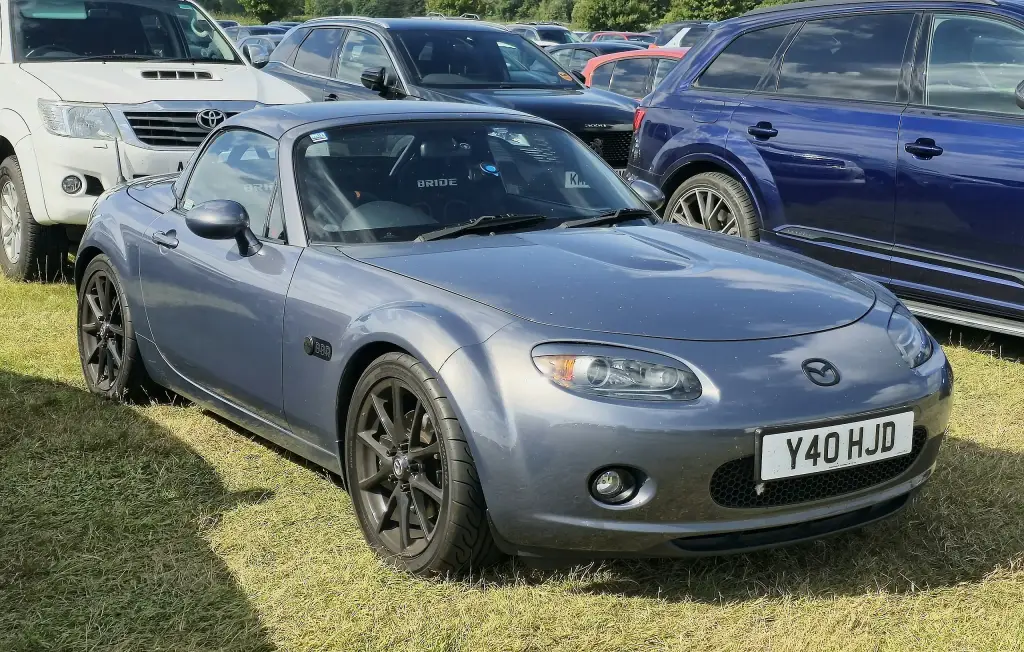
The Mazda MX-5 is a lightweight two-seat sports car that debuted at the 1989 Chicago Auto Show. Called the Miata in the United States and the Roadster or Eunos Roadster in Japan, it has been built over four generations and has sold more than a million cars, making it the best-selling two-seat convertible sports car in history.
Mazda MX-5 at a glance
| Debuted | February 1989, Chicago Auto Show |
|---|---|
| Generations | NA (1989), NB (1998), NC (2005), ND (2015) |
| Names | MX-5, Miata in the US, Roadster/Eunos Roadster in Japan |
| Design credo | Jinba ittai, unity of horse and rider |
| Benchmark | the Lotus Elan |
| First-generation sales | 228,961 between 1989 and 1997 |
| Weight | under 1,100 kg |
| Balance | about 50:50 front to rear |
| Built at | Mazda’s Hiroshima plant |
| Total sales | more than one million |
The Miata, Roadster and MX-5 records are merged here; they are the same car under different market names.
History of the Mazda MX-5
The idea came from Bob Hall, a Motor Trend journalist who spoke Japanese. In 1976 he met Kenichi Yamamoto and Gai Arai, Mazda’s head of research and development, and told them that the simple, classically British sports car no longer existed and that somebody should build an inexpensive roadster. In 1981 Hall moved to product planning at Mazda USA and met Yamamoto again, now chairman, who remembered the conversation and in 1982 gave him the go-ahead to research the idea. Hall hired designer Mark Jordan for the new Southern California studio, and in 1983 the idea was approved as the Offline 55 programme, an internal Mazda initiative to change how new models were developed, with the concept becoming a competition between Mazda’s Tokyo and California design teams.
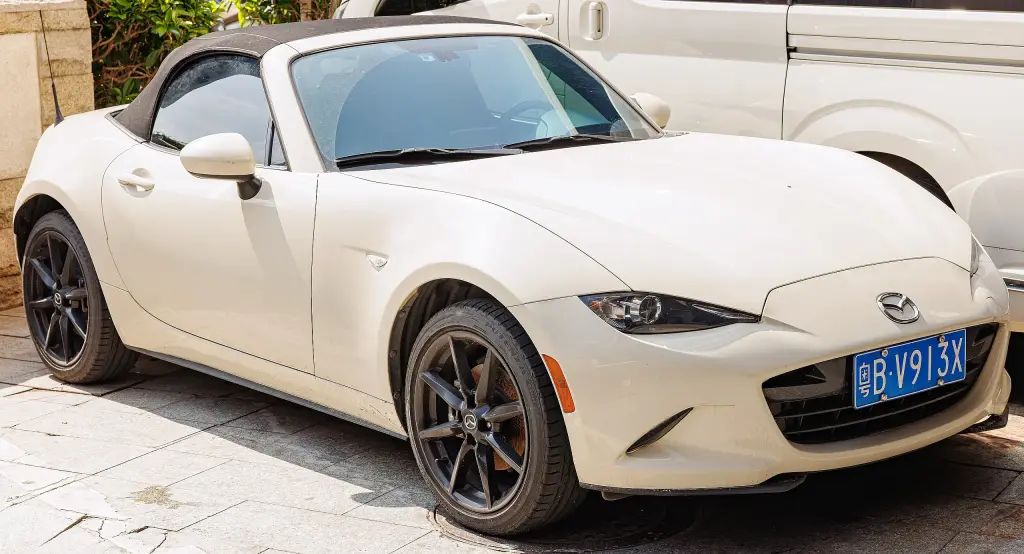
The MX-5 was launched in February 1989 at the Chicago Auto Show, at a time when small roadsters had almost disappeared; the Alfa Romeo Spider was one of the few comparable cars still in production and it was much more expensive. That left the MX-5 as the spiritual successor to the MGB, Triumph TR7, Triumph Spitfire and Fiat Spider. It was created under the design credo Jinba ittai, meaning unity of horse and rider, and with the Lotus Elan as its design benchmark; it was noted for its small, light, balanced and minimalist design. The first generation sold 228,961 cars between 1989 and 1997.
The lightweight unibody MX-5 has a curb weight under 1,100 kg and a longitudinal truss, marketed as the Powerplant Frame, that rigidly connects the engine and differential to reduce flex and improve balance. Some models have a limited-slip differential, traction control and anti-lock brakes, and with an approximate 50:50 front-to-rear weight balance the handling is nearly neutral: inducing oversteer is easy and controllable, which made the car popular for amateur and club racing, autocross and stock racing. Each generation is identified by a two-letter code, beginning with the NA, followed by the NB in 1998, the NC in 2005 and the ND in 2015.
Design and features
- Jinba ittai: the design credo of unity between car and driver.
- Powerplant Frame: a longitudinal truss linking engine and differential for rigidity.
- 50:50 balance: near-neutral handling that made the car a racing favourite.
- Light weight: under 1,100 kg, in the tradition of 1960s roadsters.
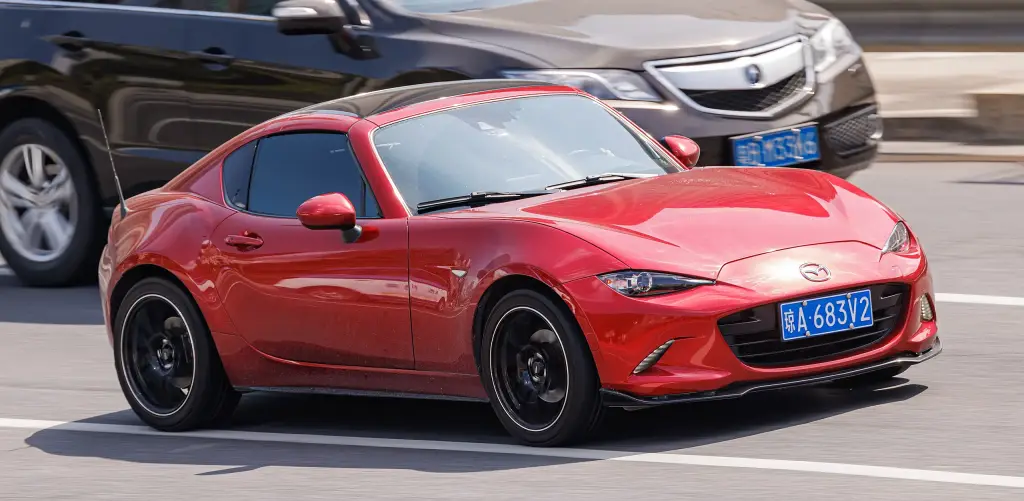
Mazda MX-5 versions
- NA (1989–1997): the original roadster.
- NB (1998): second generation.
- NC (2005): third generation.
- ND (2015): fourth generation.
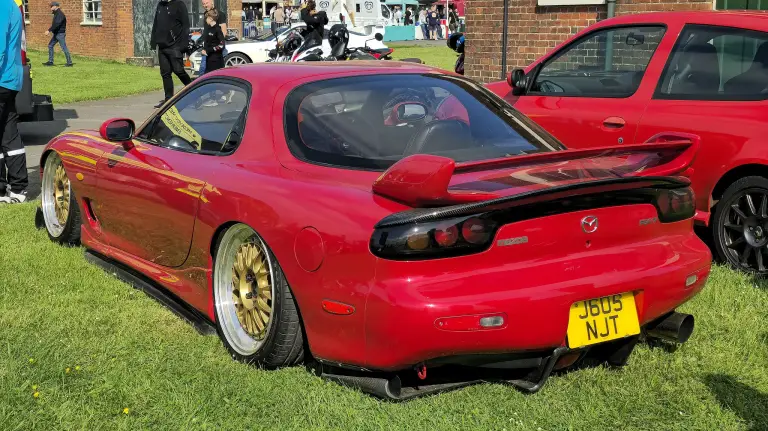
The MX-5 is the best known of Mazda’s sports cars, alongside the rotary RX-7 and RX-8, and it inspired the Kabura concept. More Mazdas are in the Mazda collection.
Sources
- Mazda MX-5, English Wikipedia: history, concept, generations, sales
- Mazda MX-5, German Wikipedia: European versions
- マツダ・ロードスター, Japanese Wikipedia: Roadster name and Japanese market