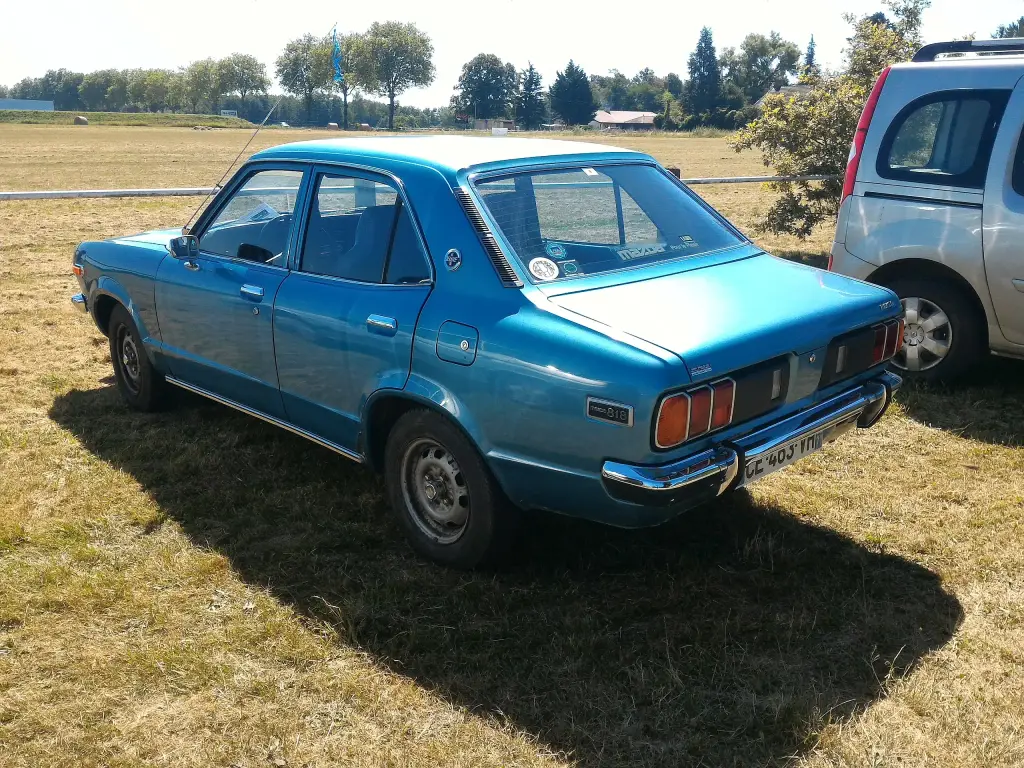
The Mazda Grand Familia was Mazda’s larger small car of the 1970s, built from 1971 to 1978. Export markets knew it as the Mazda 808 in Asia, Australia and New Zealand and as the Mazda 818 elsewhere, the different numbers being down to Peugeot’s trademark on three-digit model names with a zero in the middle. The rotary-engined version was the Mazda Savanna in Japan and the Mazda RX-3 abroad.
Mazda 818/808/RX-3 at a glance
| Built | 1971–1978 |
|---|---|
| Names | Grand Familia (Japan), 808, 818, Savanna/RX-3 for the rotary |
| Bodies | two-door coupé, four-door saloon, five-door estate |
| Engines | inline fours only: 1.3, 1.5 and 1.6 litres |
| Japan 1.3 | 87 PS at 6,000 rpm |
| Japan 1.5 | 92 PS at 5,800 rpm |
| Japan 1.6 | 100 PS, from October 1973 |
| Europe | 1.6 with 75 PS at launch, 1.3 with 60 PS from 1976 |
| USA | Mazda 808 with the 1.6 from 1972 to 1977 |
| US price | $2,997 in 1972, about $200 above a Honda Civic |
The RX-3 records are merged here because the RX-3 was the rotary version of the same Grand Familia body.
History of the Mazda 818/808/RX-3
The Grand Familia and Savanna were meant to replace the smaller Familia and to take on the Toyota Corolla, Nissan Sunny and Mitsubishi Colt. When the 1970s energy crisis arrived the smaller Familia actually sold better because of its fuel economy, so Mazda kept both and sold the Grand Familia as a larger, more upmarket alternative to the Familia/1000/1300. In North America it was Mazda’s smallest offering.
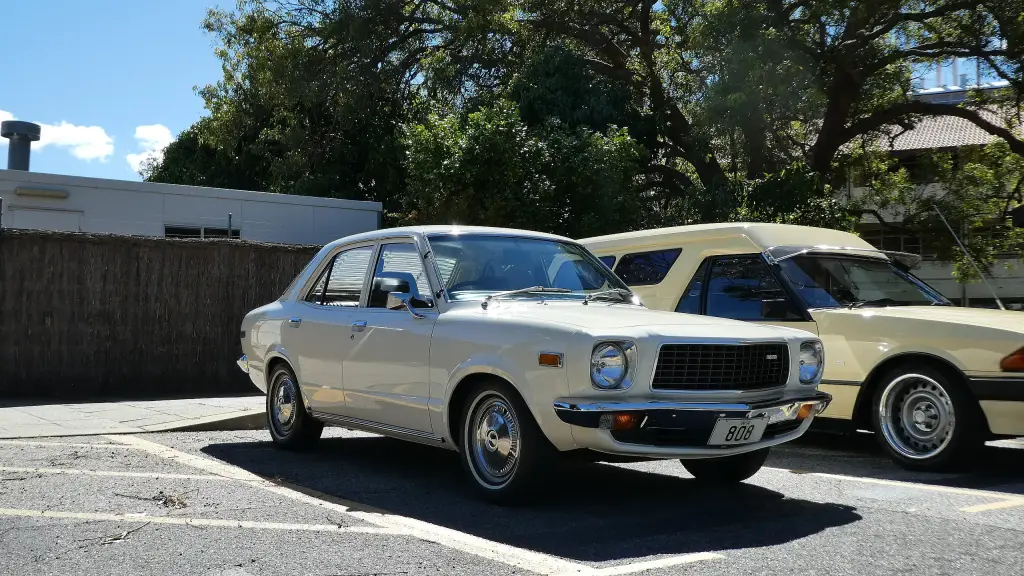
In Japan the Grand Familia came as a coupé, saloon and estate with 1.3- and 1.5-litre fours, the 1.5 being called the Grand Familia S. The 1.5 was replaced by a 1.6-litre engine in November 1973, an engine already used in export markets such as the United States for more than two years. Equipment levels ran from the basic 1300 Standard to the 1500 GL II, or GF II for the coupé, and at first only a four-speed manual gearbox was offered. Later de-smogged versions were sold as the Grand Familia AP, for Anti Pollution, with noticeably lower power.
In Europe buyers were first offered the 1.6 with 75 PS, and because of Peugeot’s trademark on numbers with a central zero the distributors sold the car as the Mazda 818. For 1976 a new 1.3-litre engine with 60 PS became standard, while the 1.6 remained available in some markets. In the United States the Mazda 808 was sold from 1972 to 1977, the name being used only for the 1.6-litre version. At $2,997 it cost some $200 more than a Honda Civic or Toyota Corolla, and it was at first only available as a two-door coupé with a four-speed manual or three-speed automatic. For 1975, as emissions rules tightened, power fell and the range grew to include the four-door saloon and five-door estate.
Design and features
- Rotary twin: the Savanna/RX-3 used the same body with a Wankel engine.
- Export numbering: 808 and 818 were the same car under different market names.
- Three bodies: coupé, saloon and estate, all with inline fours.
- Anti Pollution models: later Japanese versions were badged AP with lower output.
Mazda 818/808/RX-3 versions
- Grand Familia 1300 (1971): 1,272 cc, 87 PS in Japan.
- Grand Familia 1500 S (1972): 1,490 cc, 92 PS.
- Grand Familia 1600 (1973): 1,586 cc, 100 PS.
- Mazda 808 (1972–1977): US version with the 1.6.
- Mazda 818: European name, 1.6 then 1.3 from 1976.
- Mazda RX-3 / Savanna: the rotary-engined version.
The 818 sat above the Mazda 1000/1300 and shared its rotary engine with the RX-7‘s ancestors. More Mazdas are in the Mazda collection.
Sources
- Mazda Grand Familia, English Wikipedia: names, engines, US market
- Mazda 818, German Wikipedia: European engines and market
- マツダ・グランドファミリア, Japanese Wikipedia: Japanese range