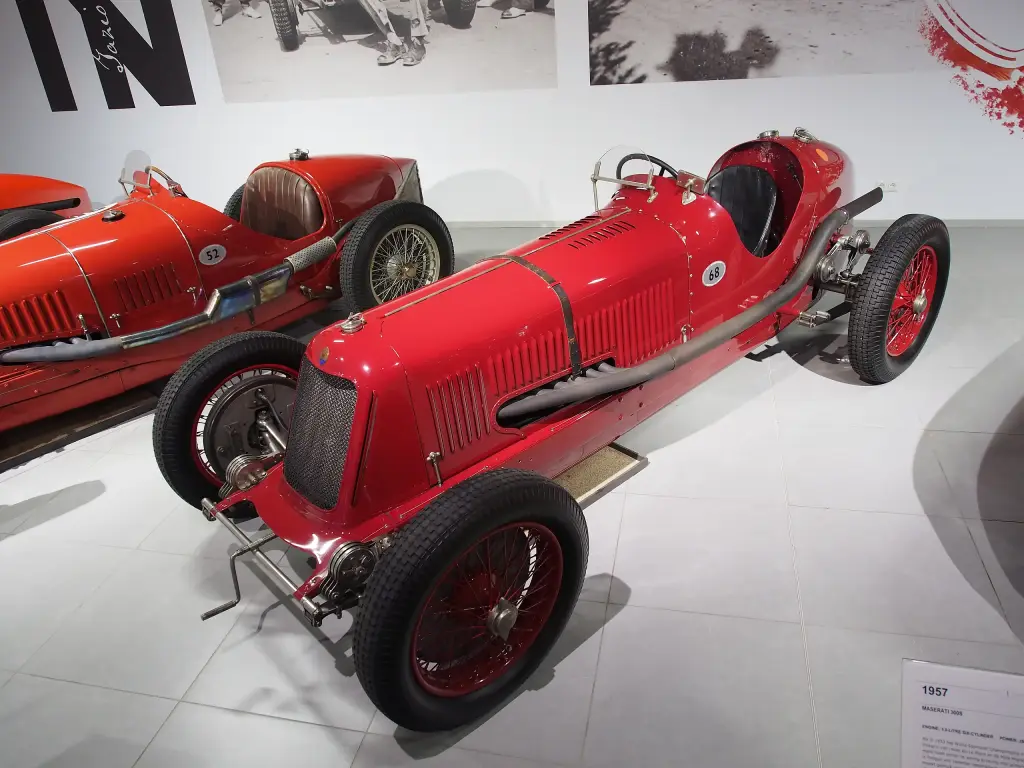
The Maserati 8CM is a Grand Prix racing car produced by Maserati in Bologna between 1933 and 1935. It used a three-litre straight-eight engine of about 220–240 hp, and Tazio Nuvolari won the 1933 Belgian Grand Prix with it. In 1934 and 1935 it struggled against the Alfa Romeo, Mercedes and Auto Union cars and was replaced by the 6C 34 and the V8RI.
Maserati 8CM at a glance
| Maker | Maserati, Bologna |
|---|---|
| Production | 1933–1935 |
| Class | Grand Prix, single-seater |
| Engine | 2,991 cc straight-eight, 69 mm × 100 mm |
| Power | about 220–240 hp (162–177 kW) at 5,500 rpm |
| Brakes | drums, 400 mm diameter |
| Chassis | derived from the 4CM 1100 |
| Weight | 785 kg, reduced to 750 kg |
| Debut | Tunis Grand Prix, 1933 |
| Replaced by | 6C 34 and V8RI |
Based on one source: the English Wikipedia article on the 8CM. It is a short article and there are no free photographs of the car, so the page has no pictures.
History of the Maserati 8CM
The 8CM mounted a three-litre straight-eight engine of 2,991 cc with a 69 × 100 mm bore and stroke. Maximum power was around 220–240 hp at 5,500 rpm, and the drum brakes measured 400 mm in diameter. The chassis had been derived from that of the 4CM 1100, which proved too light and was subject to flex; the situation improved when the driver Tazio Nuvolari asked for strengthening at the front, while the weight came down from 785 to 750 kg.
Racing
The car debuted at the Tunis Grand Prix in 1933 and won the 1933 Belgian Grand Prix in the hands of Nuvolari. In 1934 and 1935, however, it struggled to match the pace of the Alfa Romeo, Mercedes and Auto Union cars, and it was replaced by the 6C 34 and the V8RI model. The 8CM was the single-seat answer to the two-seater 8C, and it carried Maserati into the era of the 750 kg Grand Prix formula before the German teams arrived in force.
Design and features
- Straight-eight: 2,991 cc and about 220–240 hp at 5,500 rpm.
- Light chassis: derived from the 4CM 1100 and reinforced after Nuvolari’s request.
- Weight reduction: from 785 to 750 kg.
- Big drum brakes: 400 mm in diameter.
- 1933 Belgian GP win: Nuvolari’s victory at Spa.
Maserati 8CM versions
- 8CM (1933): the original car as raced at Tunis.
- Strengthened 8CM: front-end reinforcement and 750 kg weight.
The 8CM followed the two-seater Maserati 8C and was replaced by the Maserati 6C 34; its chassis roots go back to the 4CM. More cars are in the Maserati collection.
Sources
- Maserati 8CM, English Wikipedia: engine, chassis, racing history