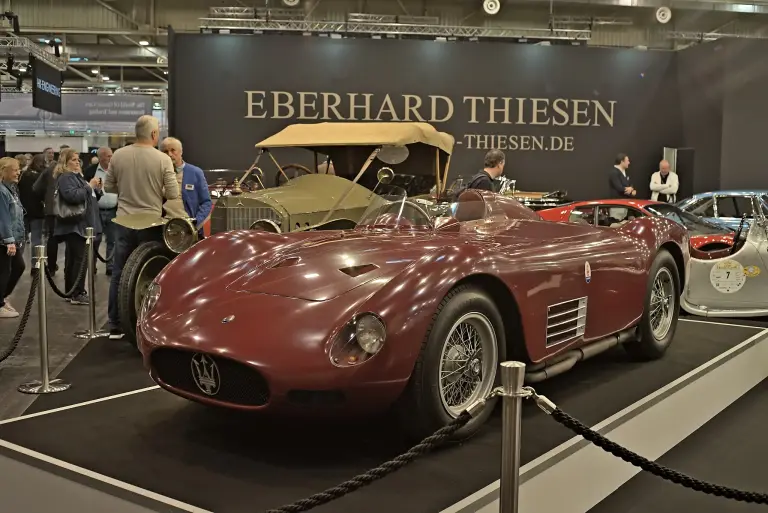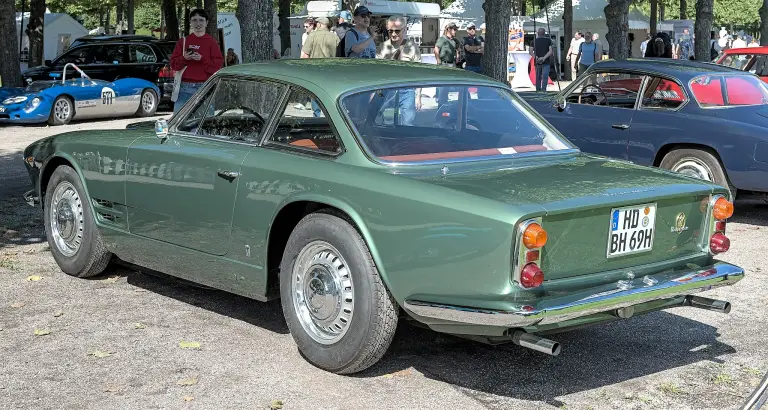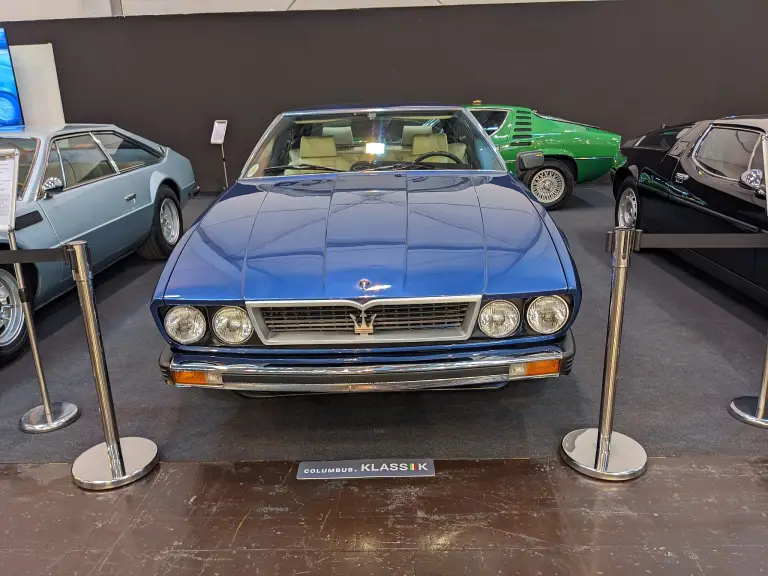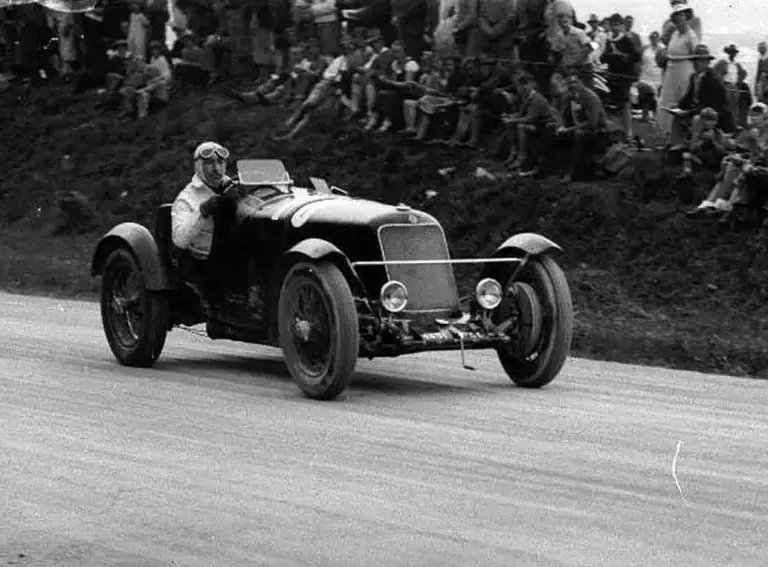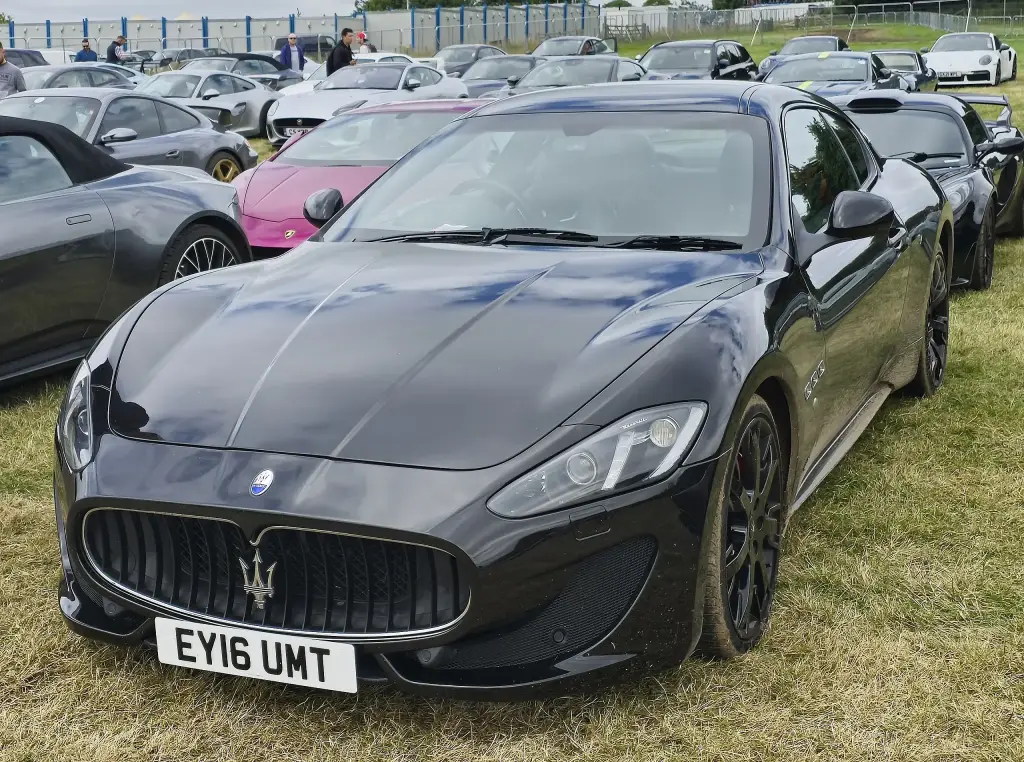
The Maserati GranTurismo and GranCabrio are grand tourers that succeeded the Maserati Coupé and Spyder. The first generation, Tipo M145, was introduced at the 2007 Geneva Motor Show and produced until December 2019, and it set a record for the fastest development of a car, going from design to production in just nine months. A total of 28,805 GranTurismo coupés were built.
Maserati GranTurismo at a glance
| Maker | Maserati, Modena |
|---|---|
| First generation | M145, 2007–2019 |
| Second generation | M189, from 2023 |
| GranTurismo engine | 4,244 cc V8, 405 PS, six-speed ZF automatic |
| GranTurismo S engine | 4,691 cc V8, 440 PS at 7,000 rpm |
| GranTurismo S torque | 490 N·m at 4,750 rpm |
| Suspension | double wishbones front, multilink rear |
| Drag coefficient | 0.33 |
| GranCabrio | convertible, 2010–2019 |
| Coupés built | 28,805 |
| Second generation | 3.0-litre Nettuno V6 or electric Folgore |
Based on one source: the English Wikipedia article on the GranTurismo and GranCabrio.
History of the Maserati GranTurismo
The first generation of the GranTurismo, Tipo M145, was unveiled at the 2007 Geneva Motor Show and built between 2007 and December 2019. It was developed unusually quickly because the proposed replacement for the Maserati Coupé looked as though it would be too expensive for Maserati to manufacture, and Fiat Chrysler Automobiles’ Ferrari division needed a small car in its range, so it was launched as the Ferrari California instead, leaving Maserati without a coupé.
GranTurismo and GranTurismo S
The original model was equipped with a 4.2-litre V8 developed with Ferrari, producing 298 kW (405 PS) and mated to a six-speed ZF automatic transmission. Its 2+2 body was derived from the Maserati M139 platform, shared with the Quattroporte V, with double-wishbone front suspension and a multilink rear, and it had a drag coefficient of 0.33. The better-equipped S variant was unveiled at the 2008 Geneva Motor Show with the enlarged 4.7-litre V8 shared with the Alfa Romeo 8C Competizione, rated at 324 kW (440 PS) at 7,000 rpm and 490 N·m at 4,750 rpm, mated to a six-speed automated manual built by Graziano Trasmissioni and shared with the Ferrari F430. The transaxle layout gave a 47/53 front-to-rear weight distribution. Standard suspension used fixed-setting steel dampers, with Skyhook adaptive suspension optional along with a new exhaust and upgraded Brembo brakes. Acceleration from 0 to 100 km/h took 4.9 seconds and the top speed was 295 km/h. The S also had new side skirts, unique 20-inch wheels, a small boot-lip spoiler and black headlight clusters; in North America it was offered only for the 2009 model year, with 300 units for sale.
MC, MC Sport Line and MC Stradale
The GranTurismo MC was the racing version of the S, developed for the FIA GT4 European Cup and based on the Maserati MC concept. It had a six-point racing harness, a 120-litre fuel tank, 380 mm front and 326 mm rear brake discs with six-piston front and four-piston rear callipers, 18-inch racing wheels, carbon-fibre bodywork, Lexan windows and a race interior, bringing weight down to about 1,361 kg. It shared the 4.7-litre V8 but was tuned to 450 PS and used the six-speed automated manual. The car was unveiled at the Paul Ricard Circuit and went on sale in October 2009 through the Maserati Corse programme; fifteen race cars were built and homologated for the European Cup and National Endurance Series, one of them raced by Cool Victory in Dubai in January 2010. The GranTurismo MC Sport Line, introduced in 2008, was a customisation programme based on the MC concept with carbon-fibre spoilers, mirror housings and interior parts, 20-inch wheels, stiffer springs, dampers and anti-roll bars, custom stability-control software and a 10 mm lower ride height; it began with the S and was extended to all GranTurismo variants and eventually all Maserati models in 2009. In September 2010 Maserati unveiled the GranTurismo MC Stradale, a more track-focused version inspired by the race car.
GranCabrio and the second generation
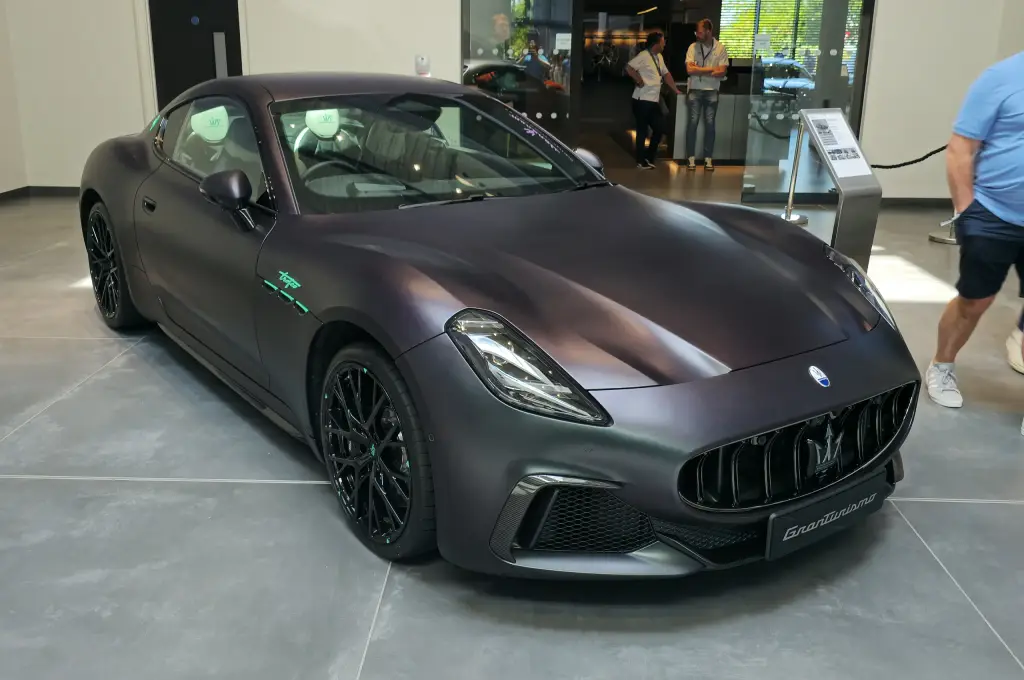
The GranCabrio convertible was unveiled at the 2009 Frankfurt Motor Show and produced from 2010 to 2019, with the GranCabrio Sport following in 2011 and the GranCabrio MC in 2013 with improved aerodynamics and a slight power increase. The second generation, GranTurismo II (M189), was revealed in 2022 and began production in April 2023 with three models, Modena, Trofeo and Folgore. Based on the Giorgio Sport platform, the petrol cars use a newly developed 3.0-litre Nettuno twin-turbocharged V6, with the Trofeo the most powerful at 405 kW (550 PS), while the Folgore is a battery-electric version with a range of 450 km. The GranTurismo Sport of 2012 replaced the S with a revised 4.7-litre engine.
Design and features
- Record development: nine months from design to production.
- Ferrari-based V8s: a 4.2-litre with 405 PS and a 4.7-litre with 440 PS.
- Transaxle layout: 47/53 weight distribution in the GranTurismo S.
- GranCabrio: the convertible version, built from 2010 to 2019.
- Racing connection: the MC and MC Stradale took the model to the track.
Maserati GranTurismo versions
- GranTurismo (2007–2019): 4.2-litre V8 with a six-speed ZF automatic.
- GranTurismo S (2008–2012): 4.7-litre V8 with 440 PS and an automated manual.
- GranTurismo MC (2009–2010): racing version with 450 PS, 15 built.
- GranTurismo MC Sport Line (2009–2019): carbon-fibre customisation programme.
- GranCabrio (2010–2019): convertible, with Sport and MC versions.
- GranTurismo II (2023–): Nettuno V6 or electric Folgore.
The GranTurismo replaced the Maserati Coupé and shares its platform thinking with the Maserati Quattroporte; the 8C-related engine also powered the 3200 GT’s successors. More cars are in the Maserati collection.
Sources
- Maserati GranTurismo, English Wikipedia: generations, versions, engines, production