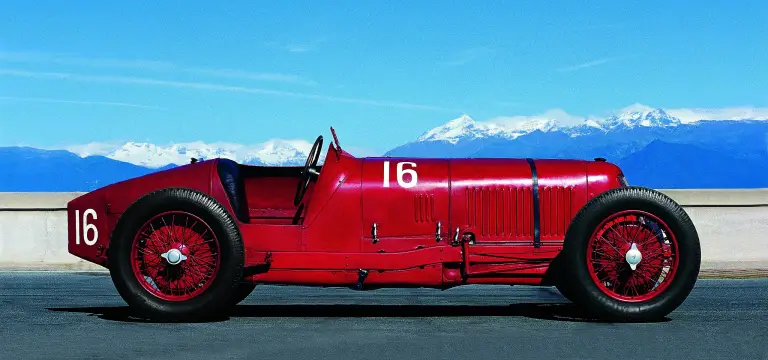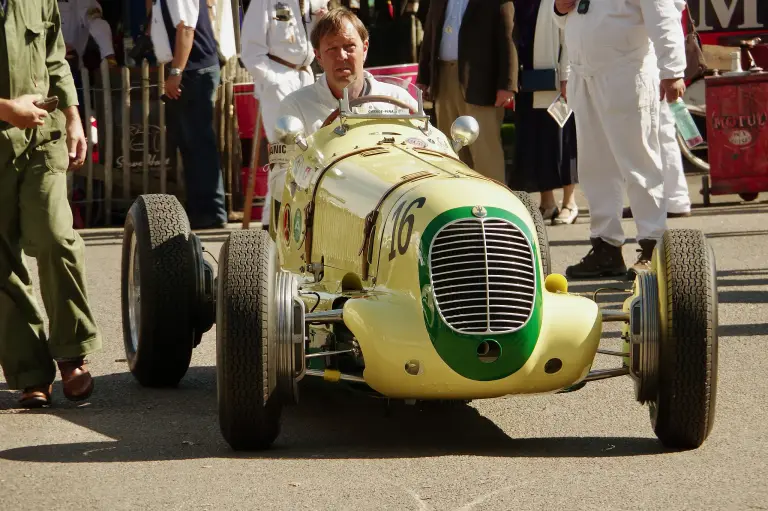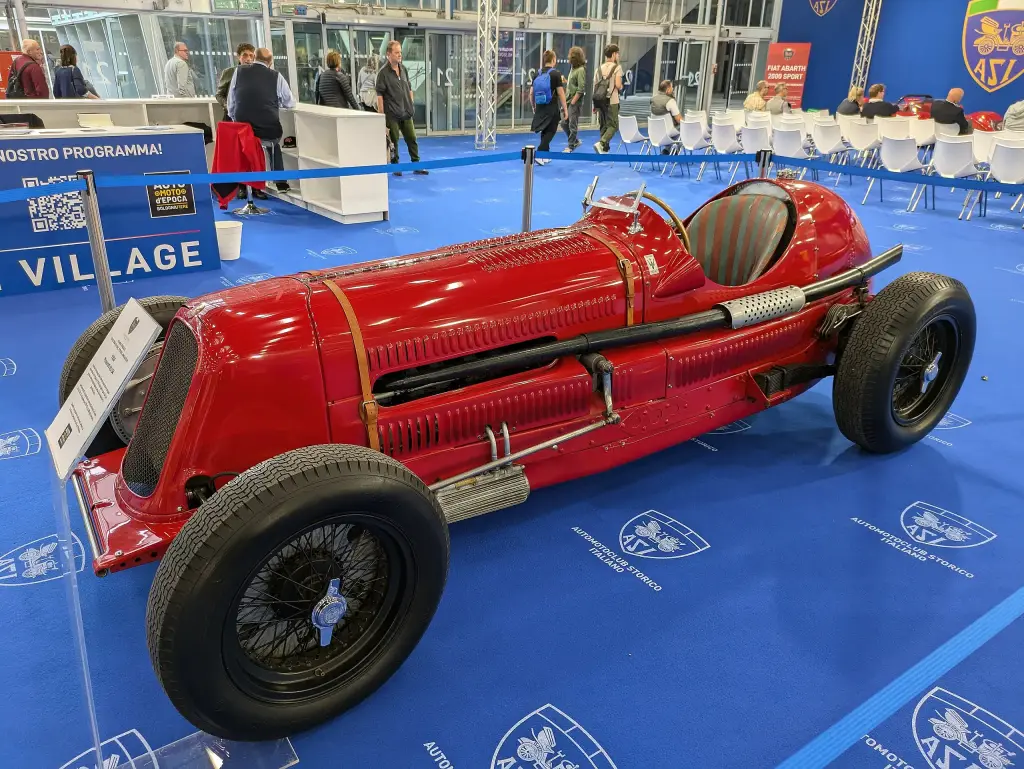
The Maserati 6C 34 is a 750 kg open-wheel Grand Prix racing car designed and built by Maserati in 1934–1935. Its inline-six produced 30 hp more than the eight-cylinder 8CM and weighed 13 kg less. Tazio Nuvolari finished third with it at the 1934 Masaryk Circuit race, behind the Mercedes-Benz and Auto Union cars but ahead of the Alfa Romeo P3.
Maserati 6C 34 at a glance
| Maker | Maserati, Modena |
|---|---|
| Production | 1934–1935 |
| Class | Grand Prix, single-seater |
| Weight | 750 kg |
| Engine | 3,724.1 cc inline-six, 84 mm × 112 mm |
| Valves | two per cylinder, twin overhead camshafts |
| Supercharger | Roots type |
| Carburettor | Weber 55AS1, upstream of the supercharger |
| Power | 270 hp (200 kW) at 5,300 rpm |
| Compression | 6.4:1 |
| Brakes | hydraulic drums |
| Top speed | 250 km/h |
History of the Maserati 6C 34
The 6C 34 was equipped with an inline six-cylinder engine that was 30 hp more powerful and 13 kg lighter than the eight-cylinder installed in the 8CM. Only five days after the engine tests on the dyno were completed, the car made its racing debut at the 1934 Italian Grand Prix, where brake problems spoiled its performance. At the next Grand Prix, on the Masaryk Circuit, Tazio Nuvolari finished third, beaten by the Mercedes-Benz and Auto Union cars but ahead of the Alfa Romeo P3.
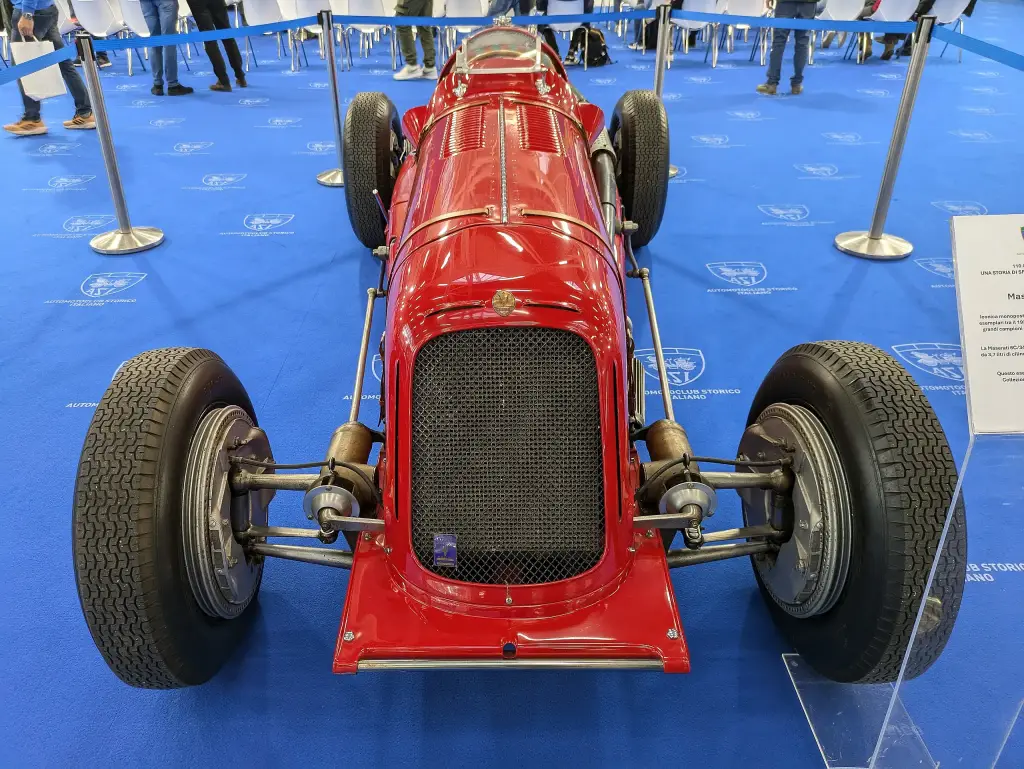
In 1935 the chassis was adjusted to stiffen it and new suspension was tested, now with independent wheels and the Parisi system. The 6C 34’s racing career ended as a semi-official car for the Scuderia Subalpina, driven by Achille Varzi, Pietro Ghersi and Eugenio Siena, with important placings but no victory.
Engine and chassis
The engine was an inline-six of 3,724.1 cc with an 84 mm bore and 112 mm stroke and a compression ratio of 6.4:1, producing 270 hp at 5,300 rpm. It was supercharged by a Roots-type compressor with a Weber 55AS1 carburettor mounted upstream of the compressor. Ignition was by a single Bosch or Scintilla magneto, the distribution used two valves per cylinder arranged in a 90° V with dual overhead camshafts, lubrication was forced with delivery and recovery pumps and cooling was by water circulation with centrifugal pumps. The brakes were hydraulic drums, the suspension used leaf springs and friction dampers with an anti-roll bar, later supplemented by independent wheels with the Parisi system, and the transmission was a four-speed gearbox plus reverse. The body was a single-seat aluminium shell on a chassis of two side members and steel cross members, and the car reached 250 km/h.
Design and features
- Light six: 30 hp more and 13 kg lighter than the 8CM’s eight-cylinder engine.
- 270 hp supercharged: a Roots blower and a Weber carburettor upstream of it.
- 750 kg: a lightweight Grand Prix car for its time.
- Nuvolari’s third place: at the 1934 Masaryk Circuit race, ahead of the Alfa Romeo P3.
- Parisi suspension: independent wheels tested on the 1935 car.
Maserati 6C 34 versions
- 6C 34 (1934): the original car with leaf-spring suspension.
- 1935 specification: stiffened chassis and Parisi independent suspension.
- Scuderia Subalpina cars: semi-official entries for Varzi, Ghersi and Siena.
The 6C 34 replaced the Maserati 8CM alongside the V8RI and was followed by the six-cylinder 6CM voiturette. Its predecessor in the line was the 8C. More cars are in the Maserati collection.
Sources
- Maserati 6C 34, English Wikipedia: racing history, engine, chassis
- Maserati 6C 34, Italian Wikipedia: technical data