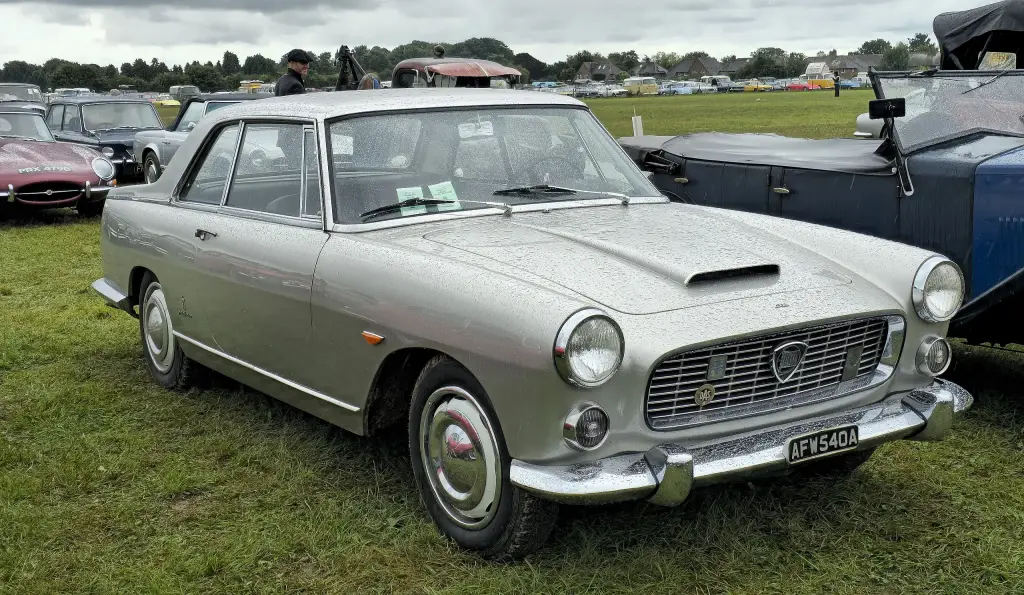
The Lancia Flaminia was a luxury car produced from 1957 to 1970 and the flagship of the range, replacing the Aurelia. It came as a saloon, a coupé and a cabriolet, with the two-door bodies built by Italian coachbuilders, and four stretched presidential limousines were made by Pininfarina for state visits. In 13 years 12,633 cars were sold, and unusually the coupé outsold the four-door saloon.
Lancia Flaminia at a glance
| Maker | Lancia, Turin |
|---|---|
| Production | 1957–1970 |
| Class | luxury car |
| Bodies | Berlina saloon, Coupé, GT, GTL, Convertibile, Sport |
| Engine | 60-degree V6, 2.5 litres, 2.8 from 1962 |
| Layout | front engine, rear-wheel drive |
| Transmission | four-speed transaxle at the rear |
| Front suspension | double wishbones with coil springs |
| Rear suspension | de Dion tube |
| Brakes | discs, optional drums on the first Berlina |
| Total built | 12,633 |
| Named after | the Via Flaminia |
History of the Lancia Flaminia
From Aurelia to Flaminia
When the Pesenti family took control of Lancia in 1955, Antonio Fessia replaced Vittorio Jano, who moved to Ferrari, and began revising the flagship. The result was the Flaminia, a less lively but more modern and luxurious car than the Aurelia. The saloon appeared first: an early version was shown in April 1956, while the definitive car, with all doors now hinged at the front and a substantially wider body, was displayed at the Geneva Motor Show in March 1957, though first deliveries took several more months. It was named after the Via Flaminia, continuing Lancia’s habit of using Roman roads.
Pininfarina’s Florida
The two original bodies were developed by Pinin Farina from two Aurelia-based show cars of its own called Florida. The Florida I of the 1955 Turin show was a saloon with rear-hinged doors; the Florida II of the 1956 Geneva show was a two-door coupé that became Battista Farina’s personal car. The Flaminia’s shape, with its horizontal grille instead of the traditional Lancia shield, its clean flanks and its recessed rear window between fins, marked a stylistic break from the rounded pontoon forms of the post-war years and influenced European and American design for years afterwards. Farina later used the design as the basis for BMC’s Farina saloons, including the Austin Westminster.
Bodies and coachbuilders
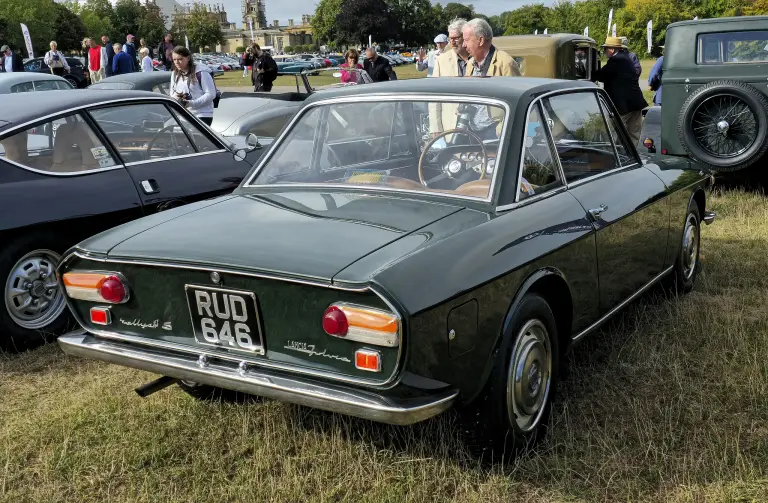
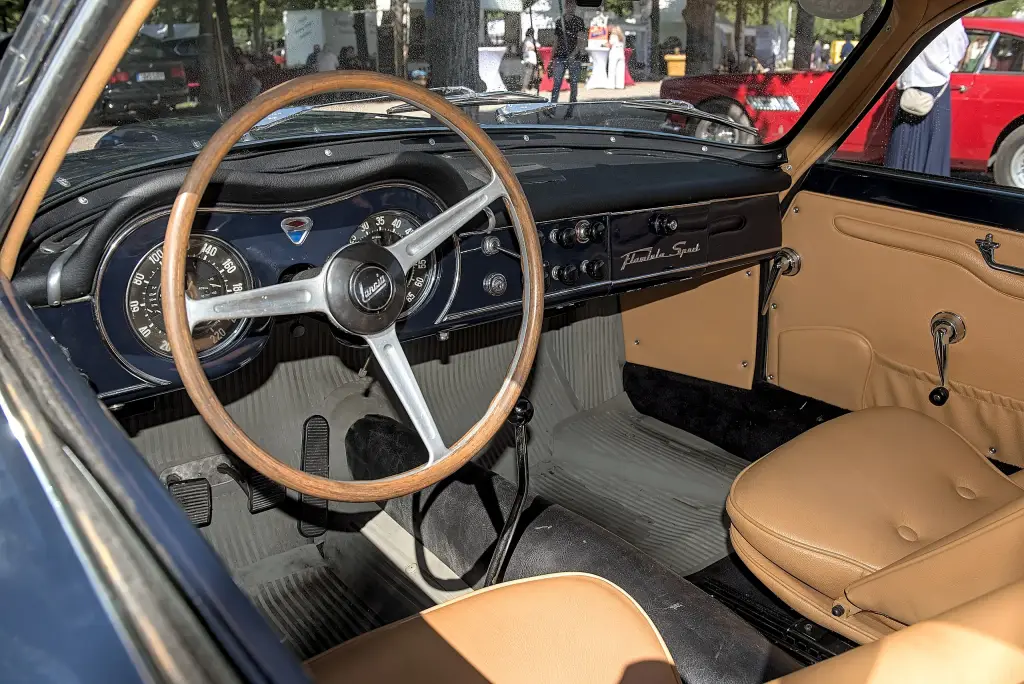
The Berlina was the only body built by Lancia itself and the only one to last through the whole production run, 3,344 cars with the 2.5-litre engine and 599 with the 2.8; they were assembled at the old Borgo San Paolo works, the last model built there. The Pininfarina Coupé was a 2+2 on a shortened wheelbase, with round headlamp frames rather than the saloon’s slightly raised ones, and 5,236 were built to 1967. Touring made the GT, GTL and Convertibile in aluminium, identifiable by four round headlamps and a short cabin: 1,718 GTs, 300 GTLs and 847 Convertibiles. Zagato’s two-seat Sport, with its rounded aluminium body and pop-out door handles, appeared in the Ian Fleming novel On Her Majesty’s Secret Service; the Super Sport replaced it in 1964 with a 2.8-litre 152 CV engine, and 593 Sport and Super Sport cars were built to 1967.
Presidential cars and the end
When Queen Elizabeth II announced a visit to Italy in 1960, President Giovanni Gronchi commissioned Pininfarina to supply official cars, and four stretched presidential Flaminia limousines were built. The 2.8-litre engine arrived in 1963 and the model was replaced in 1976 by the Gamma as Lancia’s flagship. Production ended in 1970, by which time no direct Lancia successor existed in the class: the Fiat group’s only comparable car was the Fiat 130.
Design and features
- V6 and transaxle: a development of the Aurelia engine, driving through a rear-mounted gearbox.
- Modern chassis: double wishbones at the front and a de Dion rear axle.
- Coachbuilt choice: Pininfarina coupé, Touring aluminium GT and convertible, Zagato Sport.
- Presidential limousines: four stretched cars by Pininfarina for state occasions.
Lancia Flaminia versions
- Berlina: the Lancia-built saloon, 3,344 with 2.5 litres and 599 with 2.8.
- Coupé: Pininfarina 2+2, 5,236 built.
- GT, GTL and Convertibile: Touring aluminium bodies, 1,718, 300 and 847 built.
- Sport and Super Sport: Zagato two-seaters, 593 built.
- Presidenziale: four stretched limousines for the Italian state.
The Flaminia replaced the Lancia Aurelia and was itself followed by the Lancia 2000 and later the Lancia Gamma. More cars are in the Lancia collection.
Sources
- Lancia Flaminia, English Wikipedia: development, body styles, production numbers, presidential cars
- Lancia Flaminia, Italian Wikipedia: Fessia, design history, styling influence