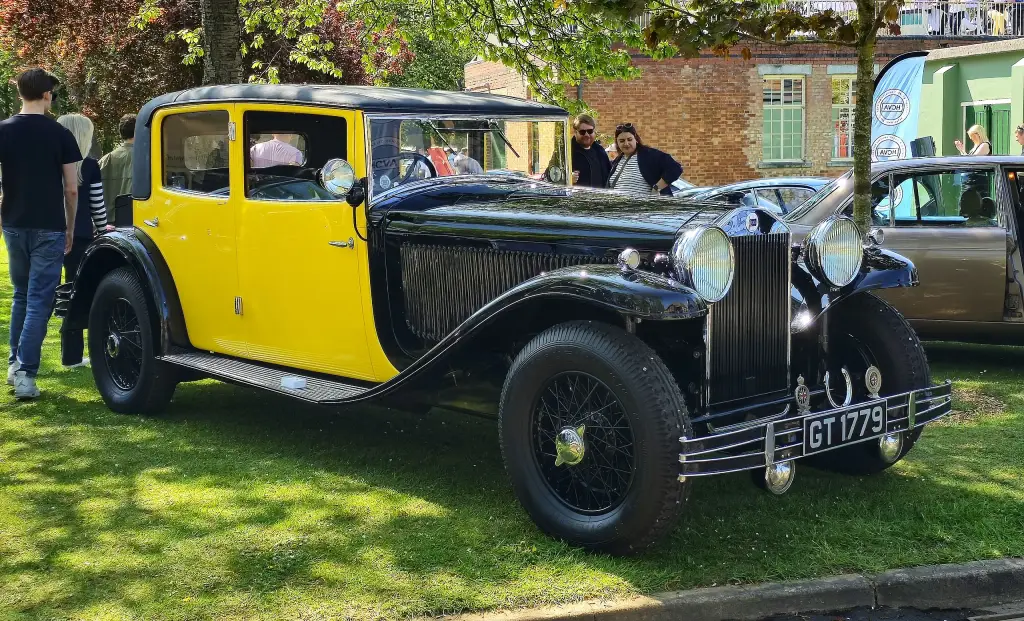
The Lancia Dilambda was produced from 1928 to 1935 and shown at the Paris Motor Show in 1929. Its 4-litre V8 with a 24-degree angle made it the flagship of the range, above the Lambda, and it was the first Lancia with an eight-cylinder engine. Three series were built, together accounting for almost 1,700 cars.
Lancia Dilambda at a glance
| Maker | Lancia, Turin |
|---|---|
| Production | 1928–1935 |
| Shown | Paris Motor Show, 1929 |
| Engine | 3,960 cc V8, 24 degrees between banks |
| Power | about 100 hp at 3,800–4,000 rpm |
| Top speed | 120–130 km/h |
| Gearbox | four-speed manual |
| Chassis | box-section frame with X brace |
| Suspension | independent front, live axle rear |
| First series | 1,104 cars, 1928–1931 |
| Later series | 300 cars second, 281 cars third, long wheelbase |
| Total | almost 1,700 |
History of the Lancia Dilambda
A successor to the Trikappa
The Dilambda project began in 1926, when Vincenzo Lancia decided to replace the Trikappa with another large eight-cylinder car. The first plan, coded 220 and clearly inspired by the Lambda, was for a car of about three to three and a half litres. Then an American visitor convinced Vincenzo of the opportunities in the United States market, and without warning his closest colleagues he dropped the project in hand and redirected the work towards a larger car.
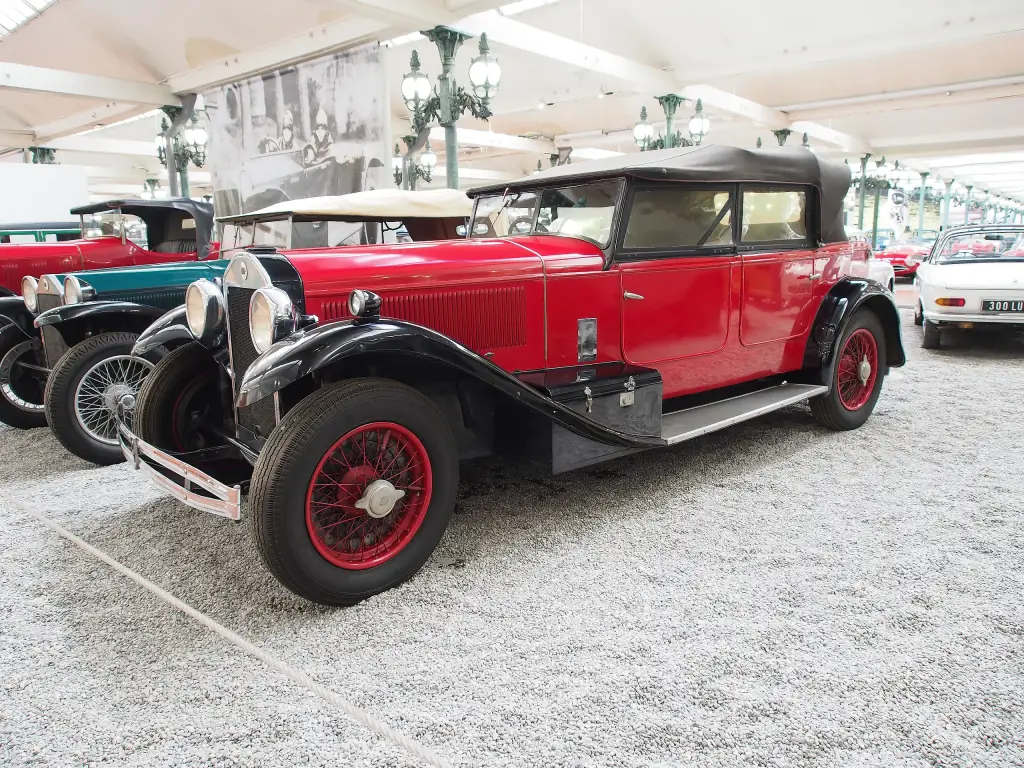
Chassis and engineering
Convinced that unitary construction did not suit a big, heavy car, Lancia had his engineers design the strongest and stiffest possible frame, which still used the Lambda’s independent front suspension. The first frame, of boxed side members, was patented in June 1927; a further patent of January 1928 describes the final layout, with boxed side members, an X-shaped cross brace with holes for the propeller shaft and a rear fuel tank that doubled as a stiffening cross member. The V8 had a 24-degree angle and 3,960 cc, giving around 100 hp at 3,800–4,000 rpm and a top speed of 120 to 130 km/h depending on axle ratio, wheelbase and weight. Road tests of the day praised its flexibility — it was said to be able to pull away in fourth — and its handling despite its size.
Series and customers
Prototypes and a run of about ten pre-series cars were sent to New York for display at the Commodore Hall. The long-wheelbase type 227 was built from 1929 to 1931 in 986 examples, the short-wheelbase type 229 joined it in 1931 and reached 418, and the final type 232 of 1933 returned to the long wheelbase and was built until 1935 in 281 units. The first series accounted for 1,104 cars, the second of 1931–1933 for 300 with a modified gearbox and brakes, and the third for 281 with a chassis restyled for better aerodynamics. A Dilambda chassis cost 58,000 lire in 1931, against 24,500 for an Artena chassis and 14,900 for a complete Fiat 514 spyder.
Bodies and details
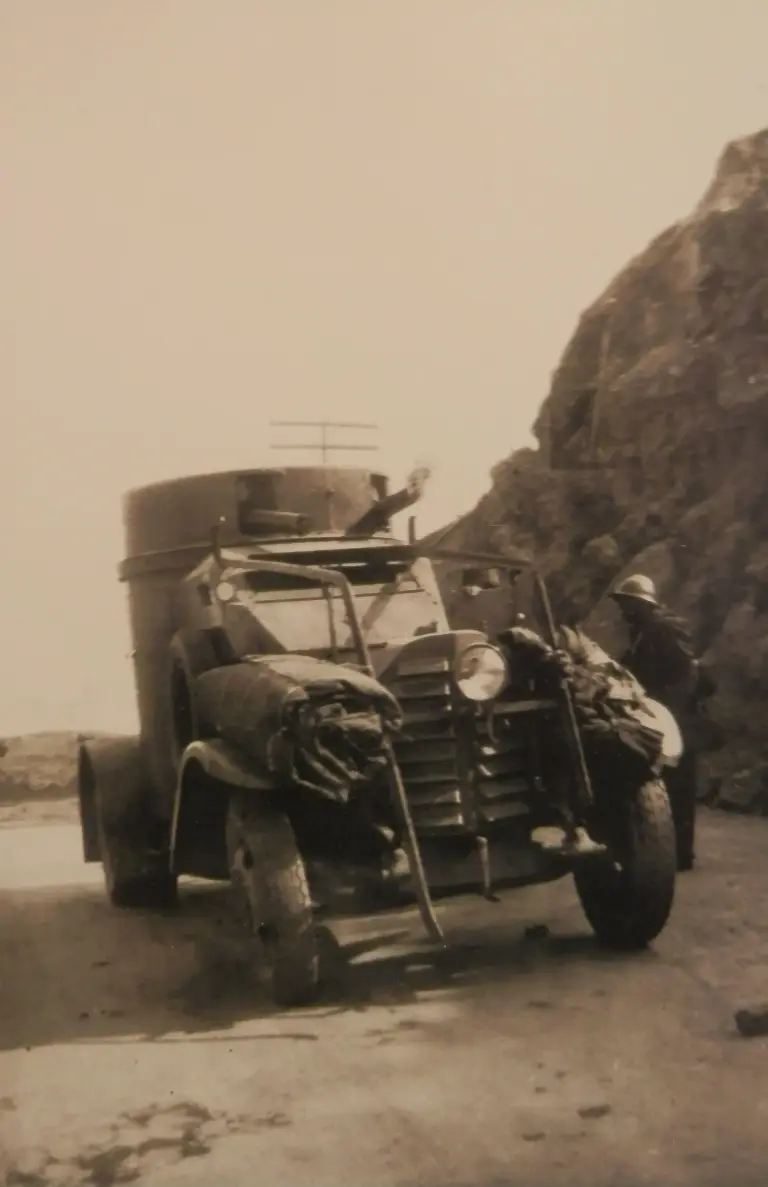
Lancia built the Dilambda as a saloon and torpedo, but the chassis was the main attraction: Italian and foreign coachbuilders made countless special bodies on it. The car introduced silentbloc bearings at the joints, a special engine oil pump, a thermostat controlling cooling water temperature and centralised chassis lubrication. Battista Farina, before opening his own carrozzeria, suggested the unusual shield-shaped headlamps that matched the badge on the radiator. The Dilambda also served with the Italian air force, the Regia Aeronautica.
Design and features
- First Lancia V8: a 4-litre engine with a 24-degree angle and about 100 hp.
- Rigid frame: boxed side members, an X brace and a fuel tank used as a cross member.
- Silentbloc bearings: rubber joints throughout the chassis to cut vibration.
- Coachbuilder favourite: a separate chassis that took bodies from many Italian and foreign carrozzerie.
Lancia Dilambda versions
- Type 227: long wheelbase, 986 cars, 1929–1931.
- Type 229: short wheelbase from 1931, 418 cars.
- Type 232: final long-wheelbase series, 281 cars, 1933–1935.
- Saloon and torpedo: factory bodies, with many coachbuilt alternatives.
The Dilambda was the flagship above the Lancia Lambda, and it was eventually replaced at the top of the range by the Lancia Astura. More cars are in the Lancia collection.
Sources
- Lancia Dilambda, English Wikipedia: series and production numbers
- Lancia Dilambda, Italian Wikipedia: project history, chassis patents, engines, prices