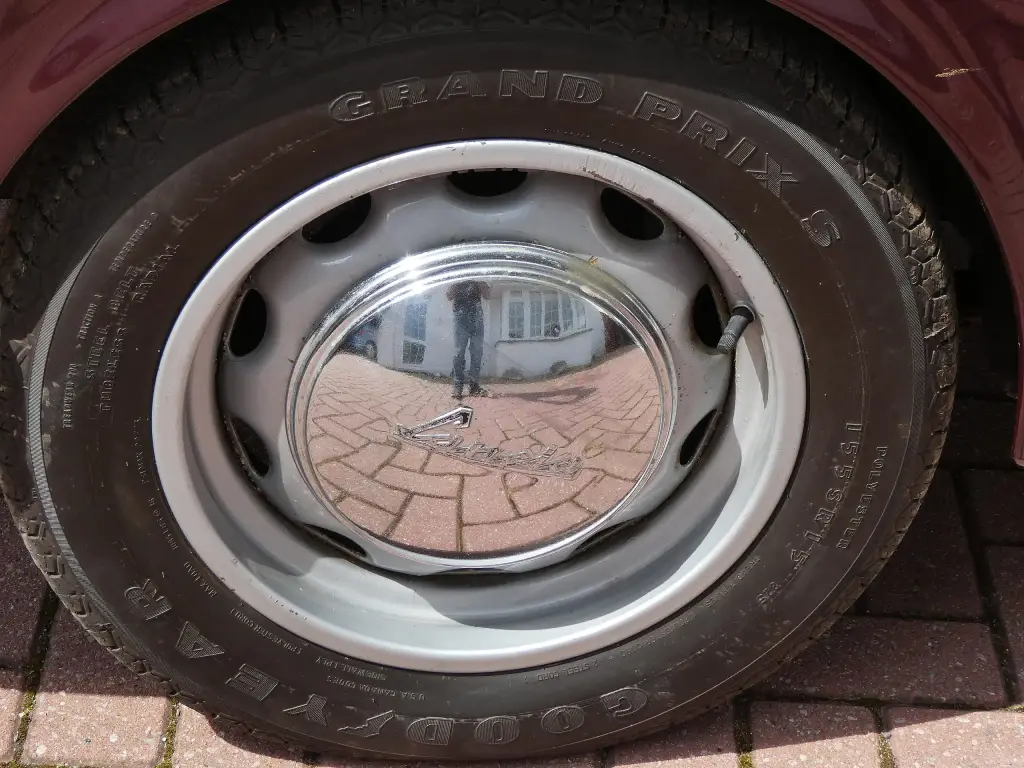
The Lancia Appia was a small passenger car introduced in April 1953 as a replacement for the Ardea and built for ten years. It used a 1,089 cc V4 and sliding pillar front suspension, making it the last of a line of Lancias that began with the Lambda of 1922. In all, 107,000 were built, including commercials and chassis for coachbuilders.
Lancia Appia at a glance
| Maker | Lancia, Turin |
|---|---|
| Production | 1953–1963 |
| Class | small family car |
| Engine | 1,089 cc V4, about 10 degrees between banks |
| Power | 38, 43 and 48 PS by series |
| Top speed | 120 to 132 km/h |
| Gearbox | four-speed, in unit with the engine |
| Suspension | sliding pillar front, live axle rear |
| Rear doors | aft-hinged, without a centre pillar |
| Built | 107,000, of which 98,000 saloons |
| Chassis to coachbuilders | 5,161 |
| Named after | the Via Appia, a Roman consular road |
History of the Lancia Appia
Replacing the Ardea
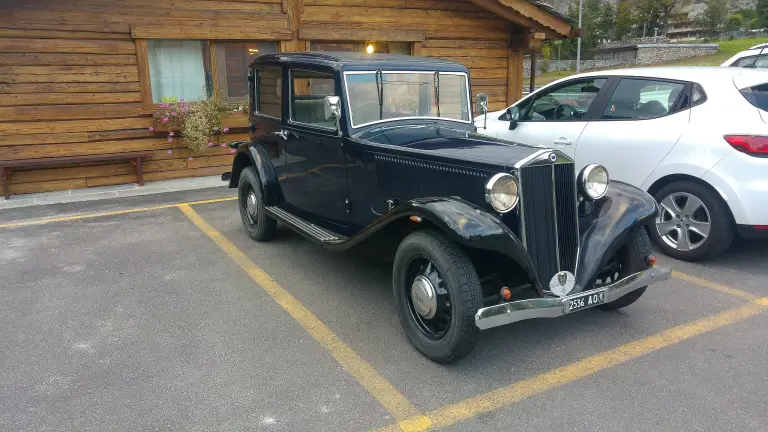
After the Aurelia of 1950, Lancia still built the pre-war Ardea and needed a modern small car. The new model was designed under Vittorio Jano. An updated version of the Ardea’s 17-degree V4 was considered first, but a clean-sheet design was chosen: a V4 with an included angle of little over 10 degrees, the narrowest of any V4, with twin camshafts in the block instead of overhead. Like the Ardea, which looked like a scaled-down Aprilia, the Appia imitated the Aurelia, with a solid rear axle and a four-speed gearbox in unit with the engine.
First series, 1953–1956
The Appia Berlina was shown at the Turin Motor Show in April 1953. The standard right-hand-drive car was coded C10, the left-hand-drive C10S. Its 1.1-litre engine gave 38 PS and a claimed 120 km/h. To save weight the doors and rear wings of the first few thousand cars were aluminium, and so were the bumpers, which dented easily. Rear doors were hinged at the back, as on the 1933 Augusta, so there was no centre pillar. Inside there were bucket front seats, a column gear lever, an ivory plastic steering wheel and grey or beige Lancia wool cloth. 20,025 first-series saloons were made.
Second series, 1956–1959
Antonio Fessia joined Lancia as technical director in April 1955 and set about correcting the Appia’s faults. The second series appeared at the Geneva Motor Show in March 1956 with a redesigned rear, a wheelbase 3 cm longer, rectangular instead of round indicators, steel bumpers with overriders and an outside fuel filler. The engine received hemispherical combustion chambers, new pistons, a new carburettor and different camshafts, raising output to 43 PS. Inside, a bench seat replaced the buckets and the steering wheel and switches turned from ivory to black. 22,425 were built.
Third series and coachbuilt cars
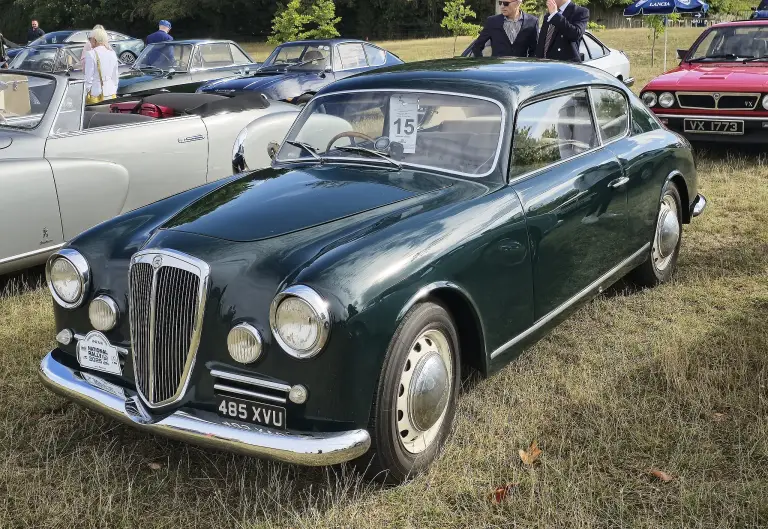
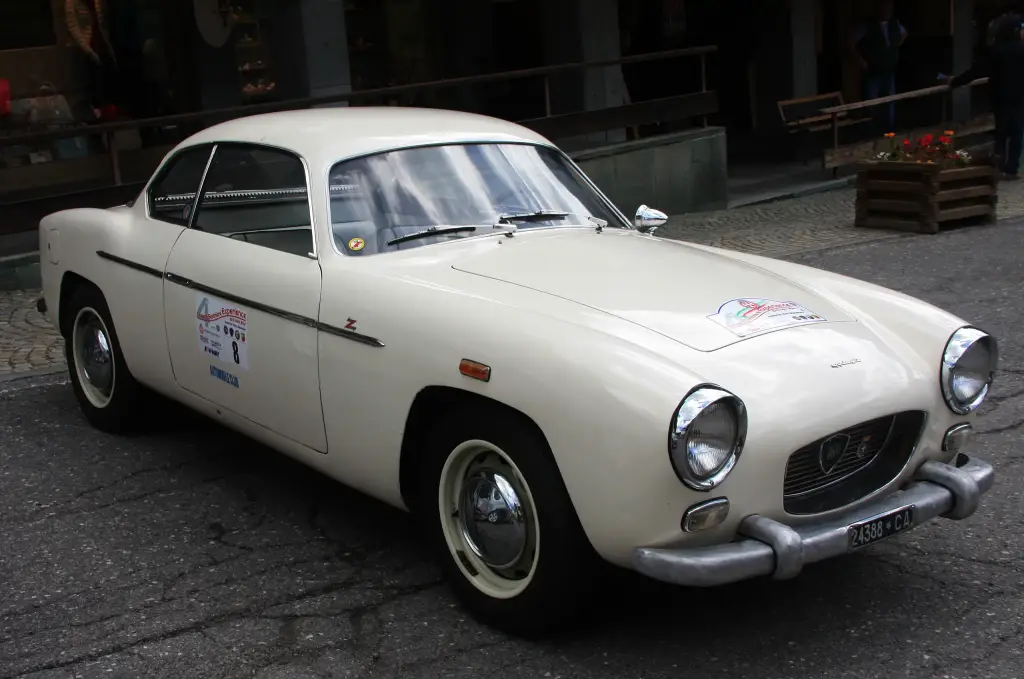
The third series of March 1959 abandoned Lancia’s traditional radiator-shell grille for a horizontal one inspired by the Flaminia, raised power to 48 PS and top speed to 132 km/h, and added the Superduplex split braking circuit. Alongside the saloons, Lancia supplied chassis to Italian coachbuilders: Pininfarina made a coupé, Vignale a convertible and a two-door saloon called the Lusso, and Zagato an aluminium-bodied GT, the first of many Zagato Lancias. Commercial versions, a van and a light truck, accounted for 3,863 of the 107,000 Appias built. Engine and running gear were also used by small builders for Formula Junior single-seaters between 1959 and 1961.
Design and features
- Narrow-angle V4: about 10 degrees between the banks, with twin camshafts in the block.
- Sliding pillar front suspension: a Lancia tradition that ended with the Appia.
- Pillarless doors: aft-hinged rear doors and no centre pillar, as on the Augusta.
- Coachbuilder appeal: 5,161 chassis went to Pininfarina, Vignale, Zagato and others.
Lancia Appia versions
- First series: 38 PS, aluminium doors and bumpers on early cars.
- Second series: 43 PS, longer wheelbase, steel bumpers.
- Third series: 48 PS, horizontal grille, split braking circuit.
- Pininfarina coupé and Vignale convertible: factory-listed coachbuilt models.
- Zagato GT: aluminium-bodied sporting coupé.
- Commercial versions: van and light truck.
The Appia replaced the Lancia Ardea and shared its layout with the larger Lancia Aurelia. More cars are in the Lancia collection.
Sources
- Lancia Appia, English Wikipedia: series history, production numbers, engine
- Lancia Appia, Italian Wikipedia: prices, coachbuilders, Formula Junior use