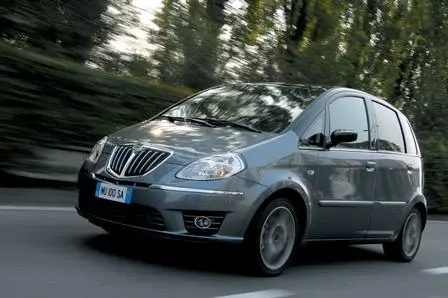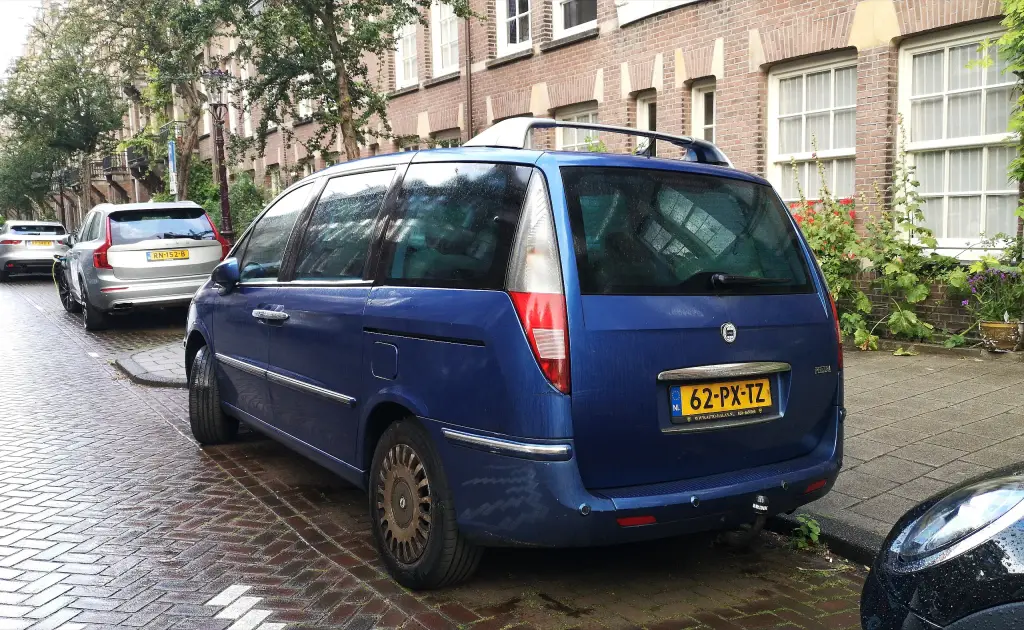
The Lancia Phedra was a large MPV produced from September 2002 to November 2010 at the Sevel Nord plant in Valenciennes, France, where Fiat and PSA built the second-generation Eurovans together. It was the Lancia version of the family that also produced the Citroën C8, the Peugeot 807 and the Fiat Ulysse, and it replaced the Zeta as the most luxurious of the group.
Lancia Phedra at a glance
| Maker | Sevel Nord, Valenciennes, for Lancia |
|---|---|
| Production | 2002–2010 |
| Class | large MPV, D-segment |
| Siblings | Citroën C8, Peugeot 807, Fiat Ulysse |
| Engines | 2.0 and 2.2 turbodiesel, 2.0 and 3.0 V6 petrol |
| Power | 109 to 204 hp |
| Top speed | 180 to 200 km/h |
| Gearbox | six-speed manual or six-speed automatic |
| Seats | up to eight |
| Storage | 60 compartments |
| Facelift | January 2008 |
| Built | 2002–2010 |
The technical and market detail comes from the Italian Wikipedia page on the Phedra; the English article covers the whole Eurovan family.
History of the Lancia Phedra
Why a second generation
The first Eurovan generation had been a moderate success, partly because its four versions were too similar and lacked personality. The Fiat and PSA joint venture therefore started again to create four new MPVs with more modern exterior and interior design and, above all, clearer differentiation from each other. The bodies were longer, which helped interior space. The Phedra was the Lancia version and replaced the Z, which it followed as the premium member of the family.
Bigger, more elegant, more practical
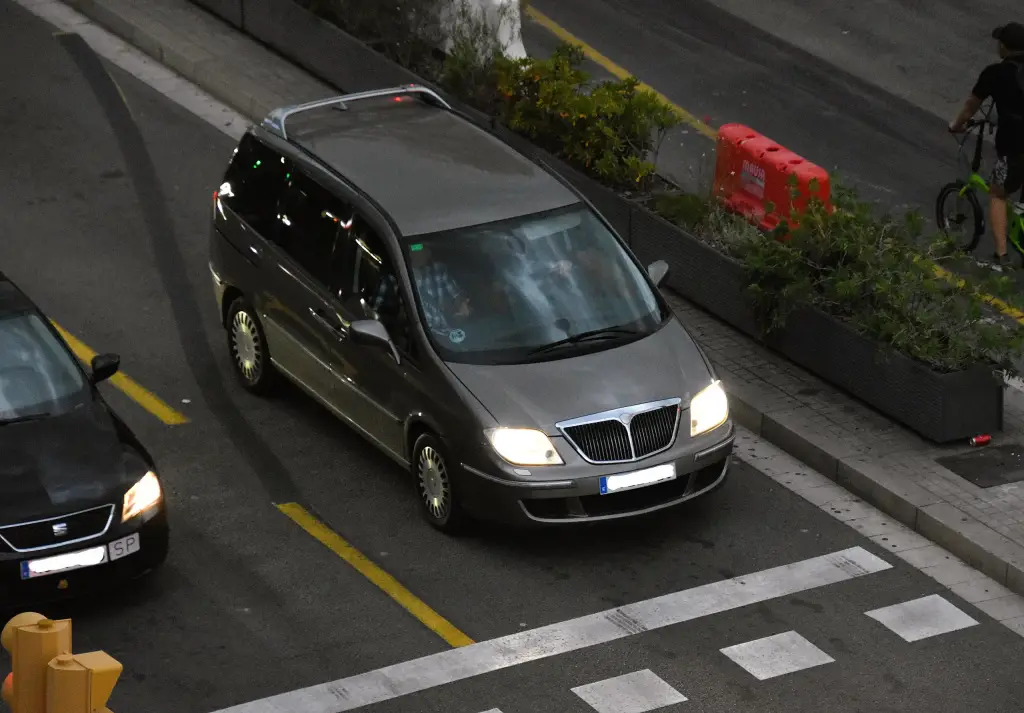
The Phedra was more elegant and more modern than the Z, and mechanically improved with new engines and better versions of the engines carried over. It was designed to carry up to eight people in comfort and safety with plenty of room to move inside, and the seats could be rearranged, removed or moved to suit any load. There were 60 storage compartments. The rear doors were sliding, with an electric opening operated by remote control available, and the instruments moved to the centre of the dashboard with a more modern design. Many versions had the Connect Nav+ system with a GSM phone and satellite navigation on a 7-inch screen, and safety equipment included ABS, ESP and ASR with six airbags as standard. From the driver’s seat the rear doors and the optional sunroof panels could be locked against accidental opening.
Engineering
The base platform was entirely new and not shared with the commercial vehicles such as the Scudo, Expert and Jumpy. Front suspension was conventional MacPherson, the rear used trailing arms with independent wheels and an anti-roll bar, and drive went to the front wheels. The engines were PSA units: 2.0 and 2.2-litre common-rail turbodiesels of 109 and 128 hp with top speeds of 180 and 190 km/h, later replaced by 120 and 136 hp versions with a particulate filter, and petrol engines of 2.0 litres and 136 hp or a 3.0-litre V6 of 204 hp available only with an automatic gearbox. Transmissions were six-speed manual or six-speed automatic. From 2005 new paint colours were added, and from May 2007 a DVD version with screens behind the front headrests.
The 2008 facelift
A restyled Phedra was presented in January 2008 and went on sale immediately. It introduced a 2.2-litre twin-turbo diesel of 170 hp with a particulate filter, reaching 100 km/h in 10.8 seconds and 200 km/h with either the six-speed manual or automatic gearbox. Compared with the other Eurovans, the Phedra resembled the Fiat Ulysse most of all in its rectangular headlamps, but the Lancia had its own two air intakes in a one-piece bumper, one-piece headlamp units instead of the Ulysse’s split ones, and thin vertical tail lamps in place of the square units of the first generation. Production ended in November 2010.
Design and features
- Premium Eurovan: the most luxurious of the four badge-engineered MPVs.
- Eight seats: removable and sliding middle and rear seats for maximum flexibility.
- 60 storage compartments: designed around family practicality.
- PSA engines: economical common-rail diesels and a 3.0-litre V6 petrol option.
Lancia Phedra versions
- 2.0 and 2.2 turbodiesel: 109 to 170 hp, including the twin-turbo of 2008.
- 2.0 petrol: 136 hp, six-speed manual.
- 3.0 V6 petrol: 204 hp, automatic only.
- DVD version: rear entertainment screens from 2007.
The Phedra replaced the Lancia Zeta as the Lancia member of the Eurovan family and shared its engineering with the Fiat Ulysse. More cars are in the Lancia collection.
Sources
- Eurovans, English Wikipedia: second generation, dimensions, differences
- Lancia Phedra, Italian Wikipedia: history, equipment, engines, facelift