The Lancia Zeta, also marketed as the Lancia Z, was the Lancia member of the first-generation Eurovan family, built at the Sevel Nord plant in France from 1994 to 2002 alongside the Citroën Evasion, Peugeot 806 and Fiat Ulysse. With its big chrome grille it was positioned as the premium version, not available with base engines and exceptionally well equipped, with prices up to 20 per cent higher than equivalent versions of its siblings.
Lancia Zeta at a glance
| Maker | Sevel Nord, France, for Lancia |
|---|---|
| Production | 1994–2002 |
| Class | large MPV |
| Also called | Lancia Z |
| Siblings | Citroën Evasion, Peugeot 806, Fiat Ulysse |
| Engines | PSA petrol and diesel, 2.0 16-valve with automatic option |
| Layout | front engine, front-wheel drive |
| Gearbox | five-speed manual, four-speed automatic on the 2.0 16v |
| Seats | two front, three middle, two or a bench in the rear |
| Rear doors | sliding |
| Facelift | October 1998 |
| Not sold in | the United Kingdom |
The Zeta is described in the English Wikipedia article on the Eurovan family, which has no separate page for the Lancia version.
History of the Lancia Zeta
Four vans, one factory
The Eurovans were a family of large MPVs from Citroën, Peugeot, Fiat and Lancia built at the jointly owned Sevel Nord factory in France, sharing their mechanicals and body structure with the Sevel Nord light commercial vans: the Citroën Jumpy, Fiat Scudo and Peugeot Expert. The first generation was launched in March 1994 with the Citroën Evasion, Fiat Ulysse, Lancia Zeta and Peugeot 806. The term Eurovan was not used by the brands themselves but by the motoring press. The vans were smaller than American MPVs such as the Chrysler Voyager, and unlike the Voyager and later the Espace they came in one size only.
What made the Zeta different
The four cars were almost identical, differing in grilles, lower tailgates and tail lights, wheel covers or alloy wheels, badges and trim levels. Lancia named its version with the previously unused Greek letter Zeta, following its tradition of Greek-letter model names, and also marketed it as the Lancia Z. The big chrome grille and the high standard of equipment made it the premium member of the family, and it was never offered with the base engines of its siblings.
Inside
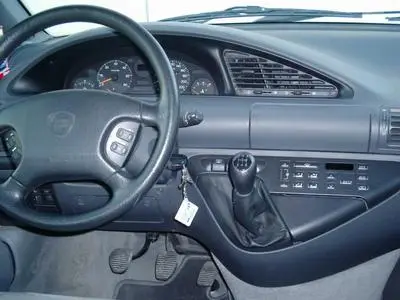
The gear lever was mounted on the dashboard rather than on the floor, and the handbrake sat on the door side of the driver’s seat, which allowed the middle console to be removed and opened a passage between the front seats. The seating arrangements included two fixed front seats, swivelling on some versions, three individual removable seats in the middle row, and either two individual removable seats or a three-seater bench in the third row. Rear side doors were sliding, a feature shared with the commercial siblings. Engines were PSA units from the XU and XUD families whatever the badge, later replaced by the EW and DW engines, with five-speed manual gearboxes as standard apart from the 2.0-litre 16-valve petrol, which could be ordered with a four-speed automatic.
The facelift and the end
In October 1998 the Eurovans received a mild facelift. The Zeta was not marketed in the United Kingdom, where Lancia had already withdrawn from right-hand-drive sales, and it was replaced in 2002 by the second-generation Lancia Phedra, a larger and more distinctly styled car built on a revised platform.
Design and features
- Premium Eurovan: the best-equipped and most expensive of the four badge-engineered MPVs.
- Flexible seating: removable middle and rear seats with a choice of two seats or a bench at the back.
- Dashboard gear lever: a layout that freed the floor between the front seats.
- PSA engines: proven petrol and diesel units shared with the Citroën and Peugeot versions.
Lancia Zeta versions
- Zeta: the standard Lancia version, never offered with base engines.
- 1998 facelift: mild exterior and interior updates.
- Automatic: four-speed automatic on the 2.0 16-valve petrol.
The Zeta was replaced by the Lancia Phedra in 2002 and belonged to the same family as the Fiat Ulysse. More cars are in the Lancia collection.
Sources
- Eurovans, English Wikipedia: first generation, differences, engines, facelift