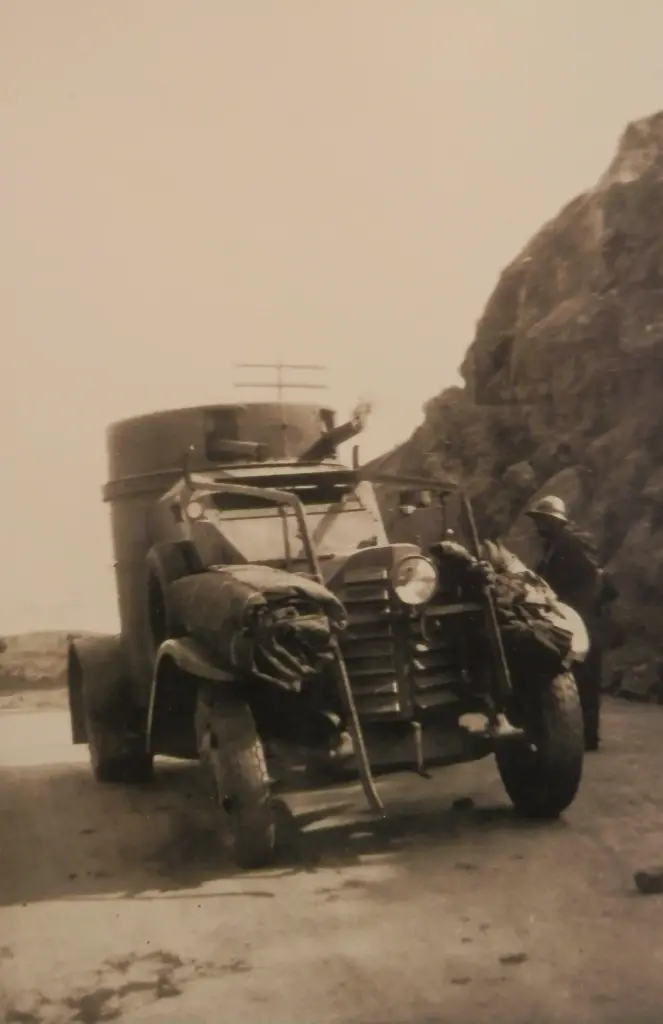
The Lancia 1Z was a light military truck built by Lancia between 1912 and 1916. Mechanically it was closely related to the 35 HP Theta passenger car of 1913, and it was the first military vehicle the company made. Its chassis went on to carry armoured bodies, artillery and anti-aircraft guns.
Lancia 1Z at a glance
| Maker | Lancia, Turin |
|---|---|
| Production | 1912–1916 |
| Type | light military truck |
| Relation | mechanicals based on the 1913 Lancia Theta |
| Engine | 4,940 cc Tipo 61 side-valve four |
| Power | 70 hp at 2,200 rpm |
| Gearbox | four-speed manual Tipo 105 |
| Chassis | ladder frame, solid axles on semi-elliptic springs |
| Payload | 2.2 tonnes, or 30 cwt in British service |
| Top speed | 60 km/h |
| First service | Italian Army, Libya, from 1912 |
| Successor | Lancia Jota from 1915 |
based on one source
History of the Lancia 1Z
Born from the war in Libya
When the Italo-Turkish War broke out in 1911 the Royal Italian Army had only begun to motorise a few years earlier and relied chiefly on Fiat 15 trucks. After a good experience in the field, the army placed further orders for tactical and logistical vehicles with Fiat and with other makers. Lancia developed the 1Z and began deliveries in 1912, in time for service on the hard terrain of Libya. Production and army use continued into the First World War.
In British and Italian service
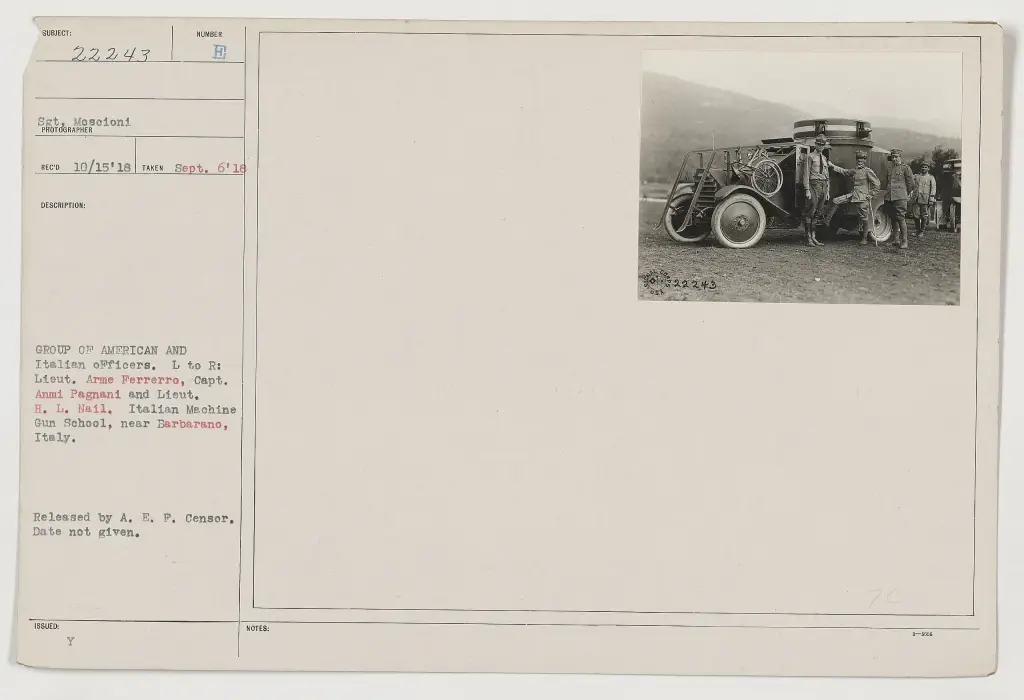
During the First World War a number of 1Zs were imported into the United Kingdom by Gaston, Williams and Wigmore and used by the Royal Naval Air Service as light tenders, rated at 30 cwt. In Italy the truck became the basis of fighting vehicles. In 1916 Ansaldo and Lancia jointly built the Automitragliatrice Lancia Ansaldo 1Z armoured car, which became the main armoured vehicle of the Royal Italian Army and was used for riot control and later to exploit infantry breakthroughs; an improved type, the 1ZM, followed in 1918.
Gun carriages and the end of production
In 1917 the 1Z was chosen to carry the Cannone da 75/26 anti-aircraft gun in a partially armoured bed, forming the Autocannone da 75/27 C.K. The initial order of 50 guns was halved to 25 to form six mobile batteries delivered in the summer of 1918, but the weapon proved unsatisfactory in the field and the guns were soon dismounted for static use. The artillery also used the 1Z as a portee for 75/27 field guns, with six batteries formed in late 1918 and assigned to the horse artillery from 1920 to 1928. In 1915 Lancia introduced the Jota truck with the same 4.5-litre engine but a dedicated chassis, and 1Z production ended during 1916.
Design and features
- Purpose-built for the army: wider axle tracks and tyres and disc wheels suited to military use than the Theta car.
- Simple and strong: a conventional ladder frame with leaf-sprung solid axles and brakes on the transmission and rear wheels.
- Good load for its day: 2.2 tonnes of cargo and 60 km/h on the road.
- Long second life: the chassis carried armoured cars and anti-aircraft guns for years after truck production ended.
Lancia 1Z versions
- 1Z truck: the standard military lorry of 1912–1916.
- Lancia Ansaldo 1Z: armoured car on the 1Z chassis, built with Ansaldo in 1916.
- Lancia Ansaldo 1ZM: improved armoured car of 1918.
- Autocannone da 75/27 C.K.: self-propelled anti-aircraft gun of 1917–1918.
The 1Z shared its mechanical layout with the Lancia Theta and led to the heavier trucks of the 1930s, such as the Lancia 3Ro. More cars and commercials are in the Lancia collection.
Sources
- Lancia 1Z, English Wikipedia: development, service, specifications