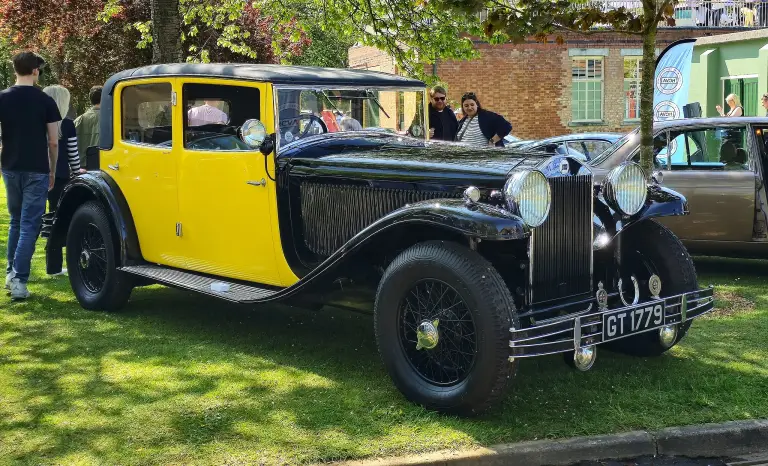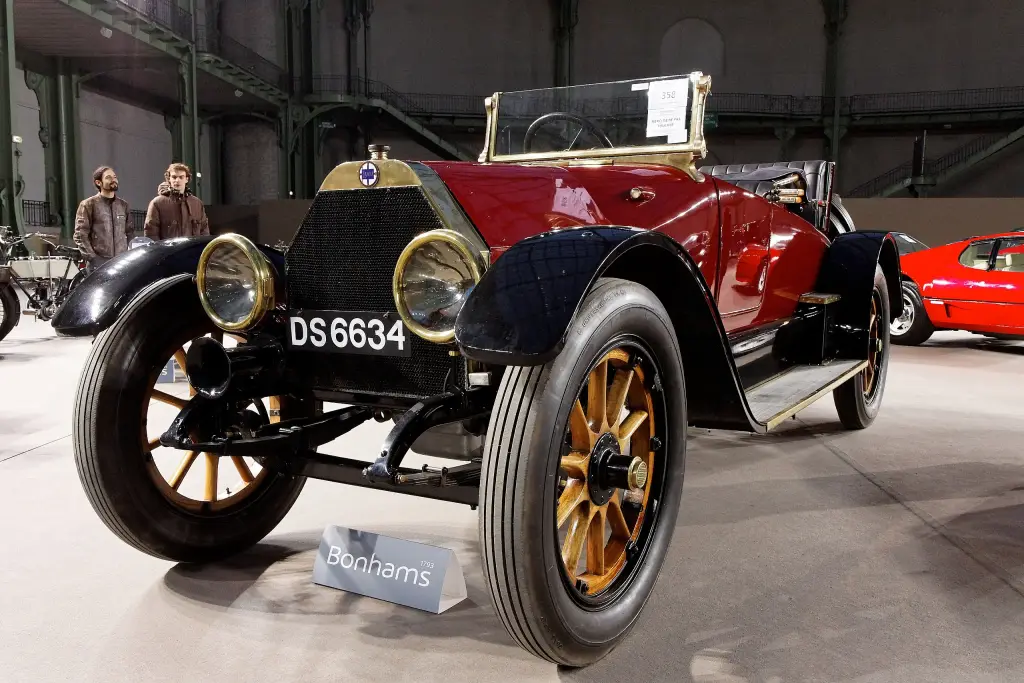
The Lancia Theta, also known as the 25/35 HP or type 61, was produced from 1913 to 1918 and was a larger development of the Epsilon. It is remembered as the first production car, certainly the first European one, offered with a complete electrical system as standard, including an electric starter. It was also the first Lancia to pass a thousand units, with 1,696 built.
Lancia Theta at a glance
| Maker | Lancia, Turin |
|---|---|
| Production | 1913–1918 |
| Also known as | 25/35 HP, Tipo 61 |
| Shown | London Motor Show, autumn 1913 |
| Engine | 4,940 cc four-cylinder, as used in the 1Z truck |
| Power | about 70 hp |
| Top speed | 120 km/h or more |
| Electrical system | 6 volts, Rushmore, standard |
| Wheelbase | 3,100 or 3,370 mm |
| Brakes | pedal on the transmission, lever on the rear wheels |
| Price | 17,000 lire |
| Built | 1,696 |
History of the Lancia Theta
A bigger Epsilon
The Theta was shown at the London Motor Show in the autumn of 1913 and went on sale at the end of that year. It was a larger version of the Epsilon, with a long production life for the period: it survived the First World War and stayed in production for about five years, until 1918, and was replaced by the Lancia Kappa when industrial production resumed after the conflict. Its chassis numbers ran from 1800 to 5154, a range that also included the Jota and Djota trucks, while 1,696 Thetas were built.
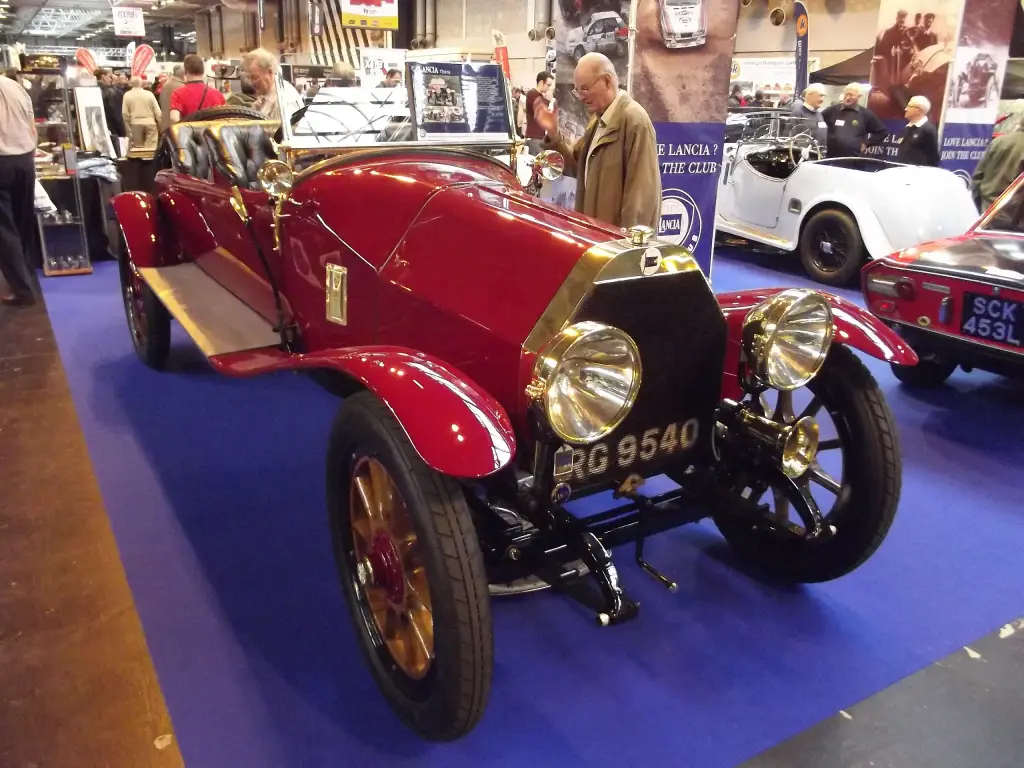
The electrical system
The Theta went into history as the first European car sold with a complete electrical system as standard. Made in America by Rushmore and running at 6 volts, it included an electric starter with a pedal control, a generator, two 50-candlepower headlamps, two auxiliary lights, a rear light and even dashboard illumination and a horn button. Vincenzo Lancia was so convinced by the system that he dropped the starting handle from the front of the car; it survived only as an accessory in the tool kit.
Engine, chassis and brakes
The engine was not innovative, being essentially the four-cylinder of almost five litres already used in the 1Z truck of 1912, but it was reliable and powerful at about 70 hp. Despite a heavy chassis it could reach and sometimes exceed 120 km/h. Braking kept the traditional two-system layout, with a lever acting on the rear wheels and a pedal on the transmission, but a Lancia patent improved its effectiveness: the modified gearbox carried a chain that pressed the friction lining against the drum with even pressure across the whole braking surface. The chassis could be ordered with a wheelbase of 310 or 337 cm, and the steering column angle could be set to three values, 34, 37 or 40 degrees, thanks to another Lancia patent.
Design and features
- Complete electrics as standard: starter, generator, lights and dash illumination on a 6-volt Rushmore system.
- No starting handle: Lancia was confident enough to drop it from the car.
- Improved transmission brake: a patented chain pressed the lining evenly against the drum.
- Adjustable steering: the column could be set to three different angles.
Lancia Theta versions
- Theta 25/35 HP: the standard production car of 1913–1918.
- Two wheelbases: 3,100 mm or 3,370 mm chassis.
The Theta used the engine later fitted to the Lancia 1Z truck and was replaced by the Lancia Kappa of 1919. More cars are in the Lancia collection.
Sources
- Lancia Theta, English Wikipedia: dates, electrical system, production
- Lancia Theta, Italian Wikipedia: engine, brakes, chassis, price, electrical details