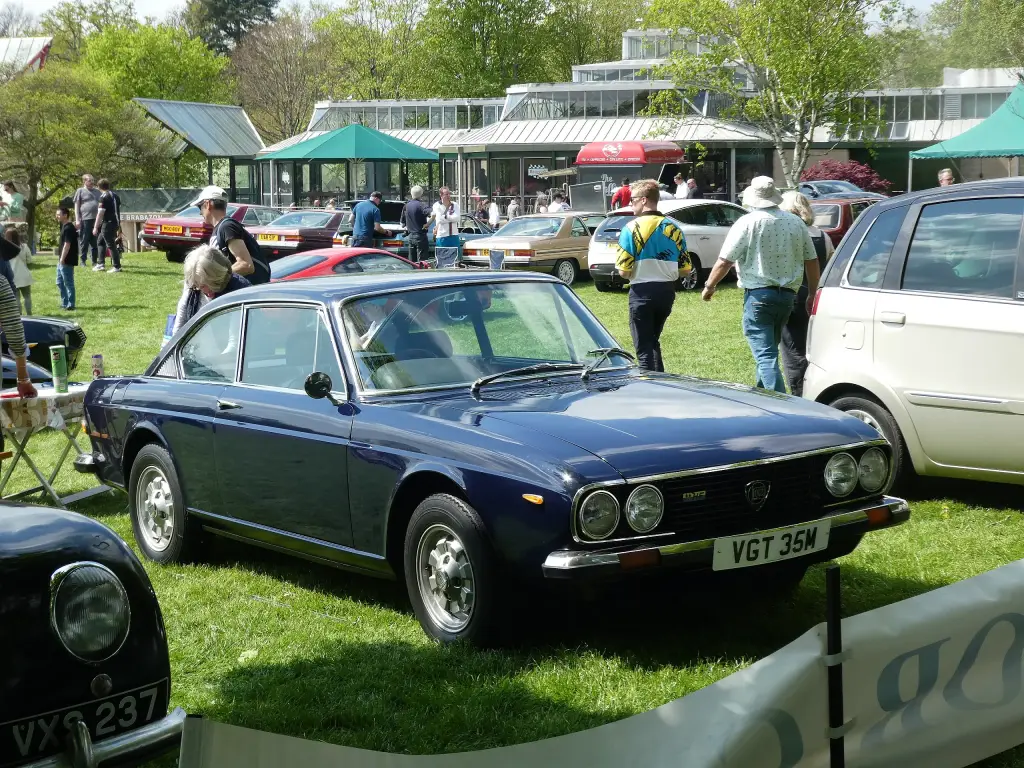
The Lancia 2000, known internally as the Tipo 820, was produced from 1971 to 1975 as the direct successor of the Flavia. It was the last vehicle designed independently by Lancia engineers before the company was taken over by Fiat in 1969, and enthusiasts came to call it the last real Lancia.
Lancia 2000 at a glance
| Maker | Lancia, Turin |
|---|---|
| Production | 1971–1974 (saloons to 1975) |
| Bodies | four-door saloon, two-door coupé |
| Engine | 1,991 cc flat-four |
| Power | 115 hp carburetted, 125 hp with injection |
| Injection | Bosch electronic, a first for an Italian car |
| Gearbox | four-speed manual, five-speed with injection |
| Drive | front-wheel drive |
| Suspension | independent front, live axle rear |
| Brakes | discs all round, split circuit |
| Saloons built | 14,319 |
| Coupés built | 1,399, plus 1,229 HF |
History of the Lancia 2000
A Flavia with a new face
The 2000 kept the central part of the body — roof, doors and interior — and the whole drivetrain of the second-series Flavia, with improvements to the fuel system. The front and rear were restyled: the tail was squared and simplified, and the nose lost its separate air intake and headlamp nacelles. The mechanical layout stayed: front-wheel drive, a flat-four engine, independent front suspension, a live rear axle and disc brakes all round with a split circuit that Lancia called Super duplex.
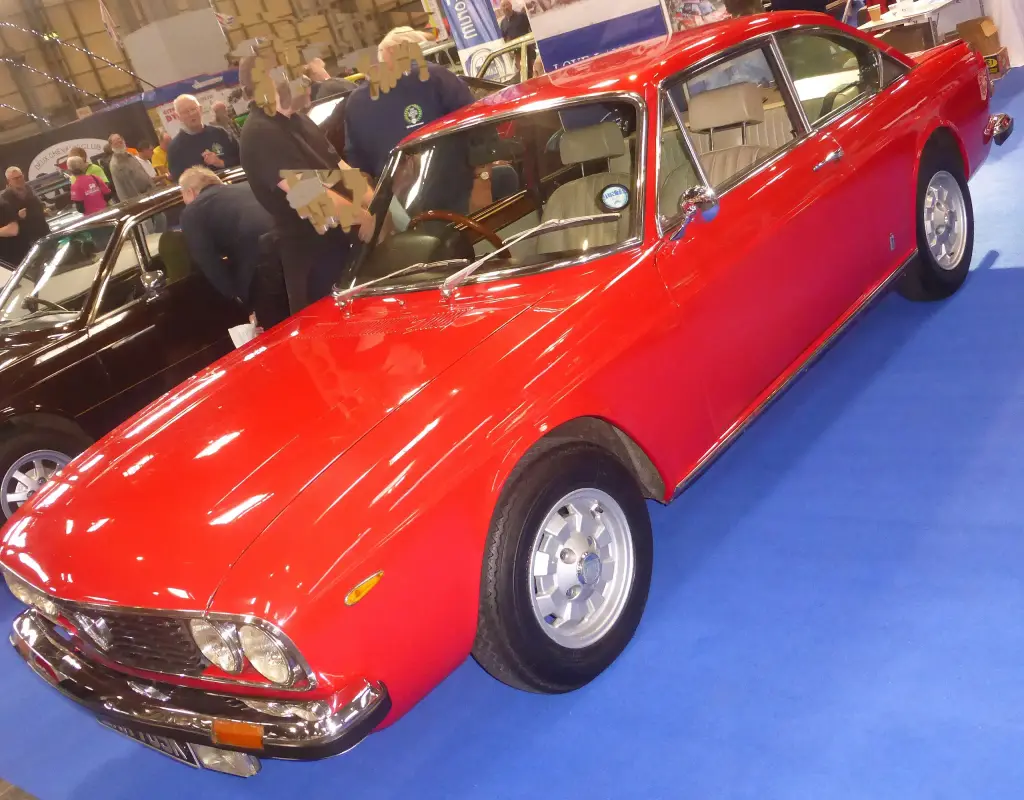
Electronic injection
The 1,991 cc flat-four was offered with a twin-choke carburettor and 115 hp, or with Bosch D-type electronic fuel injection and 125 hp. The injected cars carried an “i.e.” badge on the grille. According to the Italian Wikipedia the 2000 was the first Italian car, and one of the first anywhere, to use electronic injection, which gave more power, better economy and smoother running. Pricing and high production costs delayed the launch: Fiat did not want to put the car into production although it was ready in 1969, and it only arrived in 1971 when no other new flagship was near.
Flagship equipment
As the flagship of the range, following the Flaminia, the 2000 had a high standard of finish: fine wood on the dashboard and velvet or leather upholstery. Equipment included hydraulically operated power steering made by ZF, air conditioning, electric windows, heat-resistant glass and sun blinds. A road test by the British magazine Autocar in May 1972 recorded 187 km/h and 0–100 km/h in 10.4 seconds for an injected car, figures close to the sporting Alfa Romeo 2000 and BMW 2002 despite far more weight and equipment. Saloon production ended in 1974 with 14,319 cars built.
The coupé and the HF
The 2000 Coupé was an evolution of the second-series Flavia Coupé, with a body and interior designed and built by Pininfarina; the dashboard strongly resembled that of the Ferrari 330 GT. Changes were limited to a matt black grille with the headlamps built into a wider intake, new bumpers with rubber strips on the HF, and a squared decklid without the old tailfins. Both versions used the 2000 saloon engine: 115 hp carburetted in the Coupé, 125–126 hp with Bosch injection in the HF, which also had a wooden Nardi steering wheel and magnesium Cromodora wheels. All coupés had a five-speed gearbox with a dog-leg first gear. 1,399 Coupés and 1,229 HF Coupés were built.
Design and features
- Last independent Lancia: designed before the Fiat takeover and praised for build quality the later Beta and Gamma lacked.
- Electronic injection: the Bosch system was among the first fitted to a production Italian car.
- Flagship comfort: ZF power steering, air conditioning, electric windows and sun blinds.
- Rust resistance: the cars are regarded as more resistant to corrosion than many Italian contemporaries.
Lancia 2000 versions
- 2000 saloon: 115 hp with a carburettor, four-speed gearbox.
- 2000 i.e. saloon: 125 hp with Bosch injection, five-speed gearbox.
- 2000 Coupé: Pininfarina body, 115 hp, five-speed.
- 2000 HF Coupé: injected 125–126 hp, Nardi wheel, magnesium wheels.
The 2000 replaced the Lancia Flavia and was followed as flagship by the Lancia Gamma. More cars are in the Lancia collection.
Sources
- Lancia 2000, English Wikipedia: body changes, engines, production
- Lancia 2000, Italian Wikipedia: injection history, equipment, coupé production