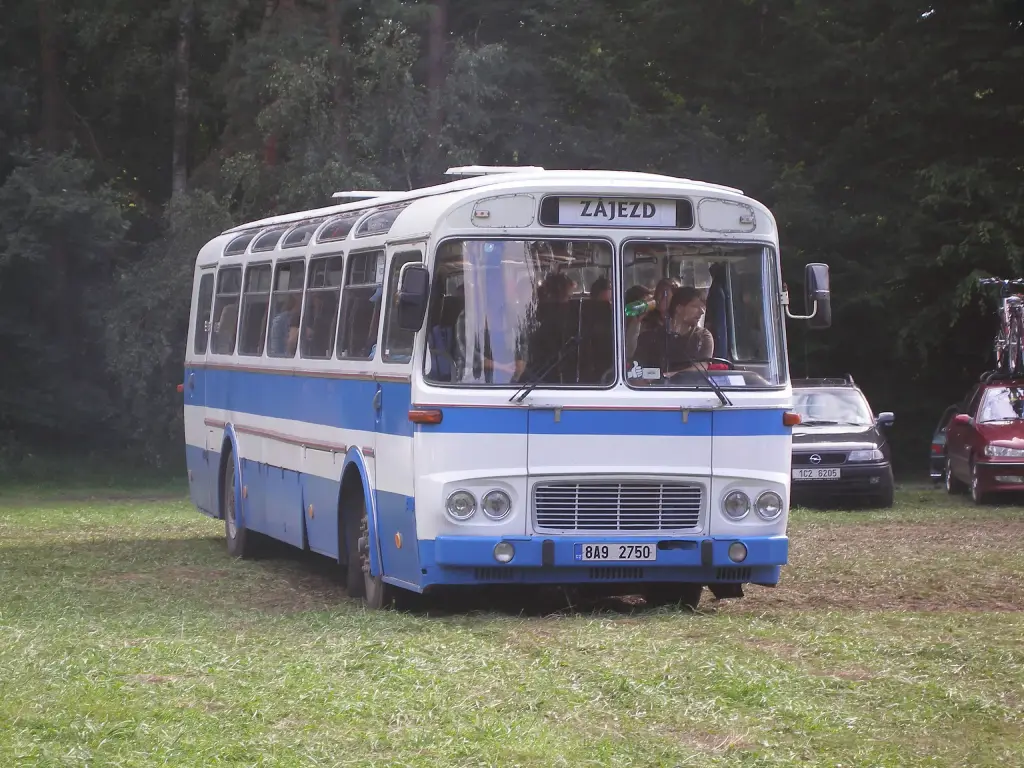
The Karosa ŠD 11 was the long-distance member of the Š series. Built in Vysoké Mýto from the 1960s to 1981, it carried Czechoslovak coach passengers on long intercity routes and tours and was replaced by the LC 735.
Karosa ŠD 11 at a glance
| Maker | Karosa, Vysoké Mýto, Czechoslovakia |
|---|---|
| Production | serial 1974–1981 (functional sample 1963) |
| Series | Karosa Š |
| Predecessor | Škoda 706 RTO LUX |
| Successor | Karosa LC 735 |
| Body | self-supporting, panel construction |
| Engine | mid-mounted, between the axles under the body |
| Gearbox | manual |
| Doors | one passenger door, manually operated by a handle |
| Seating | 2 + 2, high padded seats |
| Built | over 2,800 |
History of the Karosa ŠD 11
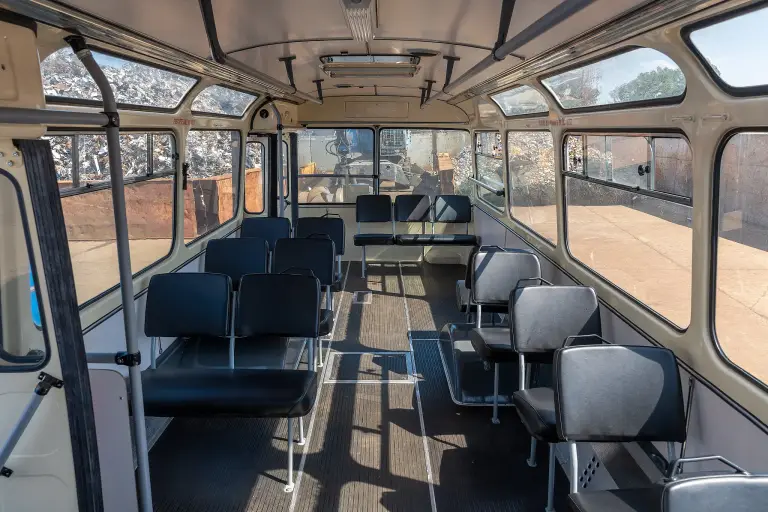
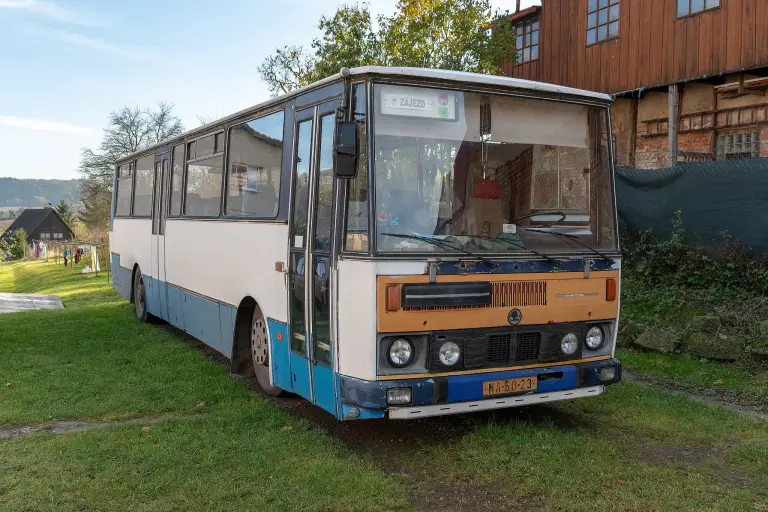
The ŠD 11 was developed from the city ŠM 11 as a bus for long intercity routes and tours. It had a self-supporting panel body and the engine under the body between the axles, as on the rest of the Š series. Because it was meant for long journeys, only one passenger door was fitted on the right, ahead of the front axle, operated by hand with a crank; some buses had a second door at the rear behind the rear axle. The seats were more comfortable than those of the intercity ŠL 11 and arranged 2 + 2 with a central aisle.
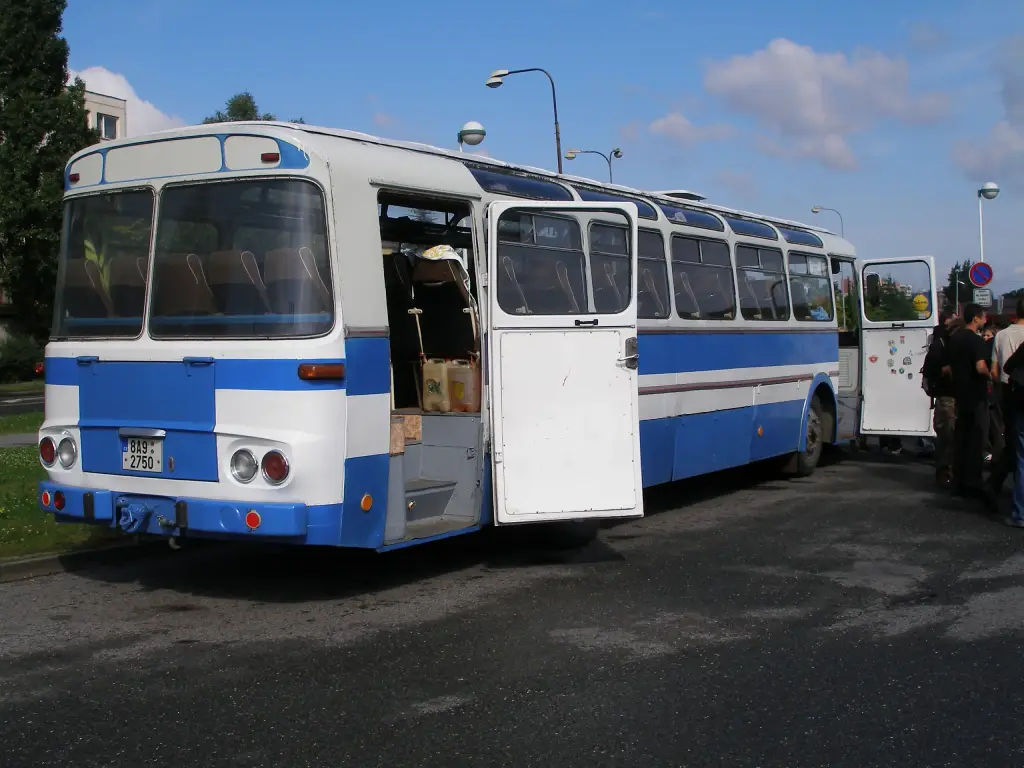
For the first ŠD 11 buses, known as Evropabus, a number of LP 30 rotel trailers were built. These were trailer-hotels on wheels with 30 beds inside, a washroom, a changing room and a toilet. One prototype, the ŠD 11.2050 or ŠD 11 Lux, was also built to a completely different design on the Š-series chassis; its auxiliary spotlights turned with the steering wheel, and the bus took second place at the international bus exhibition in Nice.
The functional sample was made in 1963 and the prototype followed in 1967; the unique ŠD 11.2050 left the works in 1968. In 1968 and 1969 a hundred single-door Evropabus buses were built, some with the rotel. Serial production of the two-door version only started in 1974 and lasted until the end of the Š series in 1981. The type was made in two forms, one with a ceiling panel above the seats for forced air distribution and individual lighting, the other with a luggage rack above the seats as in the ŠL 11. In total Karosa produced more than 2,800 ŠD 11 buses.
Most ŠD 11s were withdrawn during the 1980s, and the last ones lingered on ČSAD regional routes. Many are preserved today, including Evropabus cars with their rotel trailer, buses of the Jihlava historic bus association, the ŠKODA-BUS club in Plzeň, KHA Bratislava and numerous private collections.
Design and features
- Single passenger door: manually operated by a crank, with a second rear door on some buses.
- High padded seats: more comfortable than the intercity ŠL 11, in a 2 + 2 layout.
- Two interior layouts: a ceiling air-distribution panel or a luggage rack above the seats.
- Evropabus and LP 30: the early long-distance buses came with a 30-bed sleeping trailer.
Karosa ŠD 11 versions
- ŠD 11 Evropabus (1968–1969): single-door buses for long international routes, 100 built.
- Two-door ŠD 11 (1974–1981): the series version.
- ŠD 11.2050 Lux (1968): a one-off design prototype with steering-linked spotlights.
The ŠD 11 was replaced by the LC 735; its city and intercity sisters were the ŠM 11 and ŠL 11. More are in the Karosa collection.
Video: Karosa ŠD 11 cesta Pardubice-Chrudim
Video on YouTube.
Sources
- Karosa ŠD 11, English Wikipedia: construction, single door, high seats
- Karosa ŠD 11, Czech Wikipedia: Evropabus, LP 30 rotel, prototype, production total