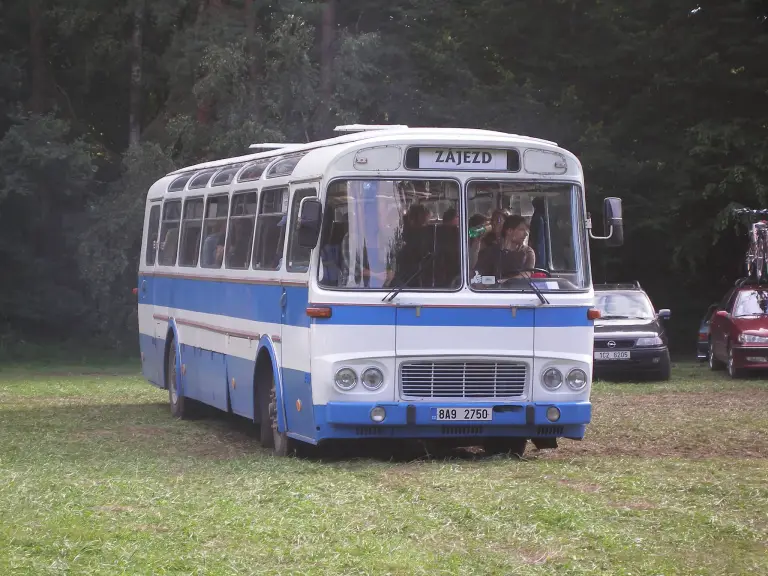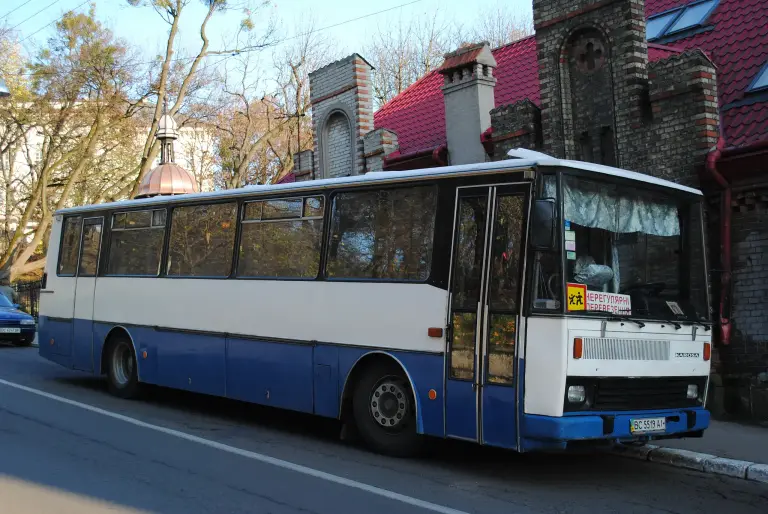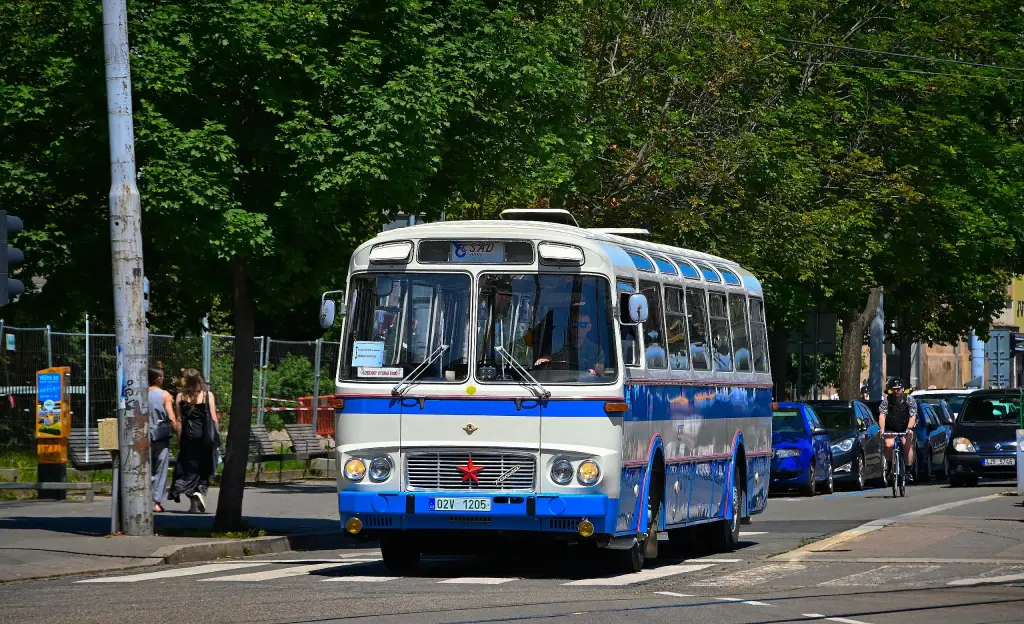
The Karosa ŠL 11 was the intercity and regional bus of the Karosa Š series. Produced in Vysoké Mýto from 1970 to 1981, it carried the bulk of ČSAD regional traffic in Czechoslovakia and was replaced by the C 734.
Karosa ŠL 11 at a glance
| Maker | Karosa, Vysoké Mýto, Czechoslovakia |
|---|---|
| Production | 1970–1981 (functional sample 1963) |
| Series | Karosa Š |
| Predecessor | Škoda 706 RTO CAR |
| Successor | Karosa C 734, from 1981 |
| Body | semi-self-supporting, panel construction |
| Engine | mid-mounted, between the axles under the floor |
| Gearbox | manual |
| Doors | two pneumatic folding doors on the right |
| Seating | 2 + 2 along the whole length |
| Built | about 14,100 |
History of the Karosa ŠL 11
The ŠL 11 was derived from the city ŠM 11, with which it shared the self-supporting panel body and the mid-mounted engine under the floor between the axles. The intercity version differed by having only two doors, both with three leaves and pneumatically operated by the driver, and a manual gearbox instead of the automatic of the city bus. The first door sat ahead of the front axle and the second in the middle of the right side. Passengers sat in a 2 + 2 layout along the whole length of the bus.
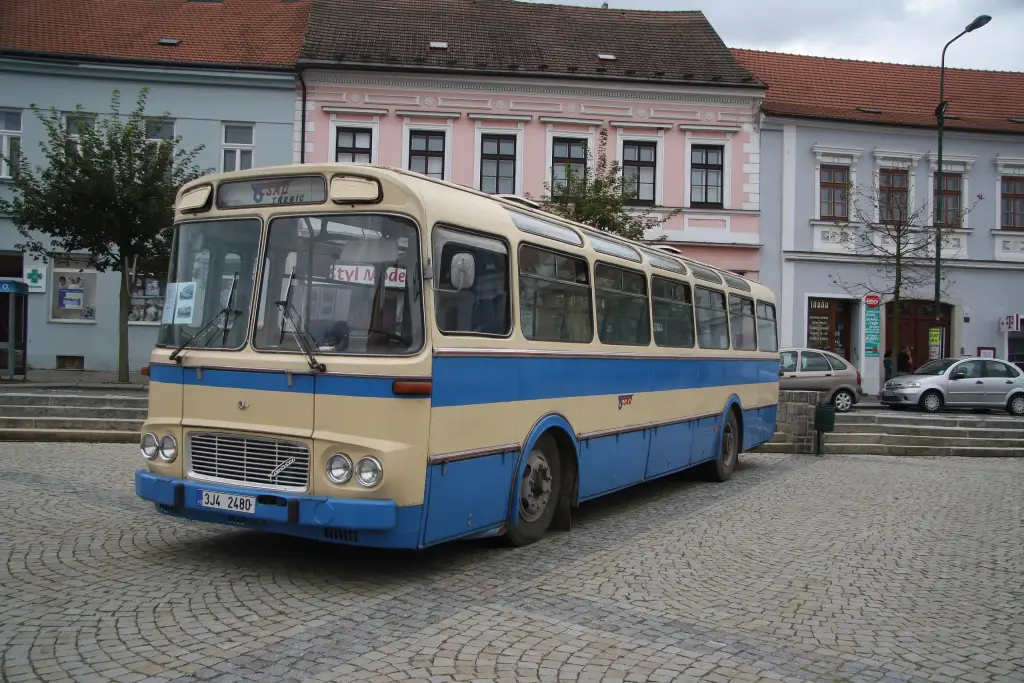
The first ŠL 11 was built in 1963, but only as a functional sample. A prototype followed in 1966 and failed its tests because of various faults. A year later a verification series of three buses was made with corrugated aluminium side panels, while the production buses had smooth sides. Serial production only began in 1970, seven years after the first bus of the type, and stopped in 1981 after about 14,100 vehicles had been built.
From 1972 a version with manually operated doors was also produced as the ŠL 11 Turist. Its second door was moved behind the rear axle, as on the long-distance ŠD 11, and the bus was intended for tours rather than line service. The ŠL 11 was aimed primarily at the ČSAD operators, which used it on intercity and regional routes all over Czechoslovakia, but smaller numbers were bought by transport undertakings and ran on city lines too, for example in Prague, Brno, Děčín, Olomouc and Mariánské Lázně. Most were withdrawn during the 1980s.
A good number survive in museums and private collections, including a car at the Technical Museum in Brno, buses of the Karlovy Vary and Plzeň operators, several Turist versions and cars held by the Jihlava historic bus association, the ŠKODA-BUS club in Plzeň and the Regional Museum in Vysoké Mýto.
Design and features
- Two doors: three-leaf pneumatic doors, one ahead of the front axle and one in the middle.
- Manual gearbox: the intercity difference from the automatic ŠM 11.
- Mid-mounted engine: under the floor between the axles, as on the whole Š series.
- 2 + 2 seating: carried along the full length of the bus.
Karosa ŠL 11 versions
- ŠL 11 (1970–1981): the standard intercity bus.
- ŠL 11 Turist (from 1972): manually operated doors with the second door behind the rear axle.
- Verification series: three buses of 1967 with corrugated aluminium sides.
The ŠL 11 was replaced by the C 734; its city sister was the ŠM 11 and the coach of the range was the ŠD 11. More are in the Karosa collection.
Sources
- Karosa ŠL 11, English Wikipedia: construction, doors, production years
- Karosa ŠL 11, Czech Wikipedia: prototypes, Turist version, production total, operators