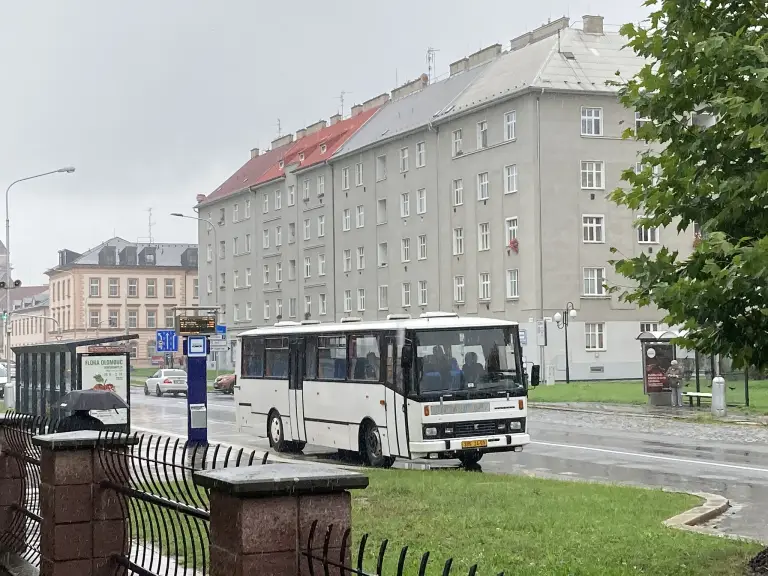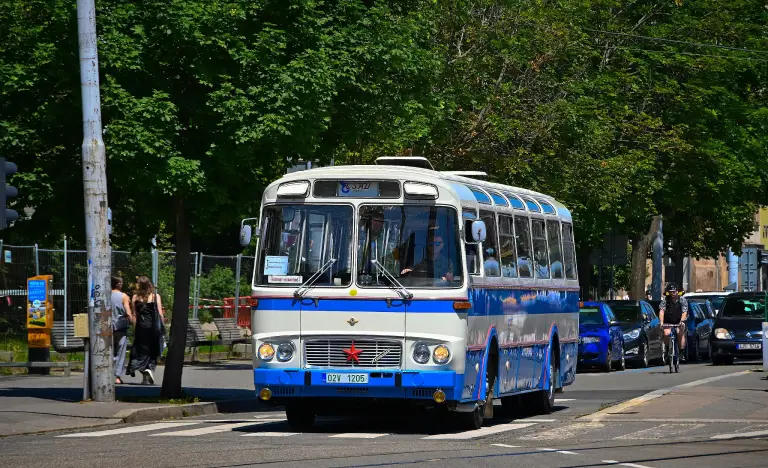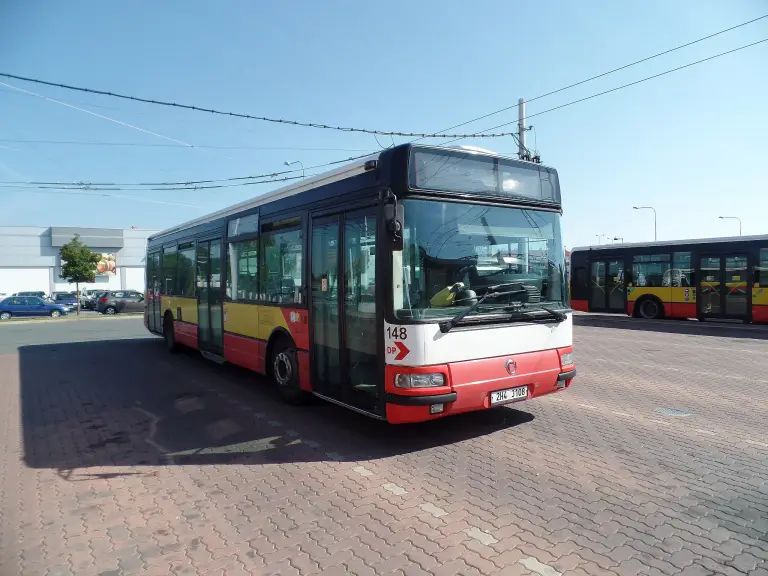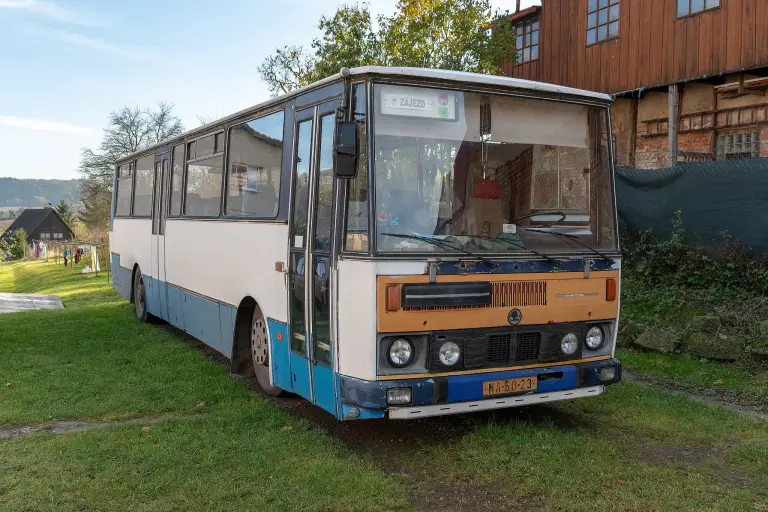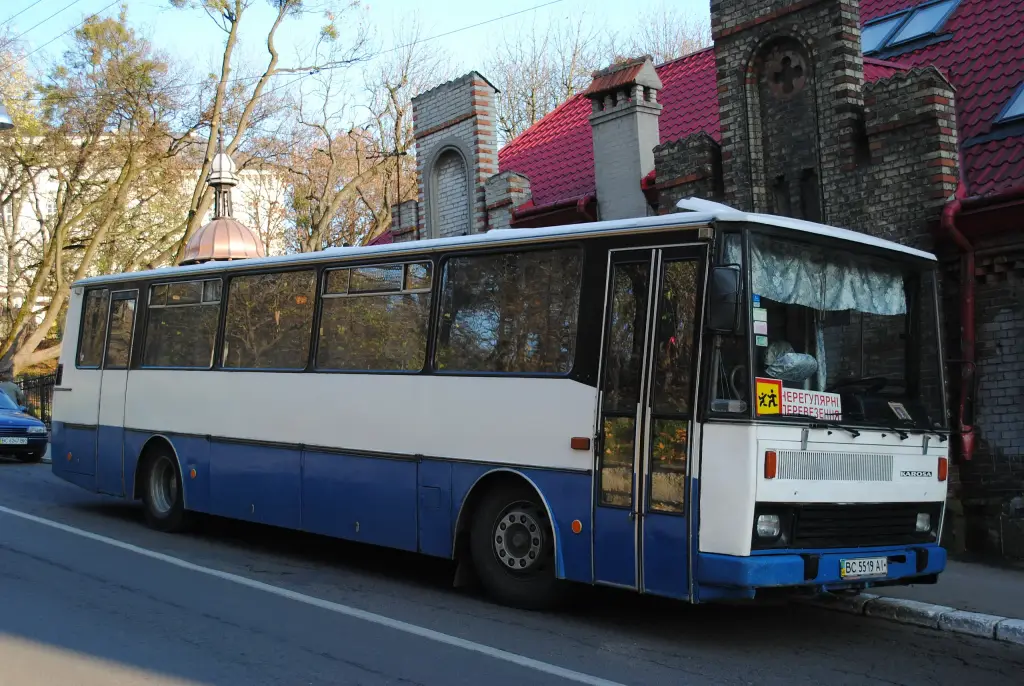
The Karosa C 735 was a long-route intercity bus made in Vysoké Mýto from 1992 to 1997. It sat between the regional C 734 and the touring LC 735, offering coach seating in a bus with two full passenger doors.
Karosa C 735 at a glance
| Maker | Karosa, Vysoké Mýto, Czech Republic |
|---|---|
| Production | prototype 1992, series 1993–1997 |
| Series | Karosa 700 |
| Based on | Karosa C 734, with a stronger engine |
| Predecessor in the range | Karosa LC 735 (converted in service) |
| Successor | Karosa C 935, from 1997 |
| Body | semi-self-supporting, panel construction |
| Engine | rear-mounted, manual gearbox |
| Doors | two double-leaf doors on the right |
| Luggage hold | 5 m³ between the axles |
| Seating | 2 + 2, high-backed coach seats on a raised platform |
| Built | 243 |
History of the Karosa C 735
The C 735 was developed as a comfortable middle ground in the 700 series: it used the body and running gear of the C 734, but had the higher-backed coach seats of the LC 73x touring cars, mounted on a raised platform so that the luggage hold between the axles grew to 5 m³. Unlike the LC 735 it kept two full passenger doors, which made it suitable for long intercity routes rather than pure touring work.
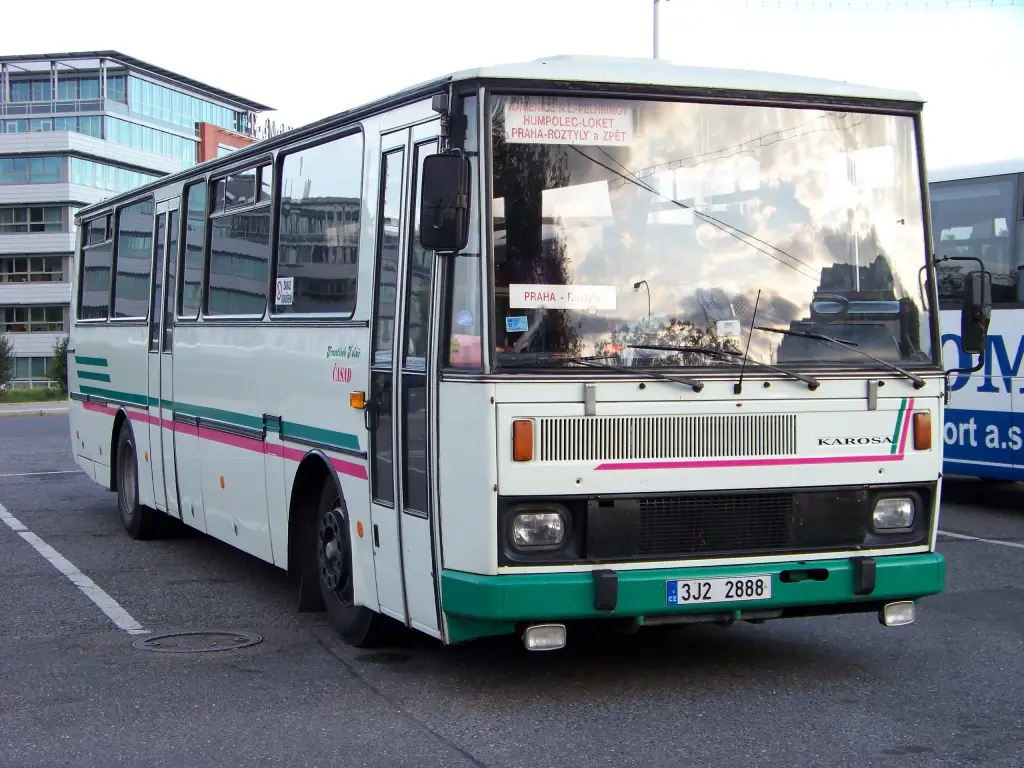
The prototype was built in 1992 under the internal designation LC21; serial production began a year later and ran until 1997, when the 700 series came to an end. Karosa built 243 C 735s in total. The overwhelming majority went to the countries of the former Soviet Union, including five in a special Siberian version, while only 74 stayed in the Czech Republic and Slovakia.
Around the turn of the century the number of C 735s in Czech service actually grew, because the operator ICOM transport converted a number of its long-distance LC 735 coaches to the C 735 layout. In practice the only change was moving the rear doors from behind the rear axle to the middle of the bus. The type has since become rare, although individual buses are still used by companies across the country as more comfortable intercity vehicles.
Construction was otherwise the familiar 700-series recipe: a semi-self-supporting panel body, an engine behind the rear axle driving only the rear axle through a manual gearbox, an independent front axle, a solid rear axle and air suspension on all axles. The two doors of about equal width sat one ahead of the front axle and one ahead of the rear axle, and the driver’s cab was not separated from the saloon.
Design and features
- Coach comfort: high-backed seats of the LC 73x type on a raised platform.
- Larger hold: 5 m³ of luggage space between the axles, against 3.5 m³ in the C 734.
- Two full doors: quick boarding for long intercity lines, unlike the single-door LC 735.
- Stronger engine: the C 734 body with a more powerful engine for longer routes.
Karosa C 735 versions
- C 735 (1992–1997): the standard long-route bus.
- Siberian version: five buses built for the far north.
- ICOM conversions: LC 735 coaches rebuilt with the rear doors moved to the middle.
The C 735 sat between the regional C 734 and the touring LC 735, and was replaced by the C 934 generation. More buses are in the Karosa collection.
Sources
- Karosa C 735, English Wikipedia: construction, production years
- Karosa C 735, Czech Wikipedia: position in the range, production total, exports, ICOM conversions