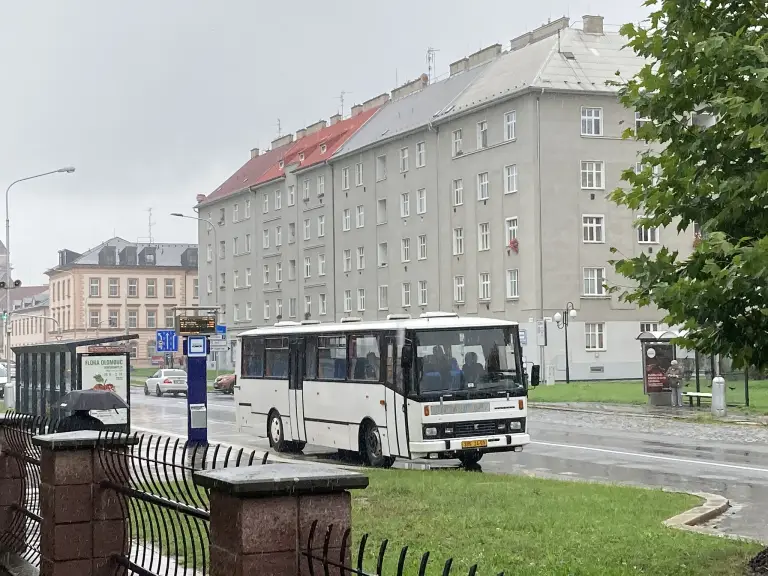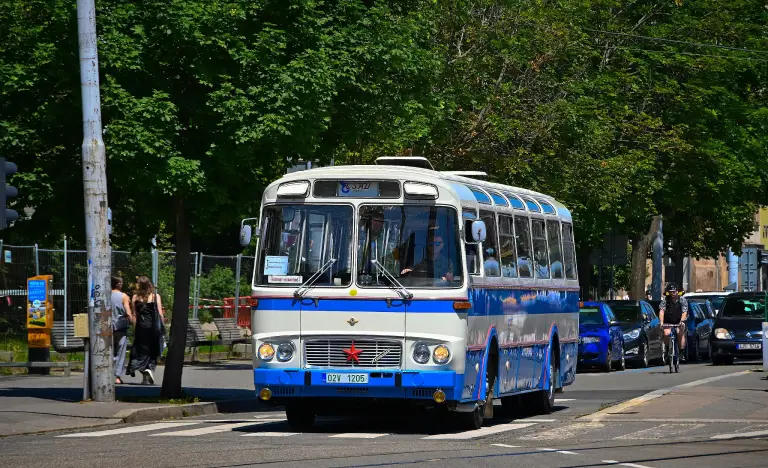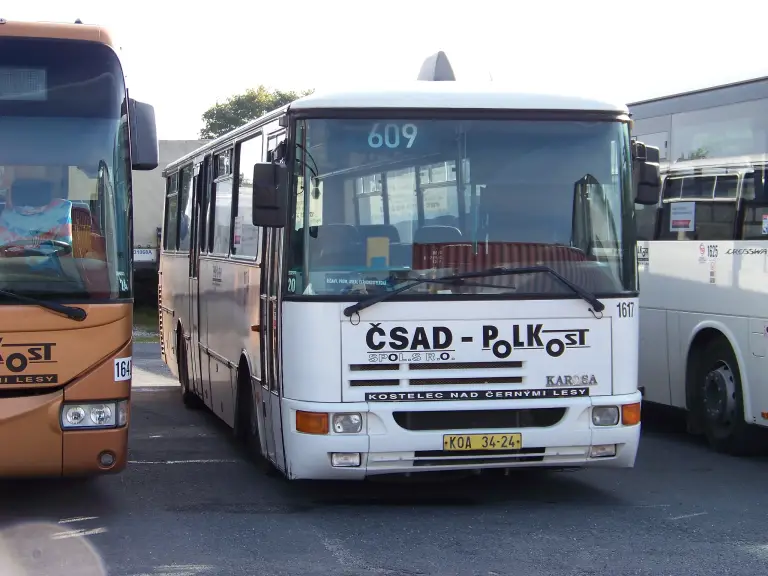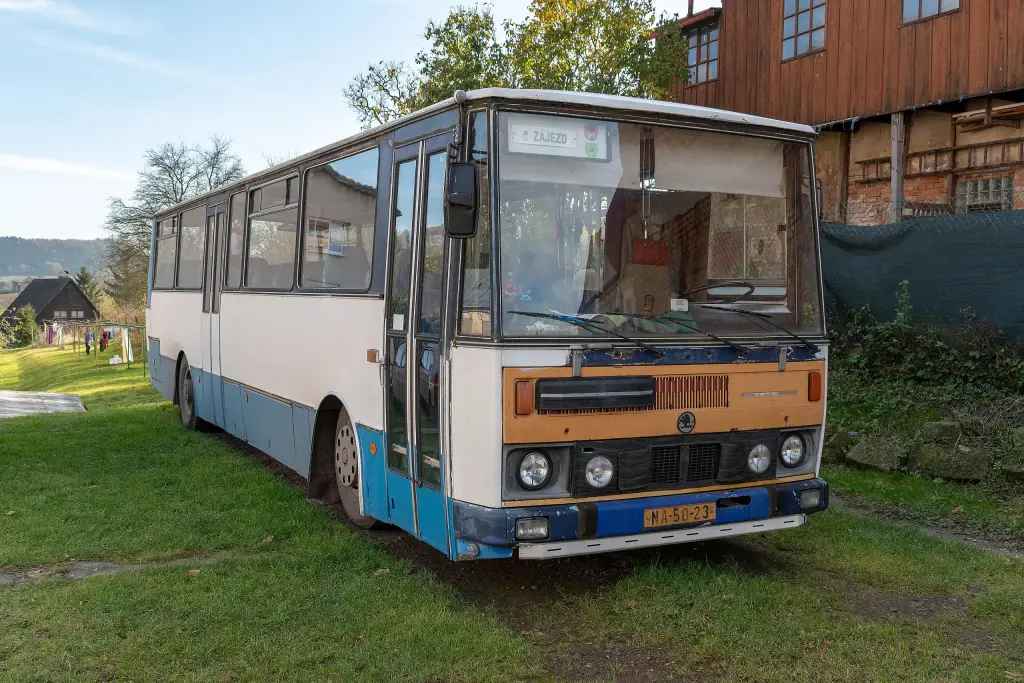
The Karosa C 734 was the intercity bus on which the Czechoslovak 700 series was built. Made from 1981 to 1996 in Vysoké Mýto, it carried the bulk of regional and shorter long-distance traffic in Czechoslovakia and was exported in large numbers.
Karosa C 734 at a glance
| Maker | Karosa, Vysoké Mýto, Czechoslovakia |
|---|---|
| Production | 1981–1996 (Czech sources: to 1997) |
| Series | Karosa 700, basic model |
| Predecessor | Karosa ŠL 11 |
| Successor | Karosa C 934 |
| Body | semi-self-supporting, panel construction |
| Engine | rear-mounted LIAZ, manual gearbox |
| Doors | two double-leaf folding doors on the right |
| Luggage hold | 3.5 m³ between the axles |
| Seating | 2 + 2 with a central aisle |
| Built | 18,079 (1975–1997) |
| Exported | 1,458, of which 625 to the former USSR |
History of the Karosa C 734
The C 734 grew out of two functional samples of 1975, marked C3 and C4 and following two buses designated C 733; a prototype called C5 appeared two years later. Karosa built a three-bus verification series in 1980 and started serial production in August 1981. The buses were made until 1997, and continued as the C 834 with small changes for the countries of the former Soviet Union. In total 18,079 C 734 buses were built between 1975 and 1997.
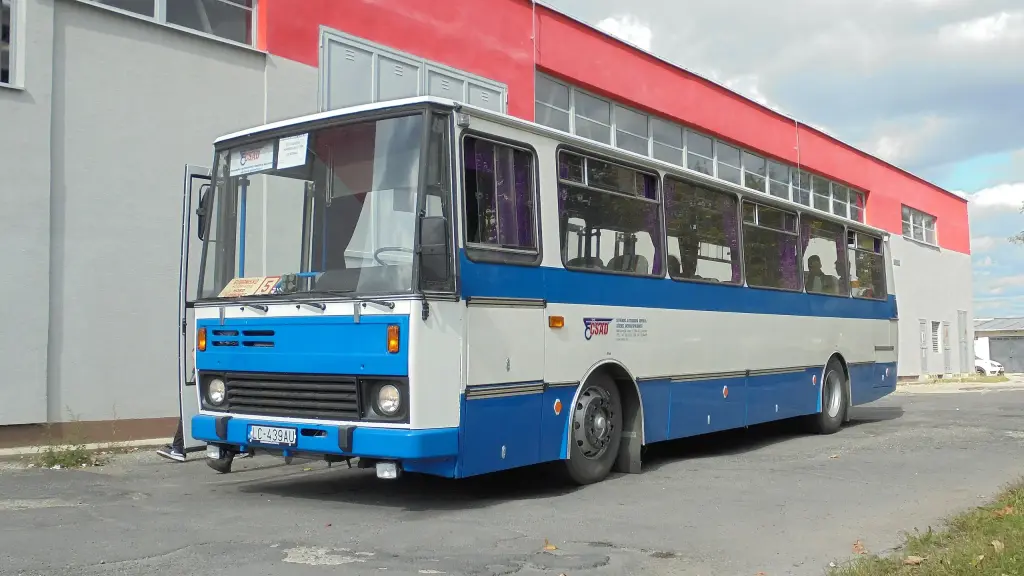
The C 734 was the basic model of the new 700 series and shared its frame and body with the city buses B 731 and B 741. The body was semi-self-supporting and of panel construction, the engine sat behind the rear axle in the rear panel and drove the rear axle through a manual gearbox. The front axle from LIAZ was independently suspended; the rear axle came from Rába in Hungary and after 1992 from PPS Detva in Slovakia. All axles used air suspension, there were two doors of about equal width and a 3.5 m³ luggage hold under the floor between the axles. Passengers sat 2 + 2 along a central aisle, the driver’s cab was not separated from the saloon.
The hot-water heating worked well below freezing but struggled to warm the whole bus, and ventilation was limited to sliding panes in two windows on the right and three on the left, so the two heater fans could not exchange the air effectively. Many changes were made during production, mostly to fit newer and more powerful engines; the subtypes ran from the naturally aspirated C 734.00 through the turbocharged .20 and .40 to the .1340 with an intercooler grille and Detva rear axle.
Most C 734s served the ČSAD regional operators on shorter intercity and regional routes all over Czechoslovakia, while some transport undertakings such as Brno and Prague used them on suburban or charter work. Exports took 1,458 buses, 625 of them to the Soviet Union. The type stayed in regular service remarkably long: after ČSAD autobusy Plzeň withdrew its cars in 2020, only two remained with VV autobusy in the Karlovy Vary region, both partly modernised with 900-series front ends; they were retired in the first half of 2023 as the last 700-series buses on Czech regular routes.
A number of C 734s were converted into trolleybuses by the Pyongyang Trolley Bus Factory in the 1990s, the conversion work finishing in 1997. Known as the Chollima-973, they became the second most common vehicle in Pyongyang’s trolleybus system behind the articulated Chollima-091 and also served in Pyongsong; some were later turned into work cars with a platform added to the roof.
Design and features
- 700-series base: the first and most numerous model of the range, sharing its body with the B 731 and B 741 city buses.
- Luggage hold: 3.5 m³ under the floor between the axles.
- Simple ventilation: two sliding windows on the right and three on the left, plus two heater fans.
- Long production life: continuous development from the naturally aspirated .00 to the turbocharged .40 and .1340.
Karosa C 734 versions
- C 734.00: naturally aspirated LIAZ engine, large Rába rear axle, black leatherette seats.
- C 734.20: turbocharged LIAZ, smaller Rába axle, exhaust in the rear bumper.
- C 734.40: turbocharged LIAZ and a body visually identical to the .20.
- C 734.1340: intercooler grille and Detva rear axle.
- C 834: export version for the former Soviet Union built after 1997.
- Chollima-973: trolleybus conversion made in Pyongyang.
The C 734 was replaced by the Karosa C 934 and shared its body with the B 931 city bus line; the more comfortable C 735 was its long-route sister. More are in the Karosa collection.
Video: Karosa C734 zkušební jízda po opravě
Video on YouTube.
Sources
- Karosa C 734, English Wikipedia: construction, Chollima conversion
- Karosa C 734, Czech Wikipedia: prototypes, production total, exports, end of service