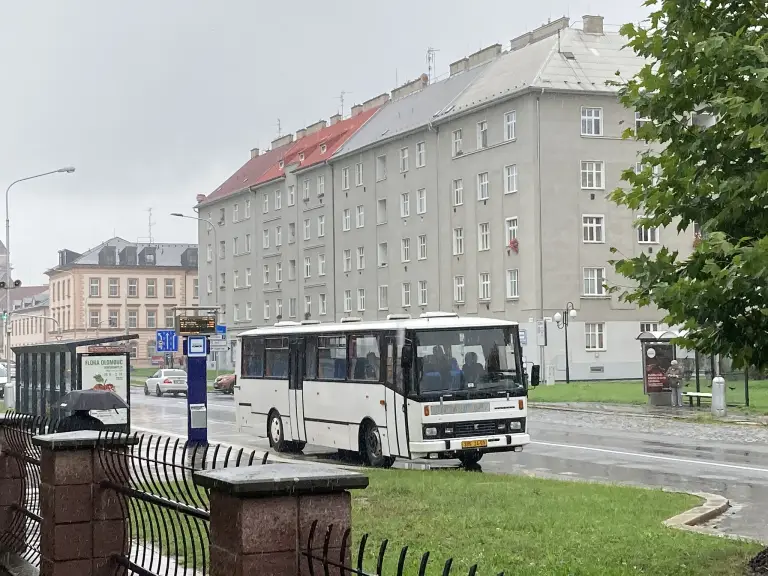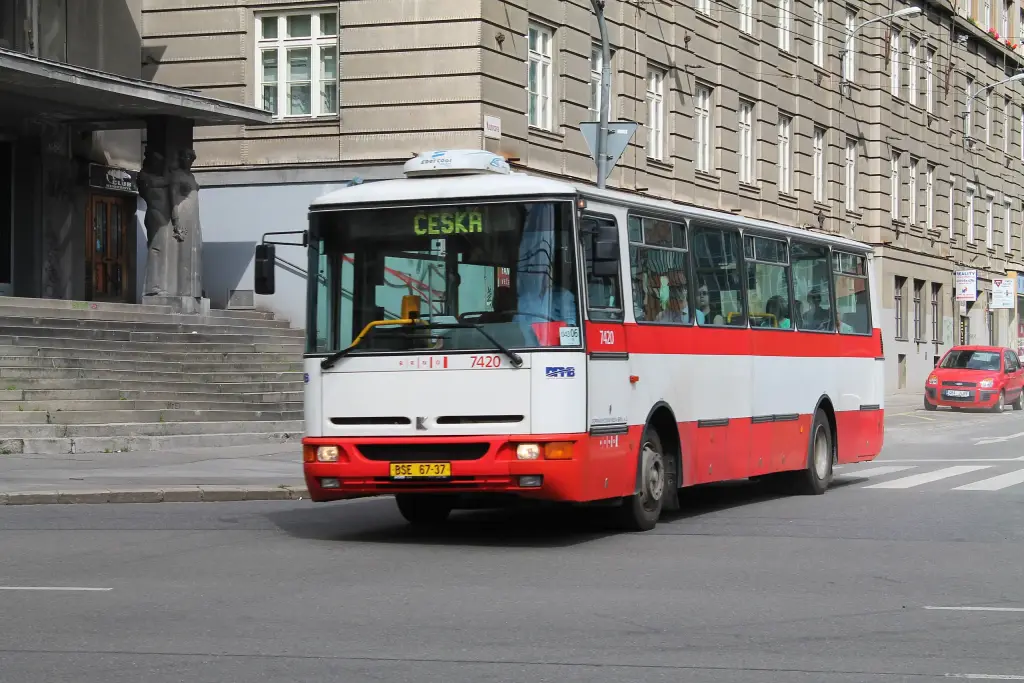
The Karosa B 931 was a standard-floor city bus built by Karosa in Vysoké Mýto from 1996 to 2002. It replaced the B 731 and became one of the most familiar buses in Czech and Slovak towns in the 2000s.
Karosa B 931 at a glance
| Maker | Karosa, Vysoké Mýto, Czech Republic |
|---|---|
| Production | 1996–2002 (prototype and pilot series 1995) |
| Predecessor | Karosa B 731 |
| Successor | Karosa B 951 |
| Body | semi-self-supporting, panel construction |
| Engine | rear-mounted, LIAZ or Renault |
| Gearbox | automatic, Voith or ZF |
| Doors | three double-leaf folding doors on the right |
| Axles | independent front, solid rear, air suspension |
| Modernised version | B 931E from 1999, floor lowered 100 mm at the front |
| Built | 338 |
History of the Karosa B 931
The B 931 was developed as the city bus member of the new 900 series and replaced the B 731, whose last examples left the works in 1996. The prototype, known inside the factory as B19, was shown at the international public transport exhibition in Paris in May 1995 and at the Autotec fair in Brno a month later. A pilot batch of eleven buses was completed at the end of 1995; ten of them, including the prototype, went to the Prague transport company.
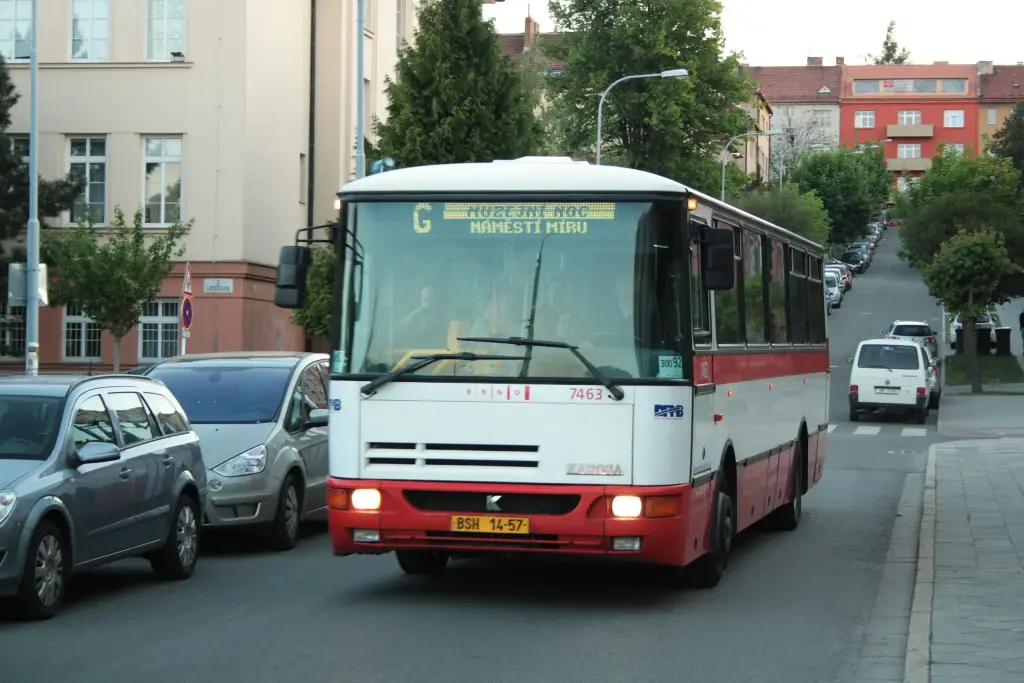
Compared with the B 731 the front and rear ends were rounded and made of glass-fibre panels over a welded frame. The engine sat behind the rear axle in the rear panel, driving only the rear axle; the front axle, from LIAZ, was independently suspended, the rear one came from Detva. All axles used air suspension. ABS and ASR were fitted, the interior had upholstered plastic seats, a new non-slip floor and space for a pram by the middle doors. Buyers could order an electronic passenger information system.
Buses were built with either LIAZ engines and Voith gearboxes or Renault engines with ZF gearboxes, in a long list of subtypes. From 1999 only the modernised B 931E was produced, with a solid Škoda front axle with disc brakes, a floor lowered by 100 mm at the front, ABS and ASR. Production ended in 2002 after 338 buses of both versions.
The B 931 was supplied to towns across the Czech Republic and Slovakia. Withdrawals began in the 2010s as low-floor buses such as the SOR NB 12 arrived: Plzeň disposed of almost all of its cars in 2014–2015, Prague retired its last B 931E in September 2018, and the last Plzeň bus stayed in passenger service until the end of August 2019. Brno kept the type longest, with the final car dispatched in July 2021. One ex-Plzeň bus was still used as a ski bus in the Krkonoše mountains until March 2024, and two privately owned ex-Prague cars appeared on line 171 in 2022.
Design and features
- Three doors: the first door is narrower than the middle and rear ones, with space for a pram by the middle doors.
- Rear engine: mounted behind the rear axle in the rear panel, driving the rear axle through an automatic gearbox.
- Air suspension: on all axles, with an independent front axle.
- B 931E update: solid Škoda front axle, disc brakes, a lower front floor, ABS and ASR from 1999.
Karosa B 931 versions
- B 931 (1996–1999): the original version with LIAZ or Renault engines.
- B 931E (1999–2002): modernised bus with a lowered front floor and a solid front axle.
- Engine and gearbox combinations: LIAZ with Voith, LIAZ with ZF, Renault with Voith or Renault with ZF.
- B 932 conversion: the Plzeň car no. 435 was rebuilt as a B 932 with a manual gearbox in 2008.
The B 931 was the city version of the 900 series; its intercity sister was the Karosa C 934, and it succeeded the B 731 family. More Czech buses are in the Karosa collection.
Sources
- Karosa B 931, English Wikipedia: construction, production, historical vehicles
- Karosa B 931, Czech Wikipedia: prototype, subtypes, end of service, production total