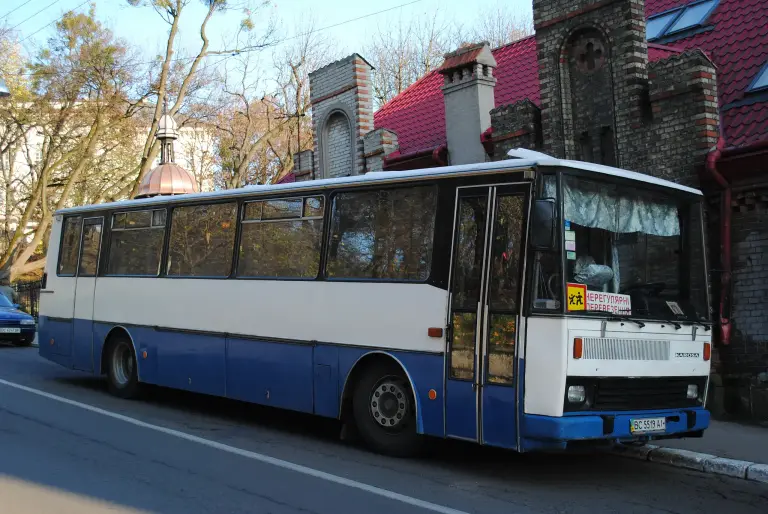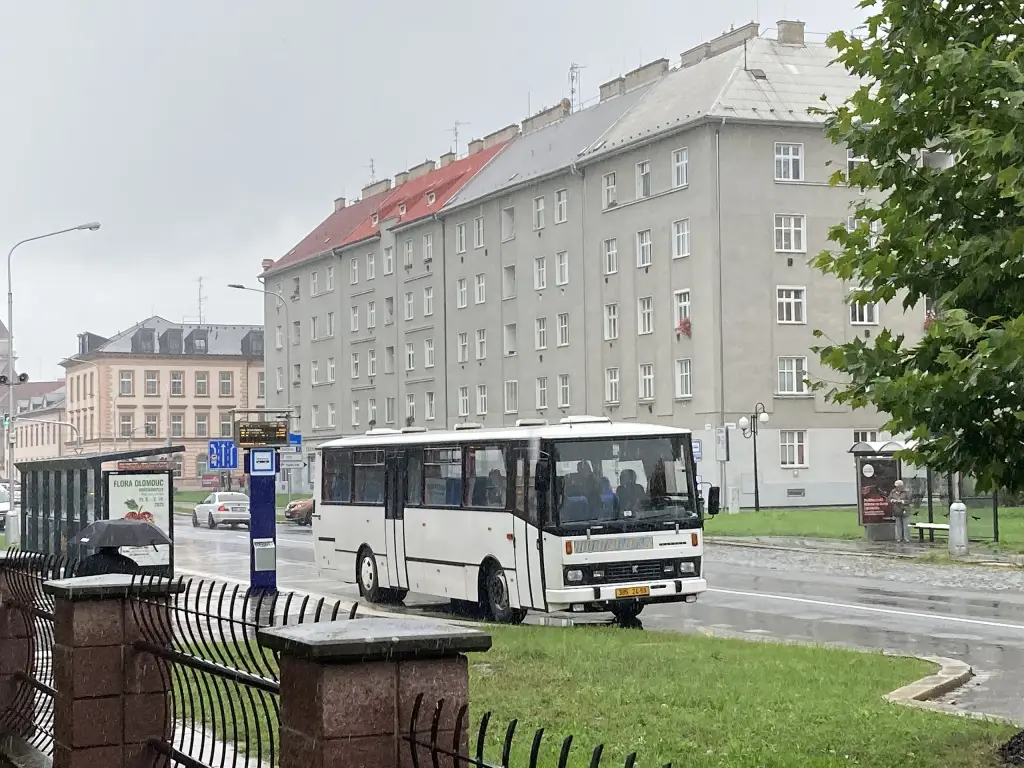
The Karosa LC 735 was the long-distance and touring coach of the 700 series. Built in Vysoké Mýto from 1982 to 1991, it carried Czechoslovak tour groups and international passengers and was the direct successor of the ŠD 11.
Karosa LC 735 at a glance
| Maker | Karosa, Vysoké Mýto, Czechoslovakia |
|---|---|
| Production | 1982–1991 (functional sample 1977) |
| Series | Karosa 700 |
| Predecessor | Karosa ŠD 11 |
| Successor | Karosa LC 736, from 1991 |
| Body | semi-self-supporting, panel construction |
| Engine | behind the rear axle, manual gearbox |
| Doors | two on the right; the rear one usually an emergency exit |
| Luggage hold | 5 m³ between the axles |
| Seating | 2 + 2, adjustable seats on a raised platform |
| Built | 6,519 |
History of the Karosa LC 735
The LC 735 was developed from the C 734 intercity bus as a touring coach. The first bus was built in 1977, but only as a functional sample known internally as LC1, notable for double doors behind the rear axle. In 1982 two cars were made, one for testing and one for the office of the prime minister of the Czech Socialist Republic, and serial production ran from 1983 to 1991.
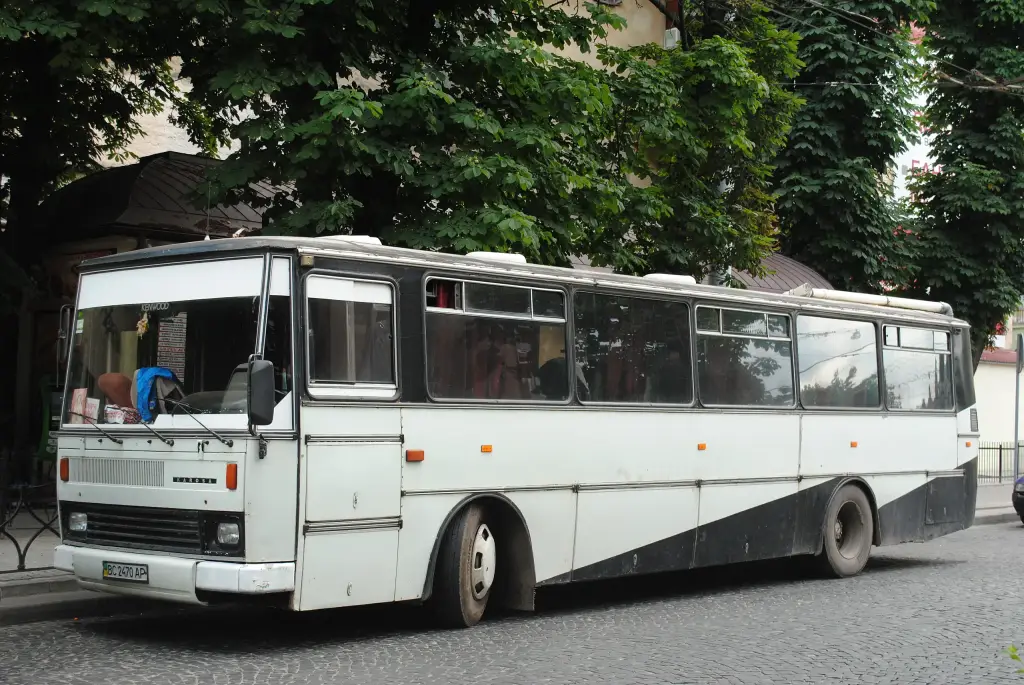
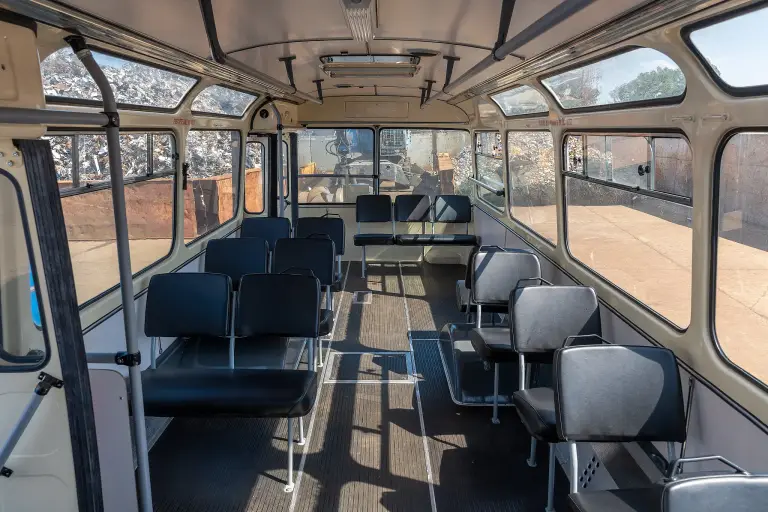
The body was semi-self-supporting with a frame, the engine and manual gearbox sat behind the rear axle and drove only the rear axle. The front axle was independent and the rear one solid, all on air suspension. On the right side there were two doors: the front one double-leaf and hinged, the rear one single and usually serving only as an emergency exit. Passengers had comfortable adjustable seats in a 2 + 2 layout, raised above the aisle so that a 5 m³ luggage hold fitted between the axles, with mesh shelves for hand luggage above the seats. A folding seat for a tour guide was often fitted by the front door. The driver’s cab was not separated from the saloon.
Production stopped in 1991, largely because passengers expected a higher level of comfort after the social and economic changes at the end of the 1980s. LC 735 and LC 736 coaches were moved from international and touring work to domestic long-distance lines, and the LC 735 was replaced in production by the C 735, whose second doors suited line service better. Between 1977 and 1991 Karosa built 6,519 LC 735 coaches.
The type was made in several subtypes. The LC 735.00, known as the Atmosférák, had a naturally aspirated LIAZ ML 635 engine and the noisy Hungarian Rába rear axle. The .20, or Malé turbo, had a quieter modernised rear axle and the turbocharged LIAZ ML 636; the .40, or Velké turbo, used the LIAZ ML 637, and the .1011 was the same bus under a different designation. Many LC 735s survive in museums and private collections in the Czech Republic and Slovakia, including cars of the Jihlava historic bus association, the ŠKODA-BUS club in Plzeň and the Dětřichov automobile museum.
Design and features
- Coach seating: adjustable seats on a raised platform, with mesh shelves above.
- 5 m³ luggage hold: under the floor between the axles, thanks to the raised passenger deck.
- Rear emergency door: the second door behind the rear axle was normally for emergencies only.
- Guide seat: a folding seat by the front door, often fitted for tour guides.
Karosa LC 735 versions
- LC 735.00: naturally aspirated LIAZ ML 635 and Rába rear axle, the Atmosférák.
- LC 735.20: turbocharged LIAZ ML 636 and a quieter modernised rear axle.
- LC 735.40: LIAZ ML 637, the Velké turbo.
- LC 735.1011: the same specification as the .40 under another designation.
The LC 735 succeeded the ŠD 11 coach and shared its body with the C 734; the long-route C 735 was its derivative. More are in the Karosa collection.
Video: Karosa LC 735 3A3 5277 Jihlava
Video on YouTube.
Sources
- Karosa LC 735, English Wikipedia: construction, doors, luggage hold
- Karosa LC 735, Czech Wikipedia: prototype, production, subtypes, survivors