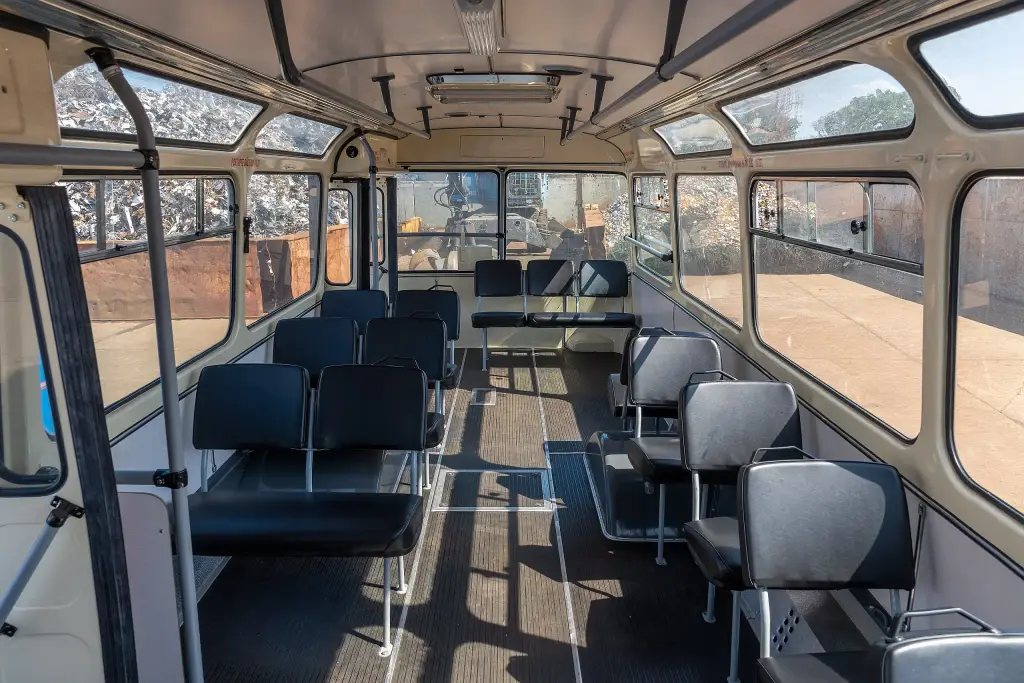
The Karosa ŠM 11 was the Czechoslovak city bus of the 1960s and 1970s. Made in Vysoké Mýto from 1965 to 1981, it broke with the front-engined Škoda 706 RTO and established the layout the Karosa city bus kept for decades.
Karosa ŠM 11 at a glance
| Maker | Karosa, Vysoké Mýto, Czechoslovakia |
|---|---|
| Production | 1965–1981 (pilot series 1964) |
| Series | Karosa Š |
| Predecessor | Škoda 706 RTO (city version) |
| Successor | Karosa B 731, from 1981 |
| Body | semi-self-supporting, panel construction |
| Engine | mid-mounted, between the axles under the floor |
| Gearbox | automatic |
| Doors | three pneumatic folding doors on the right |
| Suspension | air springs on all axles |
| Length | about 11 m |
| Built | about 9,900 |
History of the Karosa ŠM 11
The ŠM 11 was a completely new bus compared with the Škoda 706 RTO, which had its engine in front and only two doors. The engine moved to the middle of the bus, between the axles under the body, the suspension became pneumatic and the body a self-supporting panel structure. Passengers gained three entrance and exit doors, with the front door ahead of the front axle, a lower floor, wider doors and a much better view from the driver’s position. Like its predecessor it had a divided windscreen, which survived until the B 731.
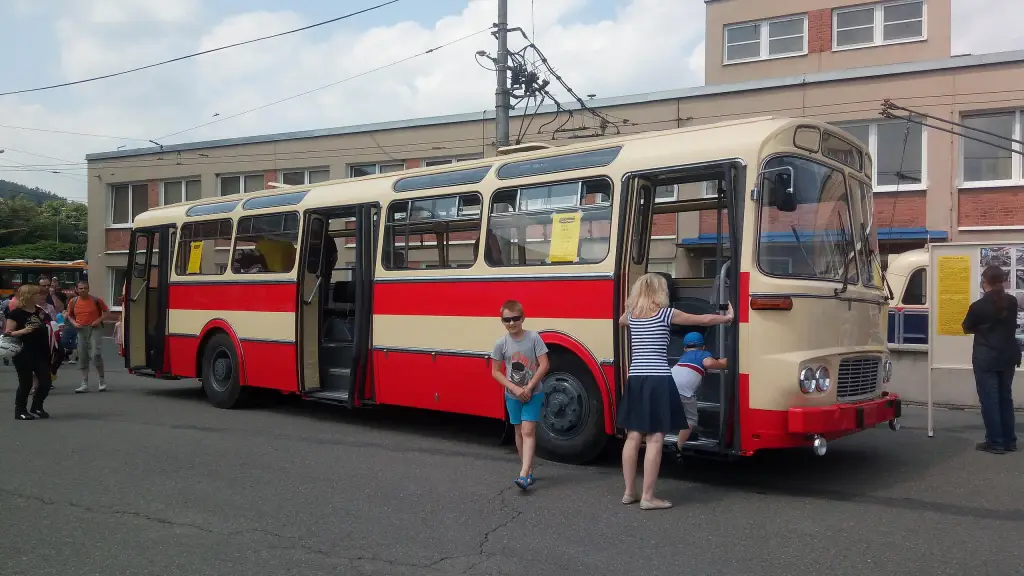
The vehicle was about 11 m long, hence the number in its name, and the Š in the designation came from Škoda, the maker of the engines for the whole Karosa Š range. The three folding doors were pneumatically operated, the front one with three leaves and the others with four. The bus was normally fitted with an automatic gearbox, and during production it gained central chassis lubrication, straight instead of corrugated aluminium side panels, a more powerful heater and a stronger engine. A planned unification with the Škoda T 11 trolleybus was dropped after only eight T 11s were built.
The first functional sample appeared in 1961, using some parts from Western Europe including the engine and rear axle; two more prototypes followed in 1962 and 1963. A verification series was built in 1964 and serial production began at the end of 1965, continuing until 1981, when the B 731 replaced the type. About 9,900 ŠM 11 buses were made.
Under Karosa’s monopoly before 1989 the ŠM 11 appeared in every Czechoslovak city. Prague had the largest fleet, with 1,249 buses in 1978 and more than 2,100 bought in total by the Prague transport company. The type served longest in Opava, where the last cars ran until 1994; the last ŠM 11 in Prague had been retired in 1987. Exports were less successful than those of the 706 RTO, but about 2,000 buses went abroad, to Bulgaria, Hungary, Mongolia, Poland, Romania, Tunisia and elsewhere. Many survive as historic vehicles in the Czech Republic and Slovakia.
Design and features
- Mid-mounted engine: between the axles under the floor, a complete change from the front-engined 706 RTO.
- Three pneumatic doors: quicker boarding and a lower floor than before.
- Automatic gearbox: fitted as standard.
- Air suspension: pneumatic springs on all axles.
Karosa ŠM 11 versions
- ŠM 11 (1965–1981): the standard city bus, progressively improved during production.
- Export buses: about 2,000 vehicles sold to Bulgaria, Hungary, Mongolia, Poland, Romania, Tunisia and other countries.
- Historic vehicles: preserved cars in Prague, Brno, Ostrava, Zlín, Plzeň, Bratislava and private collections.
The ŠM 11 was the city member of the Š series, alongside the intercity ŠL 11 and the coach ŠD 11; it was replaced by the B 931 line. More are in the Karosa collection.
Sources
- Karosa ŠM 11, English Wikipedia: construction, production, exports
- Karosa ŠM 11, Czech Wikipedia: prototypes, development, Prague fleet, end of service