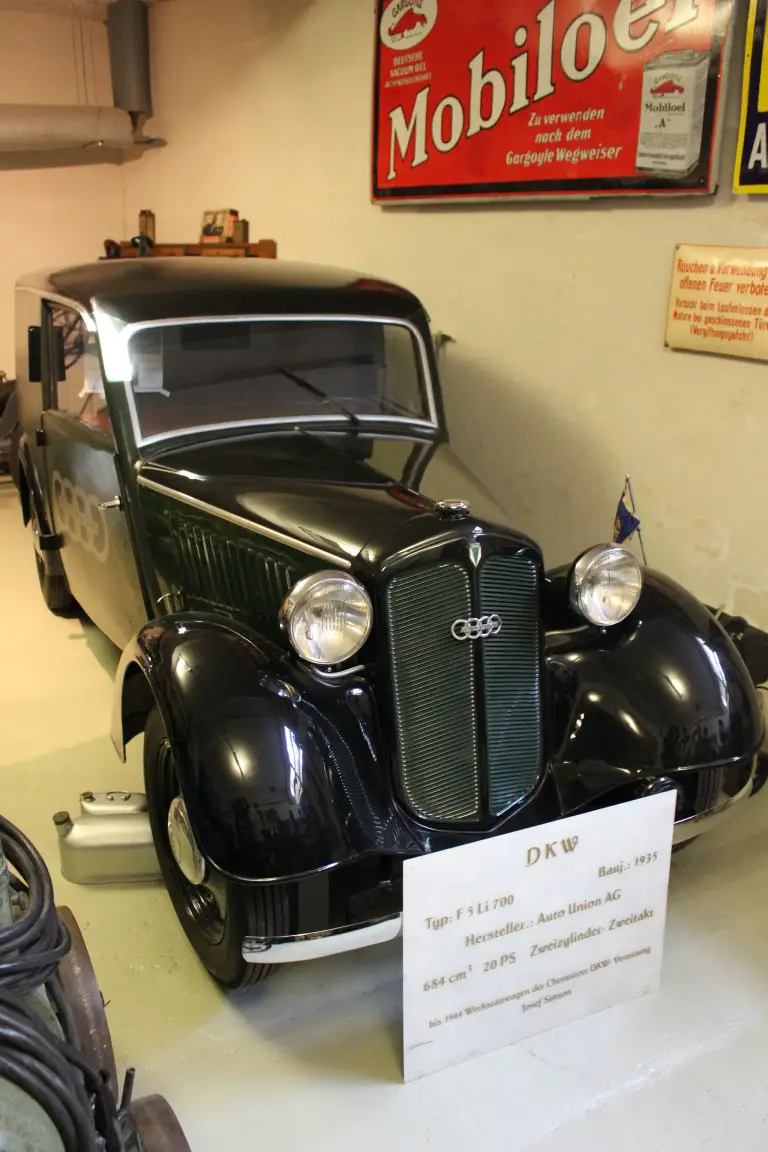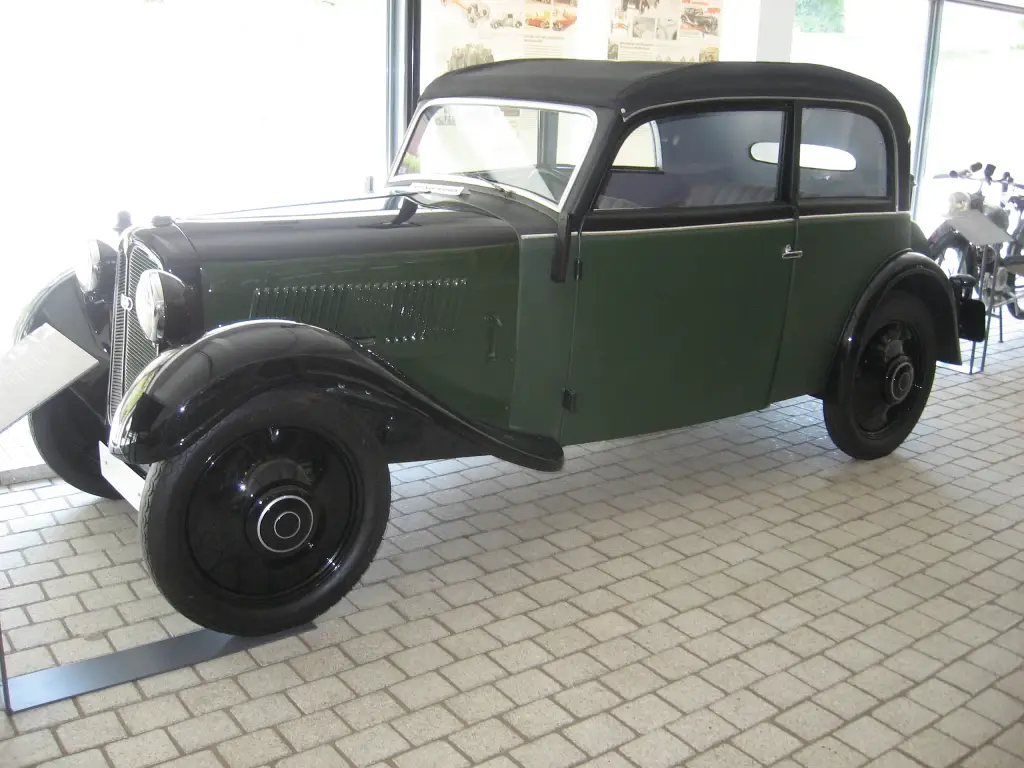
The DKW F2 was the car that turned DKW’s clever little front-wheel-drive concept into a sales success. Launched at the Berlin Motor Show in April 1932 and sold as the DKW Meisterklasse, it shared its engine and driveline with the F1 but offered a longer wheelbase and a bigger body. About 17,000 were built before the F5 replaced it in 1935.
DKW F2 at a glance
| Maker | Auto Union, Zwickau |
|---|---|
| Production | 1932–1935 |
| Launched | Berlin Motor Show, April 1932 |
| Predecessor | DKW F1 |
| Successor | DKW F5 |
| Engine | 584 cc two-stroke two-cylinder, 15 PS, 18 PS from 1933 |
| Gearbox | three-speed manual |
| Drive | front-wheel drive |
| Body | timber frame with U-profile subframe, cabrio-limousine or full cabriolet |
| Built | about 17,000 |
History of the DKW F2
A bigger F1
The F2 kept the 584 cc two-cylinder two-stroke engine of the F1, at first with a claimed 11 kW (15 PS) at 3,500 rpm, and sent it to the front wheels through a three-speed gearbox. What changed was the body: a longer wheelbase, a larger and more elegantly styled shell, and the same cheap construction as before — a self-supporting timber frame clad in artificial leather. All four wheels were independently sprung. The usual body was a cabrio-limousine, a four-seat two-door with a soft top and fixed window frames, and a full cabriolet was also available.
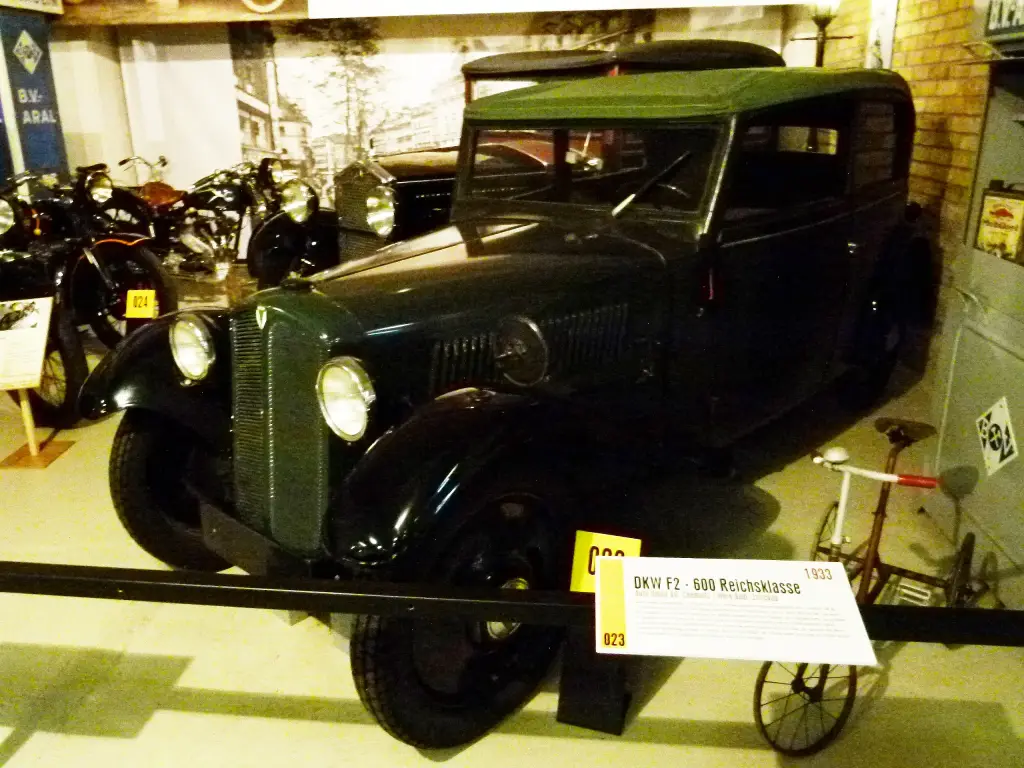
Schnürle porting
In 1933 the engine gained Schnürle porting in the cylinder heads. The system, designed by the two-stroke specialist Adolf Schnürle, improved the flow of fresh charge in and burnt gas out and let DKW raise the output of the 584 cc engine to 13 kW (18 PS). It went on to appear in most of the F2’s successors well beyond the 1930s. The same year brought the first of DKW’s confusing renamings: the improved 584 cc car became the DKW Reichsklasse, while a 692 cc version with the same porting was introduced as the DKW Meisterklasse 701 with a claimed 15 kW (20 PS).
Sales
The F2 was DKW’s best seller by a wide margin. In 1932 the company was fourth in German passenger car sales with 3,934 cars; in 1933, the year the government abolished the annual car tax, DKW overtook Mercedes-Benz and Adler to become the country’s second best selling brand behind Opel. The Meisterklasse was mildly rebodied as the F4 Meisterklasse in 1934 while the F2 Reichsklasse stayed on for another year, and in 1935 the DKW F5 replaced both.
Design and features
- Front-wheel drive: still unusual in 1932 and the basis of DKW’s reputation for grip.
- Schnürle porting: added in 1933, raising output from 15 to 18 PS.
- Light timber body: a self-supporting wooden frame with artificial-leather skin kept the price down.
- Independent suspension: all four wheels, on a car that cost little more than a motorcycle combination.
- Two names, two engines: Reichsklasse with 584 cc, Meisterklasse 701 with 692 cc.
DKW F2 versions
- Meisterklasse (1932–1933): the original 584 cc car with 15 PS.
- Reichsklasse (1933–1935): the same engine with Schnürle porting and 18 PS.
- Meisterklasse 701 (1933–1935): 692 cc and 20 PS.
- Cabrio-limousine and full cabriolet: the two body styles offered.
The F2 was replaced by the DKW F5 and followed the DKW F8 in the pre-war line. More cars are in the DKW collection.
Sources
- DKW F2, English Wikipedia: engine, body, upgrades, sales
- DKW F 2, German Wikipedia: model history