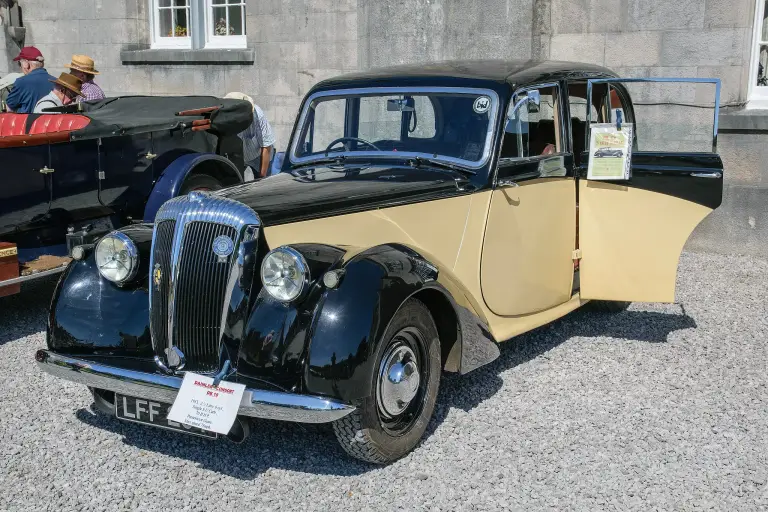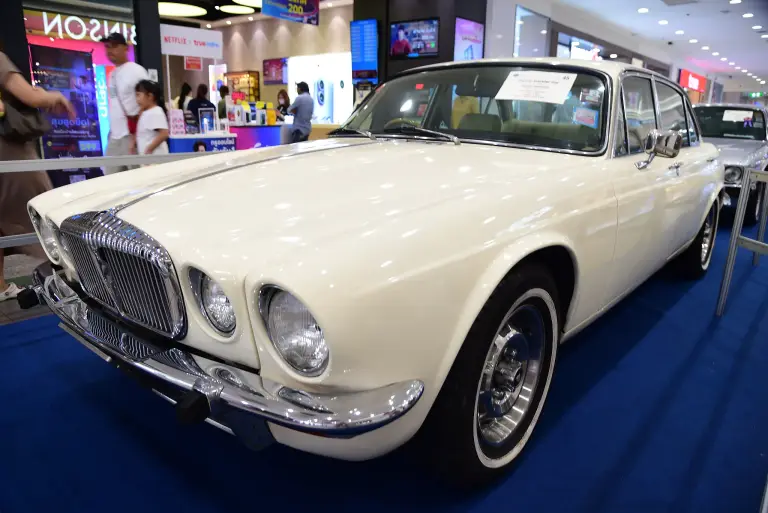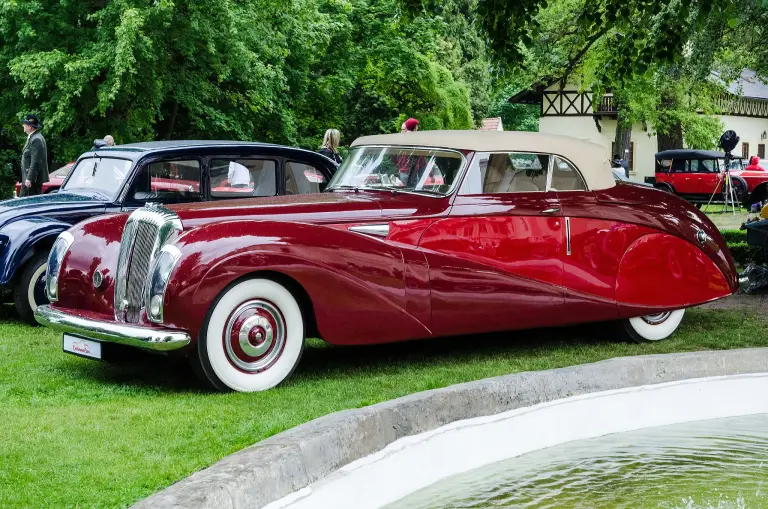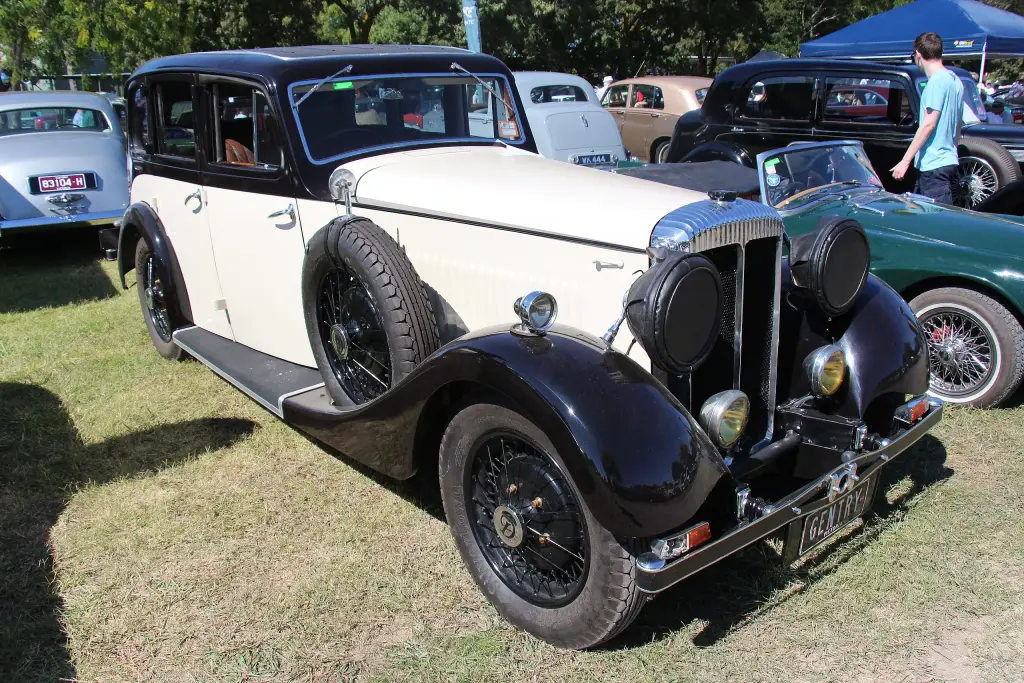
The Daimler Fifteen was the smallest and cheapest car in Daimler’s range between 1932 and 1937, named after its 15 hp tax rating. It was the first Daimler in more than twenty years to use ordinary poppet valves rather than the sleeve valves the company had championed, and the first to be sold for less than £500 since the First World War.
Daimler Fifteen at a glance
| Maker | The Daimler Company, Coventry |
|---|---|
| Production | 1932–1937 |
| Name from | 15 hp tax rating |
| Engine at launch | 1.8-litre six, poppet valves |
| Engine later | 2.0 litres (1934), 2.2 litres (1936), 2½ litres (1938) |
| Transmission | fluid flywheel and four-speed Wilson pre-selector |
| Brakes | Lockheed hydraulic with vacuum servo |
| Chassis | £350 |
| Six-light saloon | £450 |
| Coupé | £465 |
Based on one source.
History of the Daimler Fifteen
A Daimler for hard times
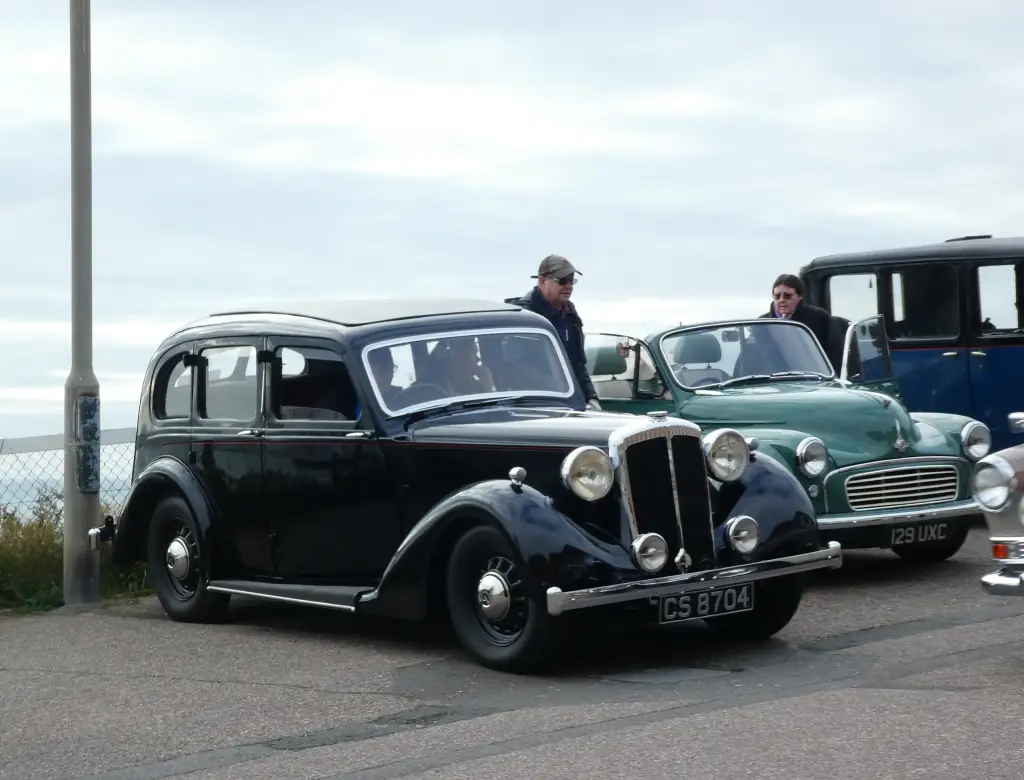
The Fifteen was launched in 1932 at the bottom of Daimler’s range, when the Depression was well established and the company, which also built economical BSA three-wheelers and from 1931 the mid-priced Lanchester range, moved downmarket to keep sales going. It was the first Daimler for more than two decades with an engine that breathed through conventional poppet valves: valve gear had improved enough to outweigh the advantages of the Daimler-Knight sleeve-valve system the company had used for years. The name came from the car’s 15 hp tax rating.
The 1.8-litre six was developed from the four-cylinder 1.2-litre Lanchester Ten, which used the same chassis and bodies in shorter form, and the same Daimler semi-automatic transmissions. Cylinders and the upper half of the crankcase were one cast-iron block with a detachable head carrying the valves and rocker gear, operated by pushrods from a chain-driven camshaft running in an oil bath below. The pistons were aluminium alloy and the crankshaft ran in four bearings with a vibration damper; lubrication was fully forced, with splash feed for cold starting. There were separate inlet and exhaust manifolds with a hotspot, natural water circulation and a mechanical fuel pump. Because of the fluid flywheel the engine could not be stalled in the ordinary way, so no automatic starter was needed.
Chassis and transmission
Engine, fluid flywheel and gearbox formed one unit held at four rubber-mounted points on the chassis. The transmission was Daimler’s fluid flywheel with a four-speed Wilson self-changing pre-selector gearbox, operated by a finger-and-thumb lever under the steering wheel, driving through an open propeller shaft to an underslung worm-drive rear axle. All springs were semi-elliptic with hydraulic shock absorbers, set wide to limit roll, and the frame passed below the rear springs so the floor could be low without wells. Lockheed hydraulic four-wheel brakes had a vacuum servo, the 19-inch wheels carried 4.75-inch tyres, and steering was by cam.
Growing engines and new bodies
In August 1934, ahead of a cut in annual tax, the engine grew to 2 litres by adding 10 mm to the stroke, with a redesigned cylinder head; Daimler claimed 10 to 15 per cent more performance, a water pump and thermostatic cooling came with it, and the wheels went to 18 inches with 5.5-inch tyres. The 1935 announcement brought redesigned saloon coachwork with a swept tail covering the spare wheel, wider bodies and the radiator and front wings independently mounted as on the Light Twenty. Front springs were lengthened, steering changed to worm and nut with an adjustable column, and centralised chassis lubrication and easy jacking were added. In August 1936 the engine went to 2.166 litres, the rear track widened by 1½ inches and the range was restyled with chromium-plated bumpers, Magna wheels, a new instrument board and a centrally controlled windscreen with dual wipers. The new coachwork was listed at £465 for a six-window saloon, £475 for a four-window sports saloon and £465 for a four-seater coupé, with the bare chassis at £350. Two years later the engine reached a full 2½ litres.
Design and features
- Poppet valves: the first Daimler in two decades without sleeve valves.
- Under £500: a six-light saloon cost £450 at launch, the coupé £465.
- Pre-selector transmission: fluid flywheel and Wilson gearbox with a fingertip lever under the steering wheel.
- Hydraulic brakes: Lockheed four-wheel hydraulics with a vacuum servo.
- Regular updates: a larger engine and new bodies almost every year.
Daimler Fifteen versions
- 1.8-litre (1932–1934): the original Fifteen.
- 2.0-litre (1934–1936): longer stroke, water pump and 18-inch wheels.
- 1936 facelift: wider bodies, worm-and-nut steering and a swept tail.
- 2.2-litre (1936–1938): enlarged engine and a wider rear track.
- Bodies: six-window saloon, four-window sports saloon and four-seater coupé.
The Fifteen was Daimler’s smallest car until the Conquest took that role after the war, and its pre-selector transmission carried on into the Consort. More cars are in the Daimler collection.
Sources
- Daimler Fifteen, English Wikipedia: engine, transmission, chassis, prices, yearly changes