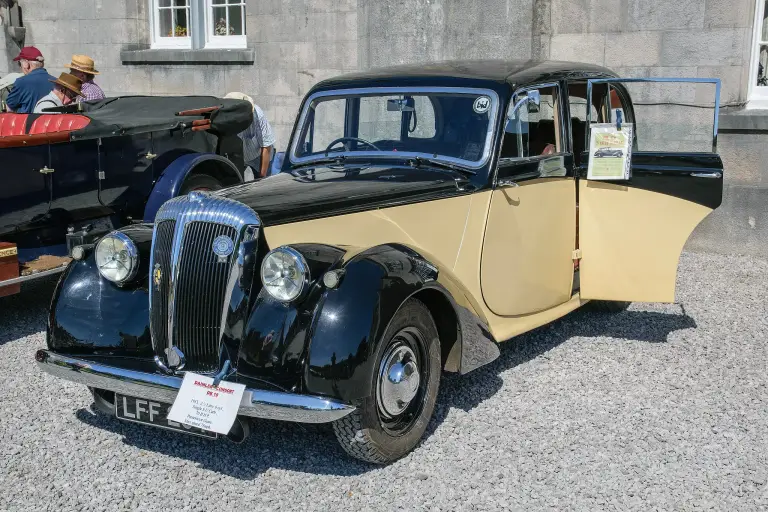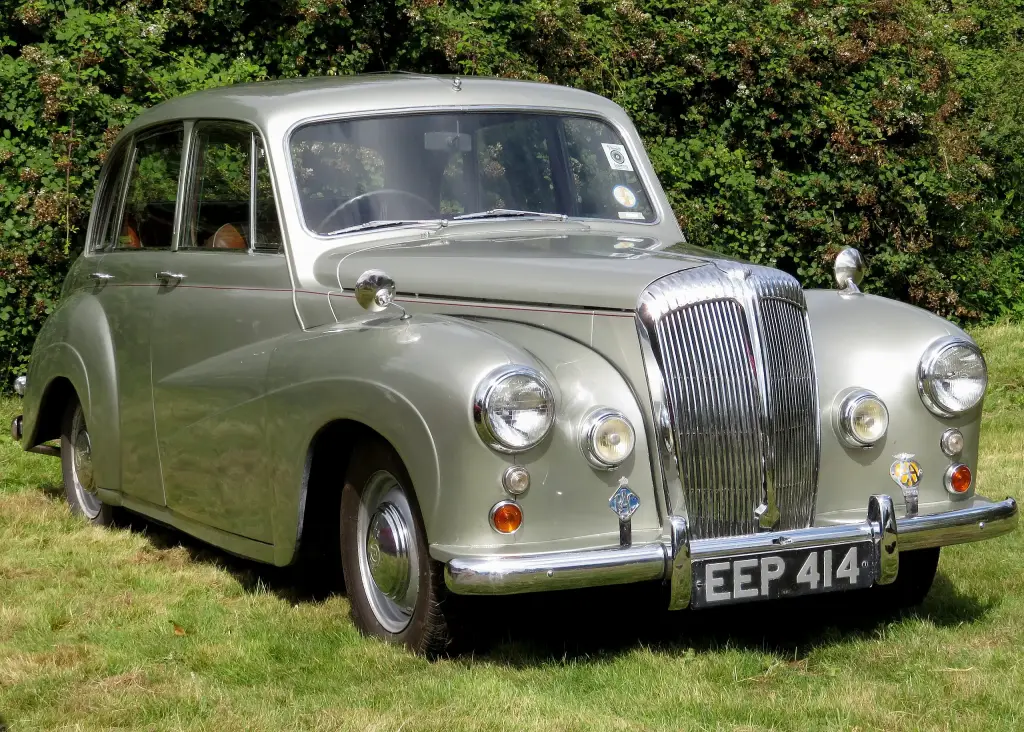
The Daimler Conquest was the company’s attempt at an affordable Daimler: a medium-sized saloon developed in four months from the Lanchester Leda and sold from 1953 to 1958. It replaced the Consort, used a new 2,433 cc straight-six and, in 100 bhp Century form, became the most successful Daimler of the 1950s.
Daimler Conquest at a glance
| Maker | The Daimler Company, Coventry |
|---|---|
| Production | 1953–1958 |
| Based on | Lanchester Leda and Fourteen |
| Engine | 2,433 cc straight-six, cast iron |
| Power | 75 bhp; 100 bhp in the Century |
| Bore and stroke | 76.2 × 88.9 mm |
| Gearbox | four-speed pre-selector with fluid flywheel |
| Wheelbase | 2,642 mm |
| Saloon weight | 1,397 kg |
| Top speed | 81 mph; 90 mph in the Century |
| Price at launch | £1,066 before tax |
| Built | 4,568 saloons 1953–1956; 4,818 Centuries |
History of the Daimler Conquest
From Lanchester in four months
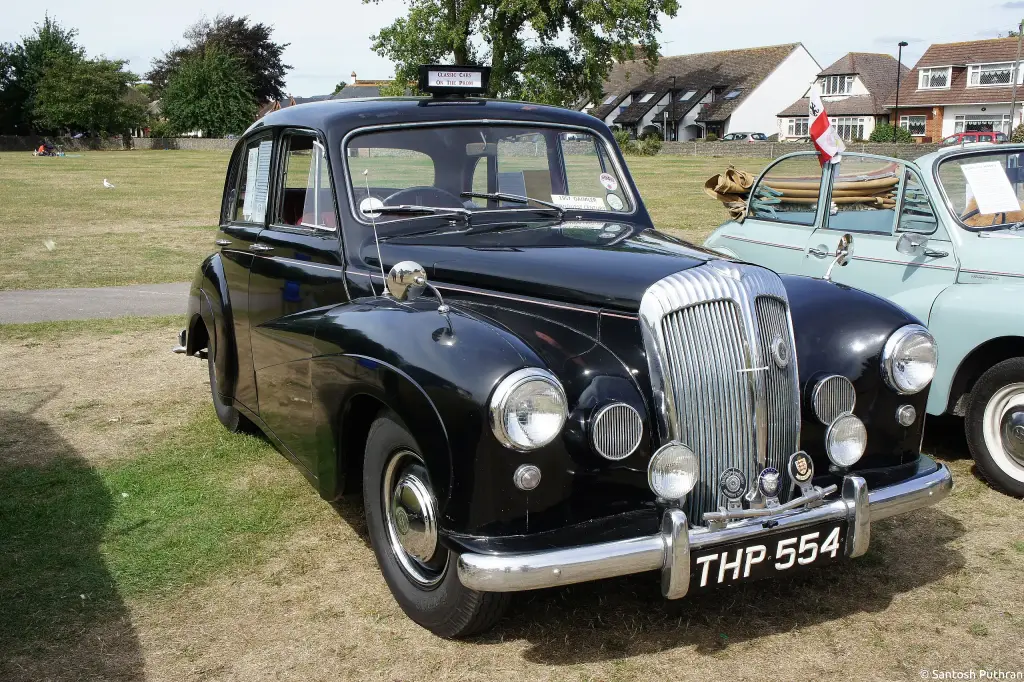
Daimler’s entry-level car of the immediate post-war years was the DB18 and its successor the Consort, both with small six-cylinder engines and both dating from 1945. Its sister marque Lanchester sold the four-cylinder Fourteen and the all-steel Leda in the same class. At the end of 1952 Daimler stopped the obsolete Consort, and early in 1953 the Leda followed; the four-door Leda was turned into the Daimler Conquest within four months of Bernard Docker, managing director of BSA, also taking over as managing director of Daimler in January 1953. The Conquest went on sale in May 1953 and replaced both cars.
The body was a slightly modified Leda shell, all steel apart from the earlier Fourteen’s timber frame, and apart from the grille and fog lamps the car was identical to the Lanchesters. The new engine was a cast-iron straight-six developed from Lanchester’s 2.0-litre four, with a single Zenith carburettor, a compression ratio of 6.6:1 and 75 bhp. The chassis was Daimler’s usual cruciform frame with double wishbone front suspension on laminated torsion bars, telescopic dampers and an anti-roll bar, leaf springs at the rear, cam-and-peg steering, Girling hydro-mechanical brakes and automatic lubrication of 21 points by a pump controlled by exhaust heat at start-up.
The Century
The 1954 Conquest Century added an alloy cylinder head with larger valves, higher compression, high-lift camshafts and twin SU carburettors for 100 bhp at 4,400 rpm, the figure that gave the car its name. It also had a stronger four-pinion differential and larger brake linings. It was the best seller of the range with 4,818 cars. The name Conquest itself referred to the Norman conquest of England in 1066, a link made through the launch price of £1,066 before tax.
In January 1955 the cars gained four inches more rear legroom, wider-opening doors and more interior trim. In October 1955 the Mark II models were announced for the Earls Court show, still as Conquest and Conquest Century, although the stronger car was now called the Daimler Century in sales literature; the built-in fog lamps gave way to valance-mounted lamps and their recesses became heater and air-vent ducts. A saloon tested by The Motor in 1953 reached 81.6 mph and 60 mph in 24.3 seconds at 20.3 mpg, and cost £1,511 including taxes.
Bodies and the end
Besides the saloon, Daimler offered an open two-seater Roadster with an aluminium body and castings instead of a timber frame, a four-seater drophead coupé with a powered roof, and a New Drophead with steel up to the B-pillars and alloy behind. The Roadster pioneered the Century engine, was shown at the 1953 Motor Show but only sold from 1954, and was dropped in 1955 after the dropheads had outsold it more than three to one. Rising prices and the fuel shortage after the Suez Crisis hit sales, and production ended by January 1958 before any replacement was ready. The Jaguar-based Daimler 250 V8 later became the Conquest’s indirect successor.
Design and features
- Leda origins: the Conquest was a Lanchester Leda with a Daimler grille and a new six-cylinder engine.
- Two power levels: 75 bhp in the Conquest, 100 bhp in the alloy-head Century.
- Pre-selector transmission: a four-speed Wilson gearbox with Daimler’s fluid flywheel.
- Traditional chassis: cruciform frame, torsion-bar front suspension and 21-point automatic lubrication.
- Several bodies: saloon, two-seater Roadster, drophead coupé and New Drophead.
Daimler Conquest versions
- Conquest saloon (1953–1956): the standard 75 bhp four-door, 4,568 built.
- Conquest Roadster (1954–1955): aluminium-bodied two-seater with the tuned engine.
- Conquest Century (1954–1958): 100 bhp six, the best seller with 4,818 cars.
- Four-seater drophead coupé: powered folding roof and few body parts shared with the Roadster.
- New Drophead: steel to the B-pillars, alloy behind.
- Mark II (from October 1955): revised lamps, vents and trim; the Century was marketed as the Daimler Century.
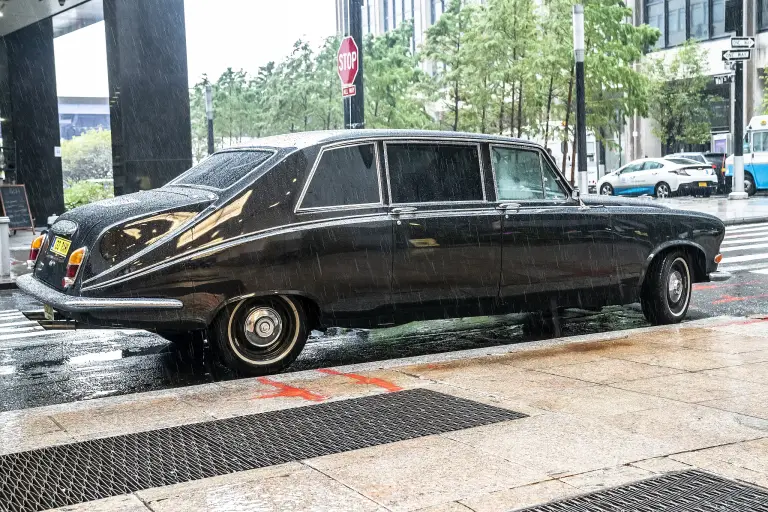
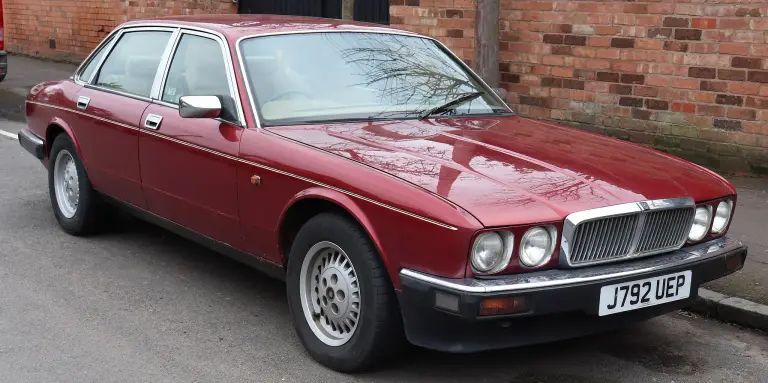
The Conquest replaced the Consort, and its place in the range was taken indirectly by the Daimler 250 V8. More cars are in the Daimler collection.
Sources
- Daimler Conquest, English Wikipedia: engine, chassis, performance, bodies, production
- Daimler Conquest, German Wikipedia: development history, model names, production figures