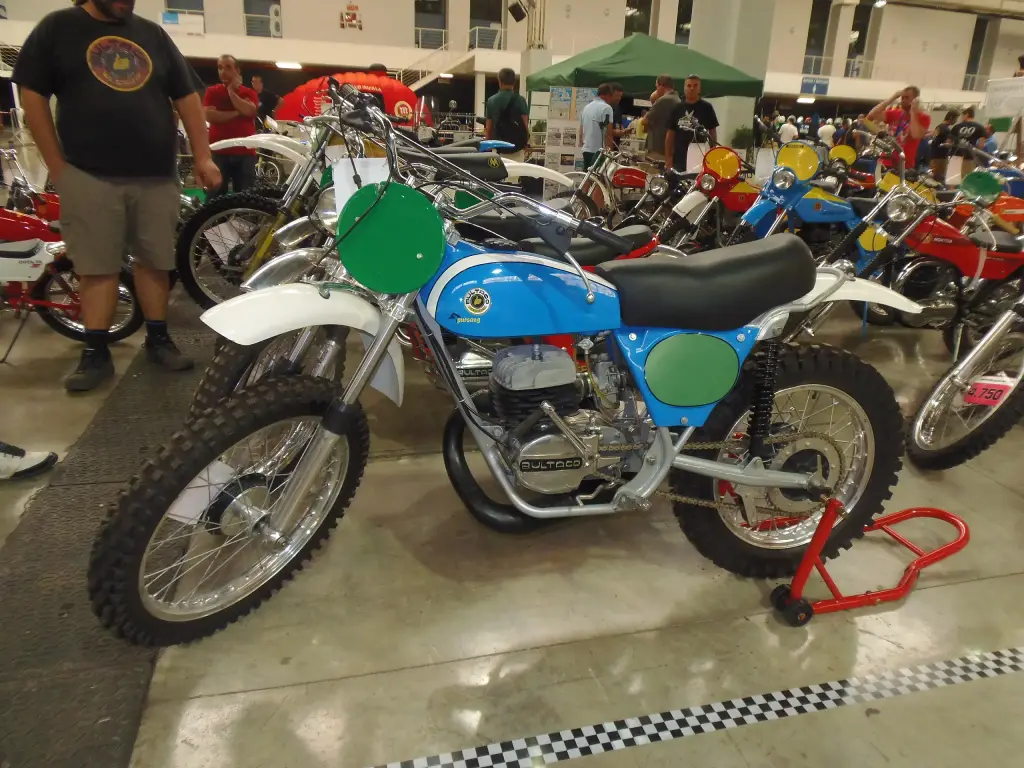
The Bultaco Pursang was the factory’s motocross motorcycle, built from 1967 to 1981. Developed after a short collaboration with the British Rickman brothers, it became one of the most successful and widely used competition bikes of its era, sold to private riders in a form close to the works machines.
Bultaco Pursang at a glance
| Maker | Bultaco, Barcelona |
|---|---|
| Production | 1967–1981 |
| Type | motocross |
| Predecessor | Rickman Métisse with Bultaco engine |
| First Pursang | Mk2 (1967) |
| Engines | 125 to 400 cc two-stroke singles |
| Popular capacities | 250 and 370 cc |
| Frame | single cradle |
| Brakes | drum front and rear |
| Mk2 gearbox | five speeds |
| Mk2 suspension | 167 mm front, 100 mm rear |
| Last version | Mk15, during the company’s crisis |
The Pursang has no English Wikipedia article; this page is based on the Catalan Wikipedia article.
History of the Bultaco Pursang
Francesc Xavier Bultó became interested in motocross after watching a race at Manresa in which his nephew Oriol Puig Bultó rode a modified Tralla 101; the race, run around 1959, was won by Pere Pi on a Derbi. In 1960 Bultaco produced its first machine for the discipline, the Sherpa S, a very basic evolution of the road-going Tralla 101. For the first Barcelona international motocross at the Pedralbes circuit, Bultó asked the British specialist Taylor Matterson to send two well-known motocross riders and builders, the brothers Don and Derek Rickman, for whom he had prepared a Tralla with a 175 cc engine. The Englishmen were impressed by the engine but disliked the frame; Don won the race anyway and agreed with Bultó that, back in England, he would build a new frame for the Bultaco engine.
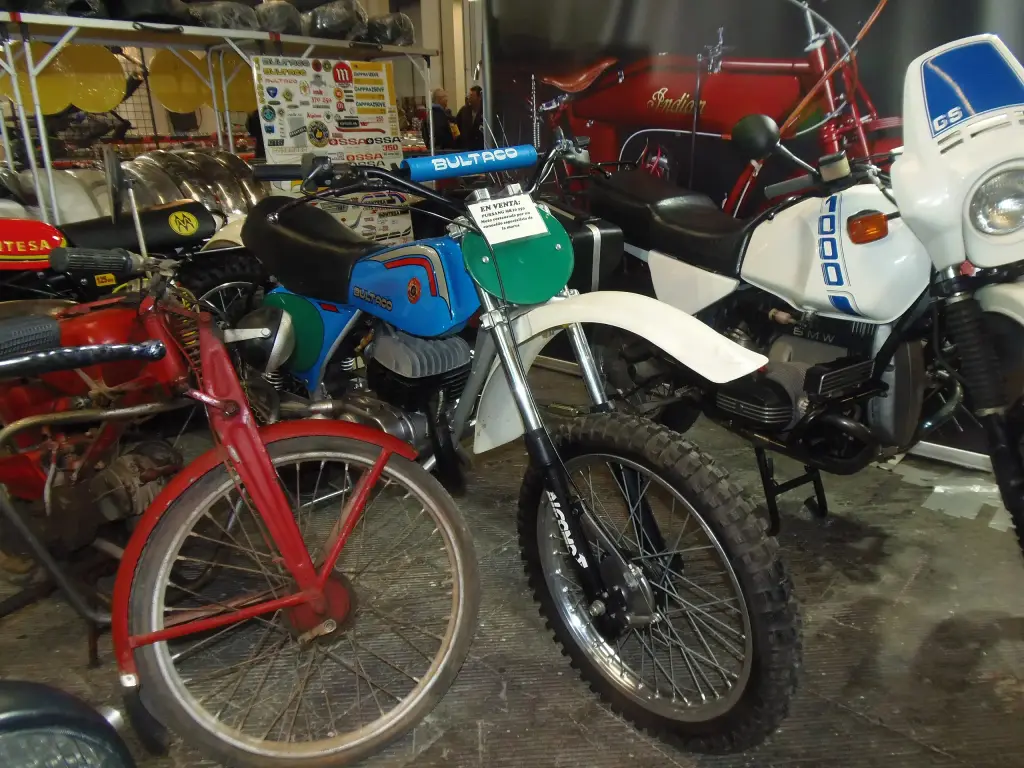
The resulting machine of 1964 was called Métisse because its parts came from different origins. The two sides agreed that the Rickmans would fit Bultaco engines to their Métisse and sell them in Britain, while Bultaco would build them in Catalonia for the rest of the world. From 1967 the Rickmans were overwhelmed by demand, and the Englishmen and Bultó disagreed over design, as the frame broke at the top, and over materials, since the Rickmans wanted Reynolds 531 tubing while Bultó was content with something cheaper. Bultaco therefore designed its own frame, a single cradle instead of the Métisse’s double cradle, and named the bike Pursang, or “thoroughbred”, in contrast to the earlier “mongrel”.
Counting the original Métisse as Mk1, the first true Pursang was the Mk2 of 1967, which began a line that lasted until the factory closed. It was a completely new machine compared with the Métisse, with a five-speed gearbox, an innovative tank and a much improved chassis using Bultaco-developed long-travel suspension of 167 mm at the front and 100 mm at the rear. Its Amal 389/30/BM carburettor had a 30 mm choke and the oversquare engine measured 72 by 60 mm. The Mk3, Mk4 and Mk5 followed between 1968 and 1971, the last with rounded shapes in the fashion of the time, and the Pursang was then the best-selling bike in its class. The Mk6 and Mk7 appeared in 1973, the Mk8 in 1975 with new suspension and brakes, and the Mk9, Mk10, Mk11, Mk12 and Mk15 between 1976 and 1979, the last during the company’s crisis.
The Pursang never won the motocross world championship, but it took many national titles and international events. Jim Pomeroy, Bengt Åberg and Harry Everts were its most famous riders, and Pomeroy’s victory on a Pursang Mk6 in 1973 at the Circuit del Vallès was the first world championship motocross win by a Catalan motorcycle. The Mk12 was known as the Everts in honour of the Belgian rider.
Design and features
- Rickman origins: the first Bultaco motocross bikes used frames built by the Rickman brothers in Hampshire.
- Works specification: following the Bultaco philosophy, the production bike carried the technical advances tested by factory riders.
- Pomeroy’s win: the first world championship motocross victory by a Catalan bike, at the Circuit del Vallès in 1973.
- Long model line: from the Mk2 of 1967 to the Mk15, with the Mk12 Everts named after Harry Everts.
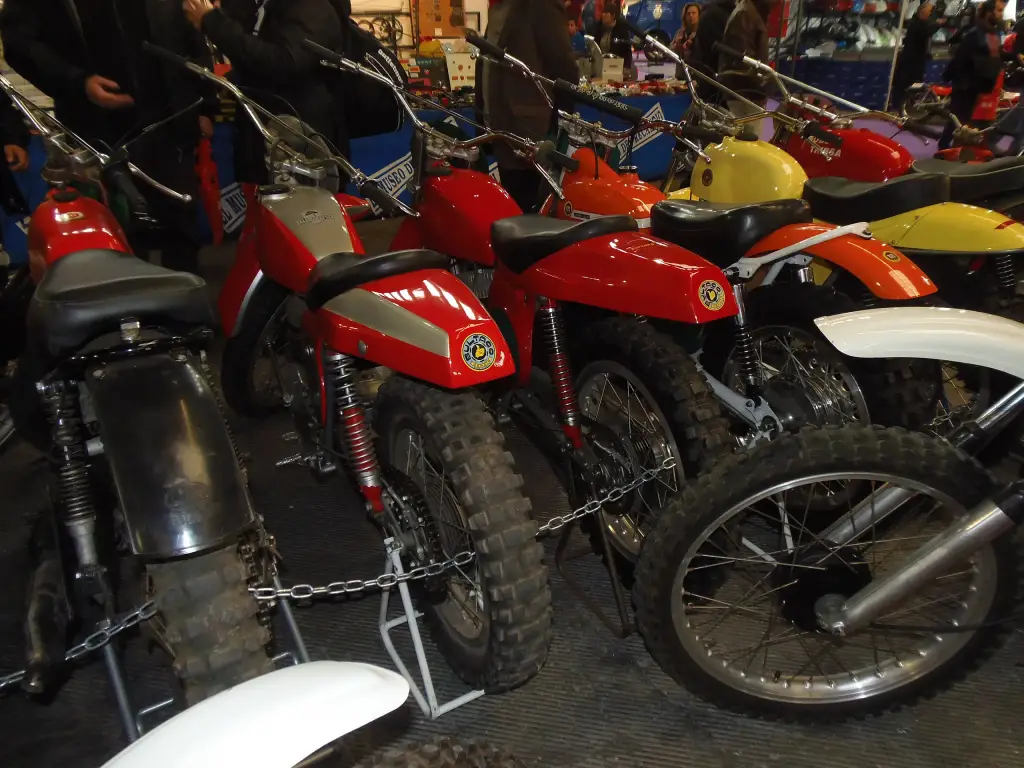
Bultaco Pursang versions
- Métisse (1964): the Rickman-built predecessor, later counted as Mk1.
- Mk2 (1967): the first true Pursang, with a new frame and five-speed gearbox.
- Mk6 (1973): the version with which Jim Pomeroy won at the Circuit del Vallès.
- Mk8 (1975): new suspension and brakes.
- Mk12 Everts (1978): a replica of Harry Everts’s works bike.
- Mk15: the final version, built during the company’s crisis.
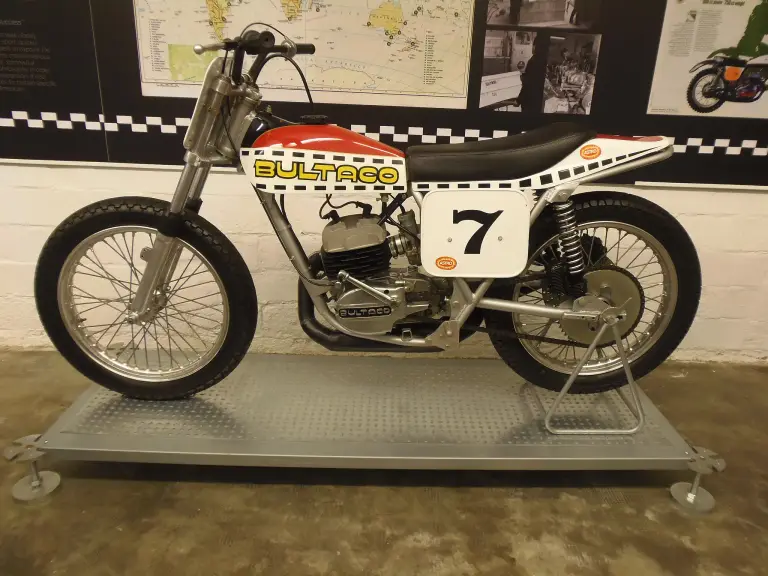
The Pursang was the basis of the Astro flat-track racer and the Frontera enduro. More models are in the Bultaco collection.
Sources
- Bultaco Pursang, Catalan Wikipedia: history, versions, racing record