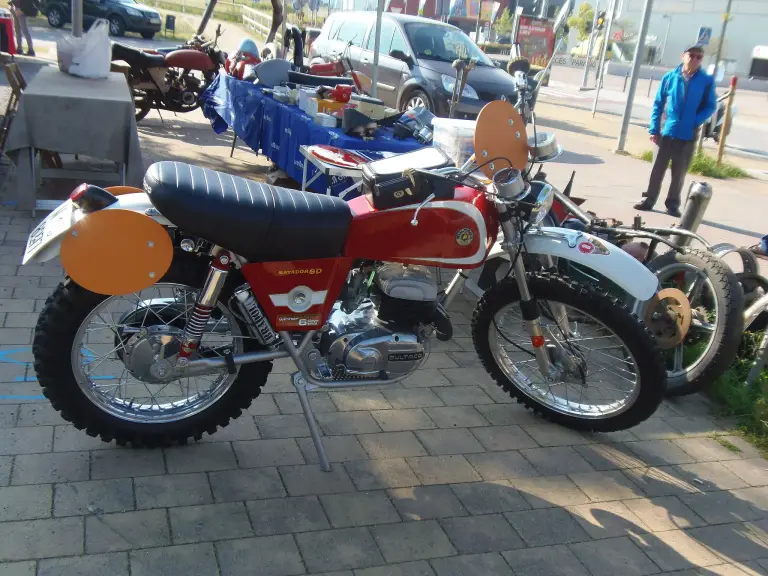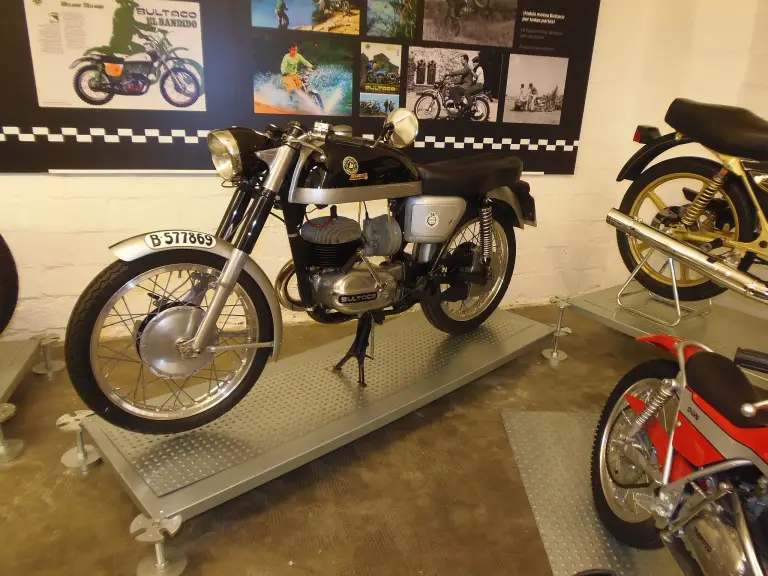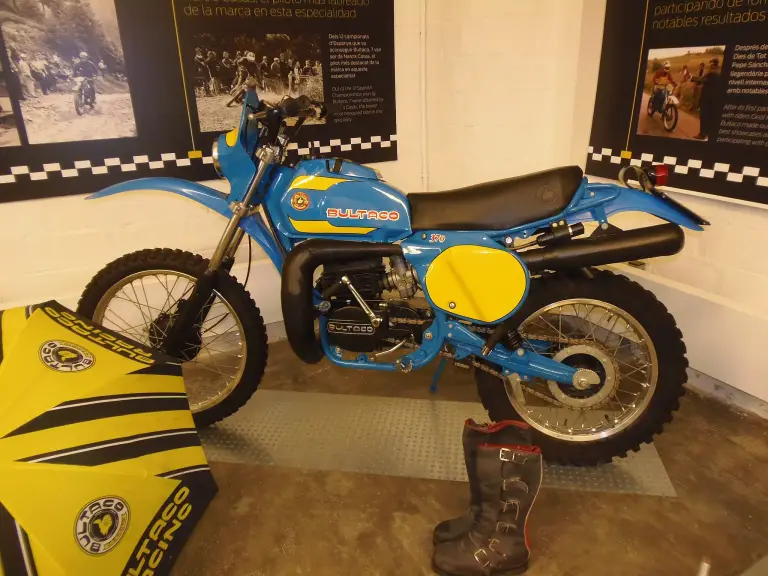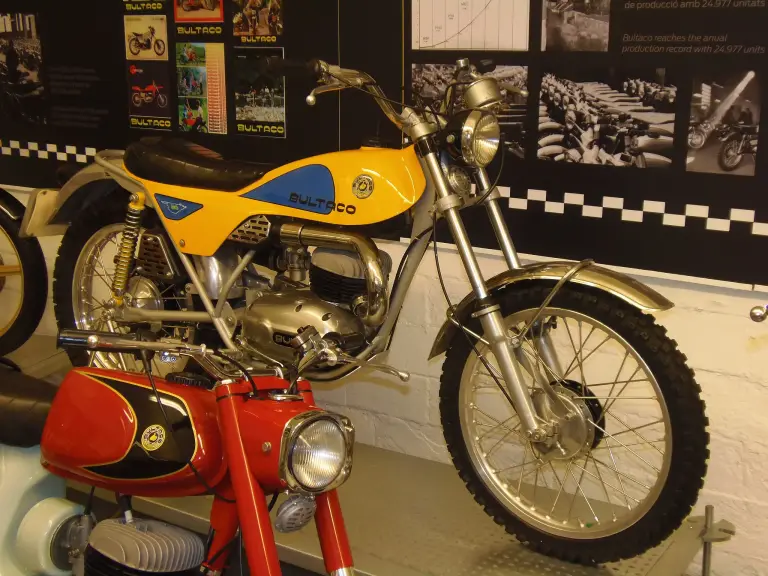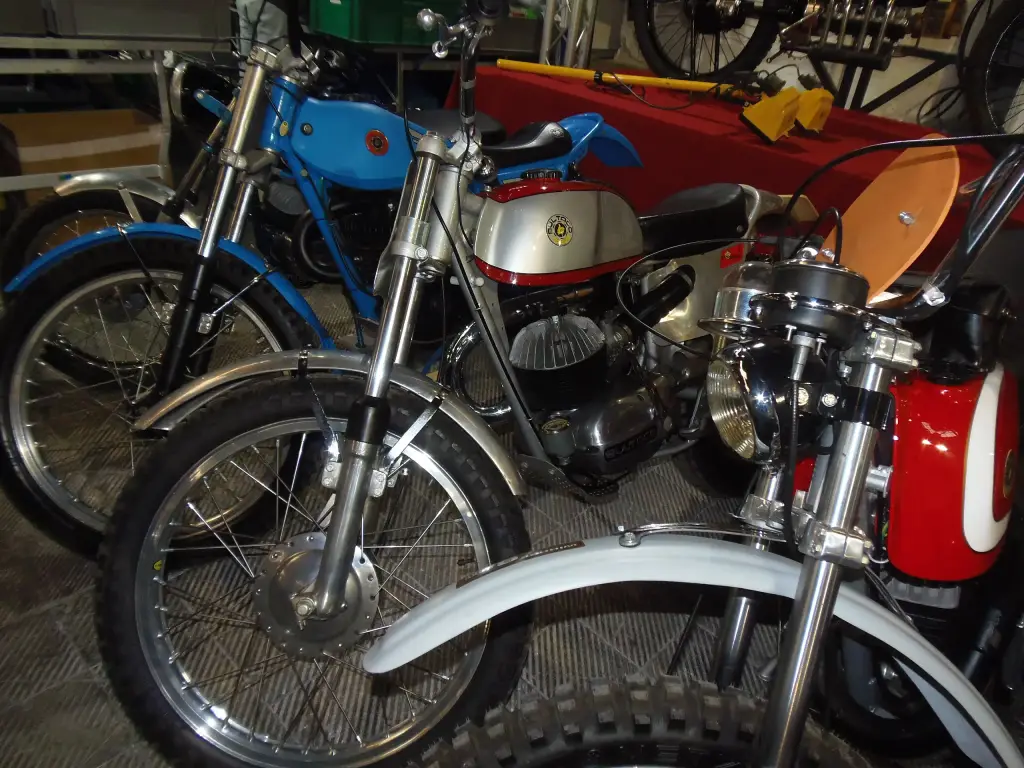
The Bultaco Sherpa T was the factory’s trials motorcycle, built from 1964 to 1985. Developed with the Northern Irish rider Sammy Miller, it was a light two-stroke machine that made the heavy British four-strokes obsolete and changed the sport.
Bultaco Sherpa T at a glance
| Maker | Bultaco, Barcelona |
|---|---|
| Production | 1964–1985 |
| Type | observed trials |
| Developed with | Sammy Miller |
| Competition debut | Scottish Six Days Trial, 1965 |
| Engines | 250 cc, then 350 cc; 74 and 125 cc youth versions |
| Frame | single cradle; double cradle on 74 and 125 cc |
| Brakes | drum front and rear |
| Model 27 | Sherpa T of 1967 |
| Model 199B | 340 cc Sherpa T of 1981 |
| World trials titles | eight in the 1970s |
The Sherpa T has no English Wikipedia article of its own; this page uses the English article on Bultaco and the Catalan and Italian articles on the model.
History of the Bultaco Sherpa T
In 1960 Bultaco launched two machines derived from the road-going Tralla 101: the Sherpa S for motocross and the Sherpa N, intended for rural use on bad roads, which sacrificed some top speed for greater climbing ability and the capacity to ford rivers. The Sherpa N can be considered Bultaco’s first trials bike and was the first of the brand to compete in a trial in the United Kingdom, at Traitors Ford on the Warwickshire and Oxfordshire border in 1961, ridden by Dan Shorey. Not long afterwards Francesc Xavier Bultó began organising the Trial de Sant Antoni on his family estate at Cunit, inspired by the British events he had discovered on his travels, and the machine used there, developed from a Sherpa N, became the origin of the Sherpa T.
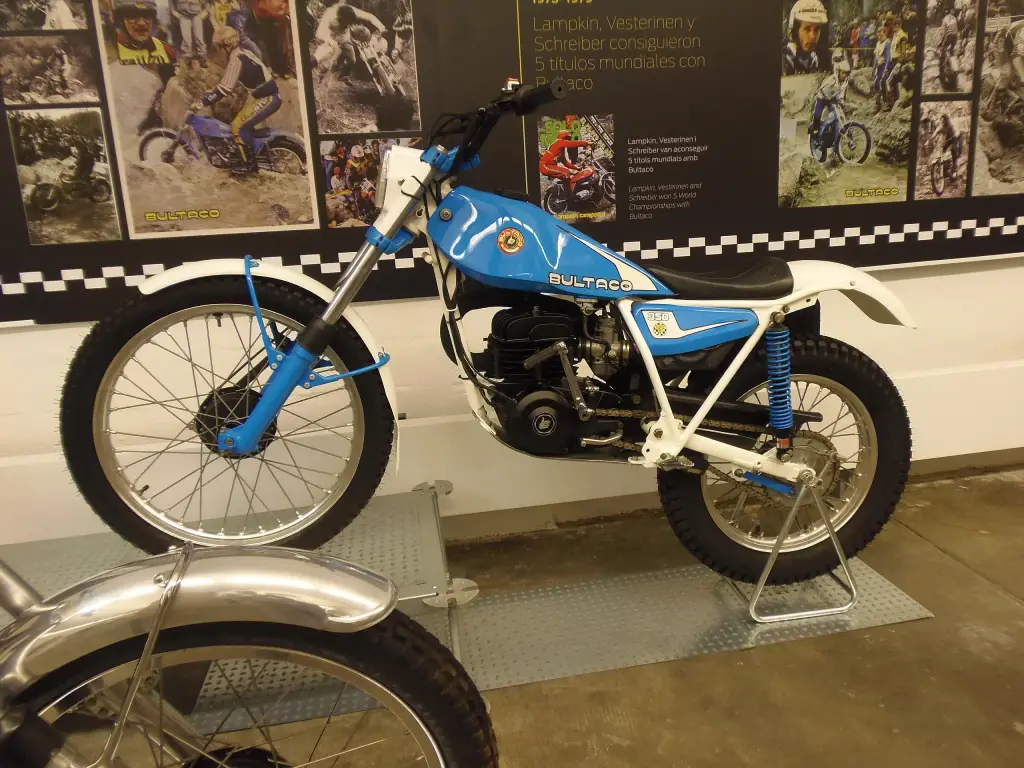
In 1964 Oriol Puig Bultó took two more developed prototypes to the Scottish Six Days, riding one himself and giving the other to the British rider Tom Ollerton. Puig Bultó retired, but Sammy Miller, the leading trials rider of the moment, tried the bikes and was so surprised by their lightness and lively engine that he asked to be kept informed of future developments. In the same year, at a promotional event in Grenoble, the Bultaco riders finished third, fourth and fifth, which convinced Bultó that with few changes his motorcycles could beat the heavy 500 cc four-strokes from BSA, Ariel, AJS and Norton.
The Sherpa T made its official competition debut at the 1965 Scottish Six Days, and from then on it won national championships, international events and world titles without interruption until the company’s problems in the early 1980s took it off the scene. Miller won the Scottish Six Days in 1965, 1967 and 1968 and the European trials championship in 1968 and 1970, and Bultaco dominated the World Trials Championship in the 1970s, winning the title eight times and the Scottish Six Days four times. The range grew from the original 250 to a 350 in 1972, with youth versions of 125 cc from 1975 and 74 cc from 1976. Its riders included Sammy Miller, Malcolm Rathmell, Martin Lampkin, Yrjö Vesterinen, Bernie Schreiber, Charles Coutard, Manuel Soler and Toni Gorgot.
Design and features
- Two-stroke revolution: the light, responsive engine ended the dominance of heavy British four-strokes.
- Sammy Miller: developed with the leading trials rider of the time, who won the Scottish Six Days three times on it.
- Works specification: production bikes carried the advances tested in competition, so a private rider could buy a world championship-winning machine.
- Wide range: 250 and 350 cc models plus 74 and 125 cc versions for young riders.
Bultaco Sherpa T versions
- Sherpa T “Sammy Miller” (1964–1967): the original model developed with Miller.
- Sherpa T (1967–1968): the second series, including model 27.
- Sherpa T 250 (1968–1982): the longest-running version.
- Sherpa T 350 (1972–1985): the larger-capacity model, including the 340 cc model 199B.
- Sherpa T 125 (1975–1980): youth version with a double-cradle frame.
- Sherpa T 74 (1976–1982): the smallest version, for riders from 16.
The Sherpa T succeeded the Lobito T as the trials model, while the Matador covered enduro. More models are in the Bultaco collection.
Sources
- Bultaco Sherpa T, Catalan Wikipedia: history, development with Sammy Miller
- Bultaco Sherpa T, Italian Wikipedia: versions and production years
- Bultaco, English Wikipedia: world titles, Scottish Six Days wins