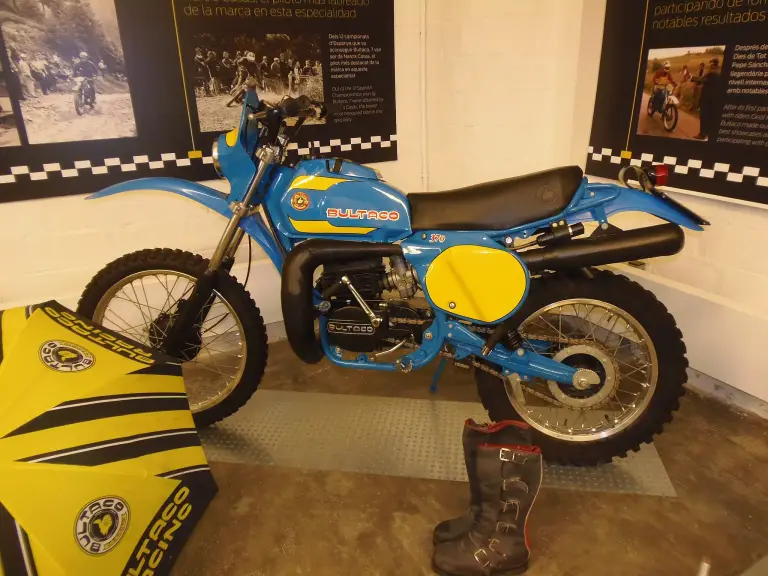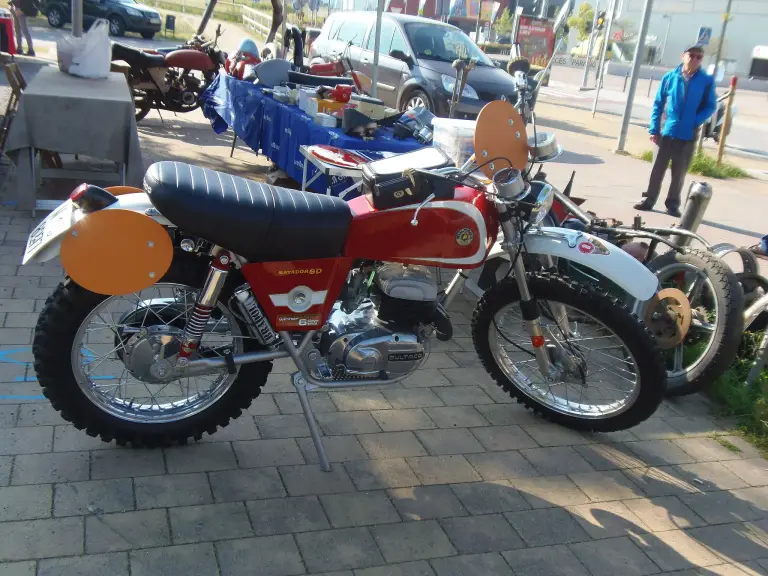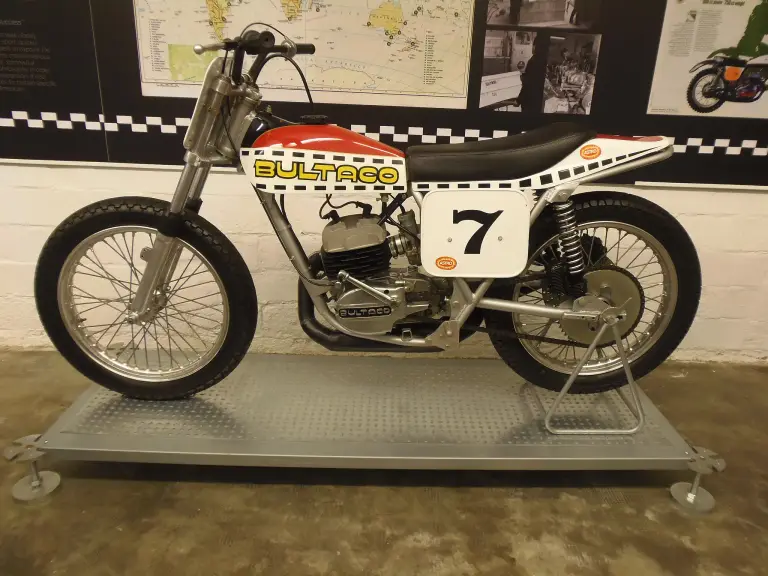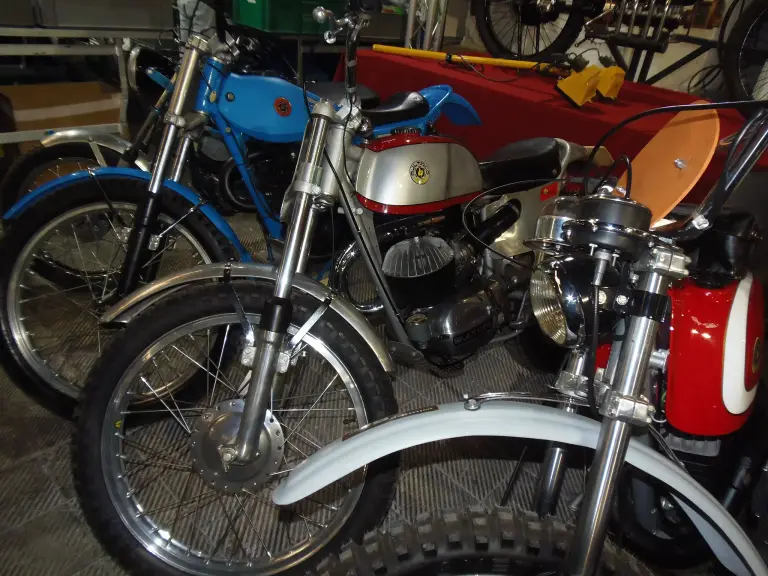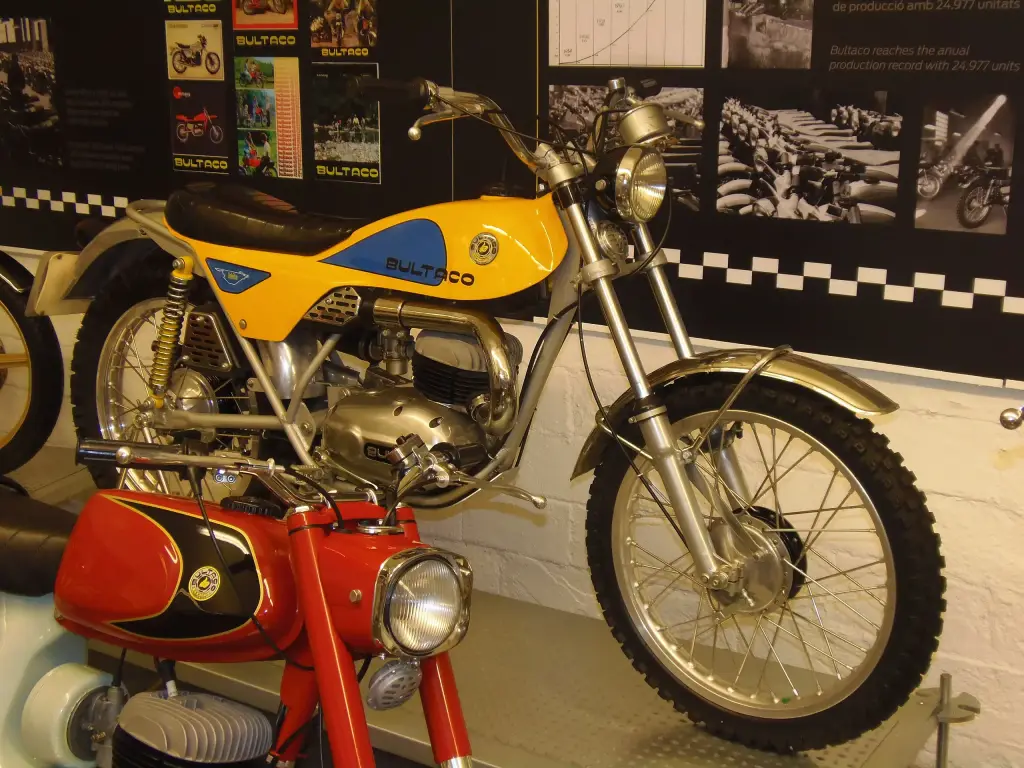
The Bultaco Lobito was a light motorcycle for mixed road and off-road use, made from 1966 to 1976. Cheap, simple and usually yellow, it became the first motorcycle of many Spanish teenagers and one of the most familiar Bultacos of the 1970s.
Bultaco Lobito at a glance
| Maker | Bultaco, Barcelona |
|---|---|
| Production | 1966–1976 |
| Type | trail / mixed road and off-road |
| Engines | 74, 100, 125 and 175 cc two-stroke singles |
| First model | Lobito 100 (1966) |
| Frame | single cradle; double cradle on the Lobito T |
| Brakes | drum front and rear |
| Colour | yellow; the first 1966 version was blue and black |
| Target riders | 16 to 18 years old, on the 74 cc A1 licence limit |
| Last version | Lobito T (1975), trial-oriented |
| Replaced by | Frontera 74 and Sherpa T 74 |
| Name revived | Derbi Lobito, 1999–2001 |
The Lobito has no English Wikipedia article; this page is based on the Catalan Wikipedia article.
History of the Bultaco Lobito
In 1966 Bultaco launched the Lobito 100 in Spain with a 100 cc engine. It was not a fully specialised machine, being intended for weekend rides, but it let the many enthusiasts of the time take their first steps in mountain motorcycling. It has sometimes been called the first Bultaco trail bike, years before the company launched its first model with that name, the Alpina. Its success was such that before the end of the year the original 100 cc version was joined by a Mk2 for riders between 16 and 18, whose engine was reduced to 74 cc, the legal limit for holders of the A1 licence available at 16, with everything else unchanged.
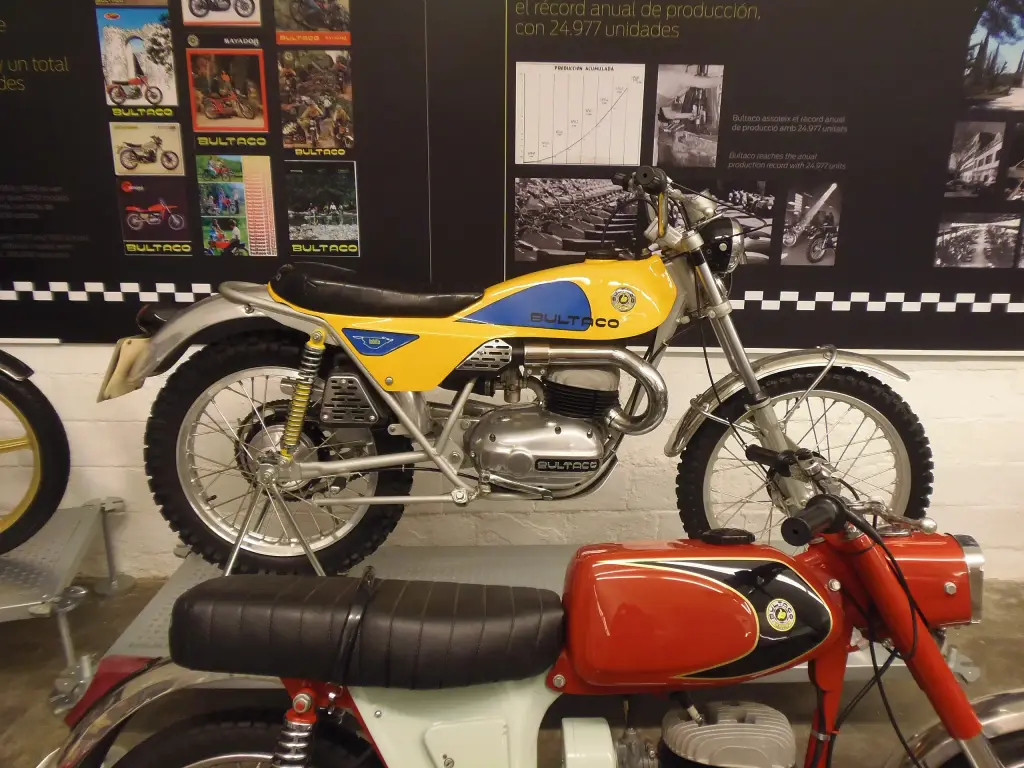
The Mk3 was presented at the 1969 Barcelona motor show in 74, 100 and 125 cc. It had little in common with the first Lobitos: besides the bright yellow colour it now had a clear trials character. Gradually the Mk3 drifted towards motocross, a direction stressed in the Mk4 with 125 and 175 cc engines. As a result, the Mk5 appeared in mid-1971 with engines even closer to those of the Pursang motocross bike; the Mk4 and Mk5 were intended for export and were hardly sold in Spain at all.
In 1972 a new evolution, the Mk6 family with 74, 125 and 175 cc engines, returned to its more trials-oriented origins after the disparity of performance seen in the Mk5 compared with the Mk3. The Mk6 was gentler and easier to handle, and so better suited to non-specialist riders. The trend continued in 1973 with the Mk7, aimed at modest enduro use, and was consolidated with the Mk8 of 1974. In 1975, while the Mk8 was still in production, Bultaco launched a final Lobito entirely dedicated to trials, the Lobito T, built in 74 and 125 cc. Together with the Mk8 it stayed in the catalogue until 1976, after which Bultaco abandoned the Lobito to make way for the Frontera 74 and the Sherpa T 74. The name lived on in 1999, when Derbi used it for a special edition of its Senda 50 that was built until 2001.
Design and features
- Yellow livery: after the blue and black first version, almost every Lobito was yellow, whole or with blue or red stripes.
- 74 cc for young riders: the Mk2 was created for 16-year-olds limited to 74 cc by the A1 licence.
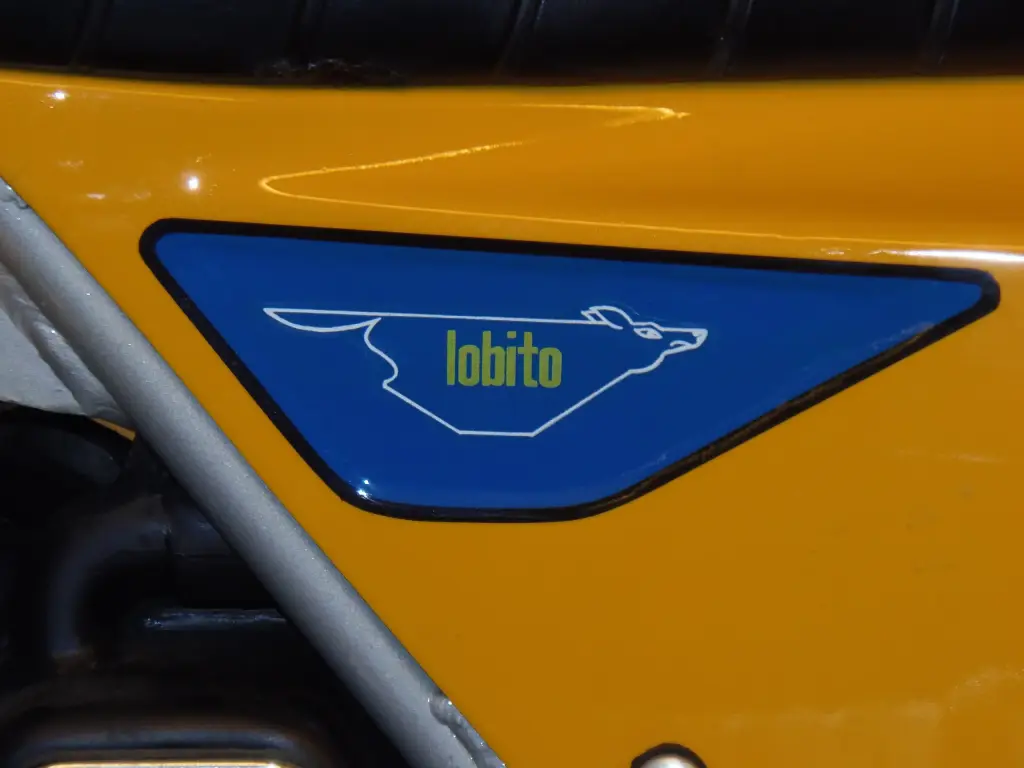
- Wolf logo: the name means “little wolf”, and the model’s logo was the silhouette of a running wolf.
- Everyday bike: light, nimble and with a lively engine, it also worked well in town and became a 1970s icon.
Bultaco Lobito versions
- Lobito 100 (1966): the original 100 cc trail bike, blue and black.
- Mk2 (1966): 74 cc version for riders from 16, otherwise identical.
- Mk3 (1969): 74, 100 and 125 cc, with a stronger trials character and yellow paint.
- Mk4 and Mk5 (1971): 125 and 175 cc, motocross-influenced and mainly for export.
- Mk6 (1972): 74, 125 and 175 cc, gentler and closer to the original concept.
- Lobito T (1975): 74 and 125 cc trials version, the last of the line.
The Lobito was replaced by the Frontera and the Sherpa T. More models are in the Bultaco collection.
Sources
- Bultaco Lobito, Catalan Wikipedia: history, versions, colours, name