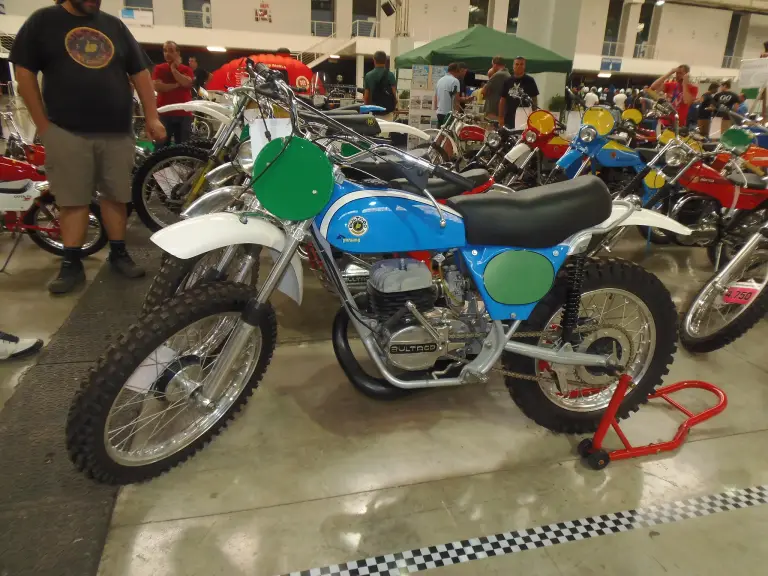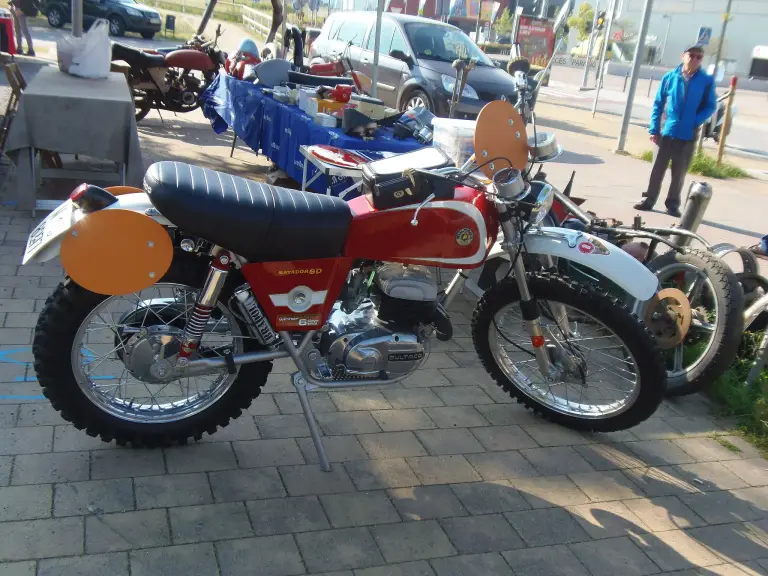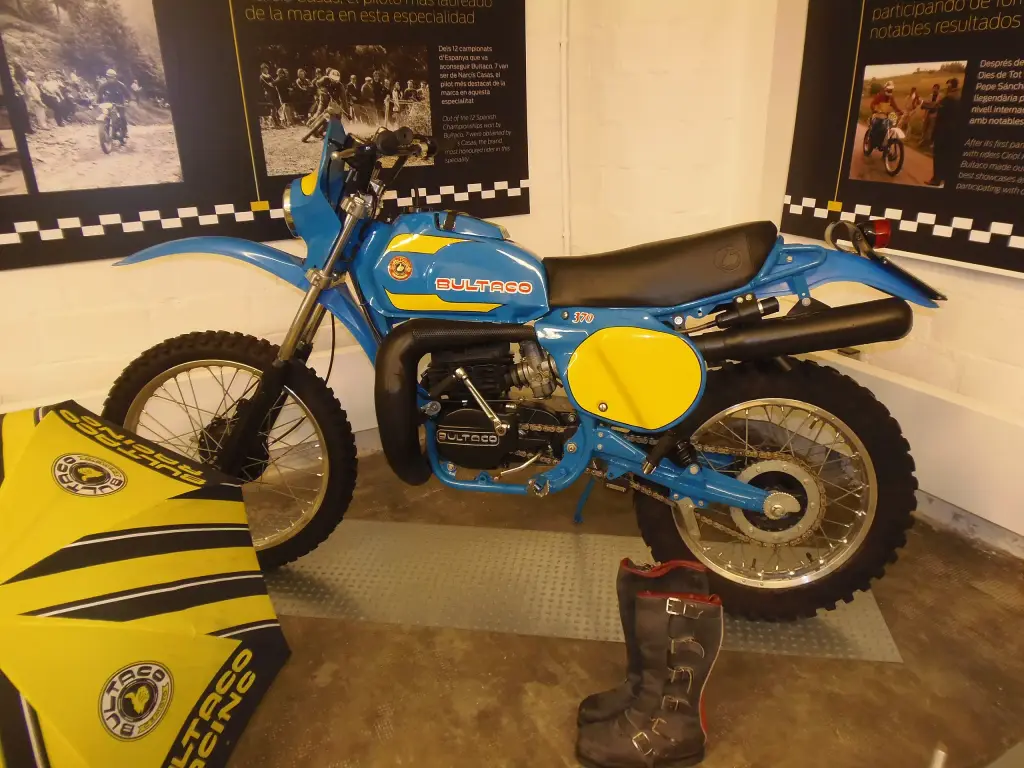
The Bultaco Frontera was the company’s enduro machine of the late 1970s. Introduced in 1975 as a much lighter and more modern replacement for the Matador, it was closely related to the Pursang motocross bike and was built until 1981.
Bultaco Frontera at a glance
| Maker | Bultaco, Barcelona |
|---|---|
| Production | 1975–1981 |
| Type | enduro (“Todo Terreno”) |
| Predecessor | Bultaco Matador |
| First version | Mk9 (1975) |
| Engines | 74 to 370 cc two-stroke singles, air-cooled |
| Mk10 power | 32 CV at 8,000 rpm |
| Frame | single cradle; double cradle on 74 and 125 cc |
| Brakes | drum front and rear |
| Key versions | Mk10 (1976), Gold Medal (1977), Mk11 (1978) |
| Military version | “Guardia Civil”, model 160, 1976 |
| Last version | Mk12 370 TT; Mk15 TT prototype not produced |
The Frontera has no English Wikipedia article; this page is based on the Catalan Wikipedia article.
History of the Bultaco Frontera
The Frontera was not a simple update of the Matador but a completely different concept. Bultaco had been working on a replacement for years, and after the failure of the Biflecha in 1973 the factory riders chose a more radical solution: adapting the light and powerful Pursang motocross bike to enduro regulations. The idea, urged among others by Toni Soler, worked, and the result was the Frontera of 1975. The first of the line was called Mk9, continuing the Pursang numbering with which it was closely related. It was initially built in 250 and 360 cc, although the larger engine was a little abrupt in response and soon received a softer, flatter power curve.
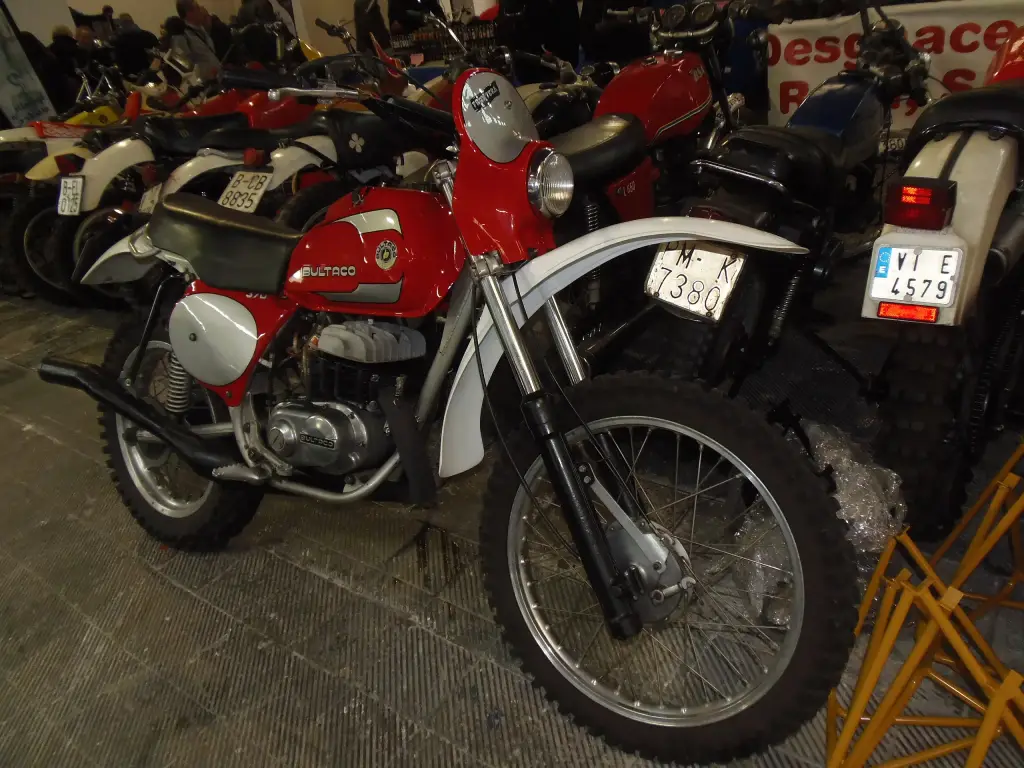
A year later the Mk10 brought major changes: 32 CV at 8,000 rpm, a five-speed gearbox with longer ratios, a smaller and shorter frame, stiffer suspension for better behaviour and a more sophisticated electrical system. That year also saw versions for young riders with 74 and 125 cc engines and styling that copied the Mk10, filling the gap left by the Lobito after that model had turned to trials as the Lobito T in 1975. In 1977, while the Mk10 was still on sale, Bultaco added the Gold Medal, derived directly from the Pursang Mk10 of that year and closer to a road-registered motocross bike than to a pure enduro.
The high point came in 1978 with the Mk11, the most successful version of the line, a high-performance enduro that marked the beginning of the end of its run of successes. Narcís Casas won his last Spanish enduro championship, and Bultaco’s, on an official Mk11 370 that year, shortly before the company’s financial crisis deepened in 1979 and led to bankruptcy and closure. From 1979 the racing department was all but gone, and Bultaco concentrated on cosmetic updates such as the yellow Frontera 74 and the white Mk11. The Mk12 370 TT was a road-registered version of the 1978 Pursang Mk12 Everts, and the last attempt at renewal, the Frontera Mk15 TT prototype shown to the press around 1980, never reached production.
Design and features
- Pursang-based: the Frontera took the motocross chassis and engine and adapted them to enduro use.
- Youth versions: 74 and 125 cc models replaced the Lobito for younger riders in 1976.
- Spanish titles: riders such as Narcís Casas, Josep Maria Pibernat, Joan Riudalbàs and Toni Soler won Spanish enduro championships on the Frontera.
- Military version: the 1976 “Guardia Civil” model 160 was a Mk9 painted green for the mountain unit of the Civil Guard.
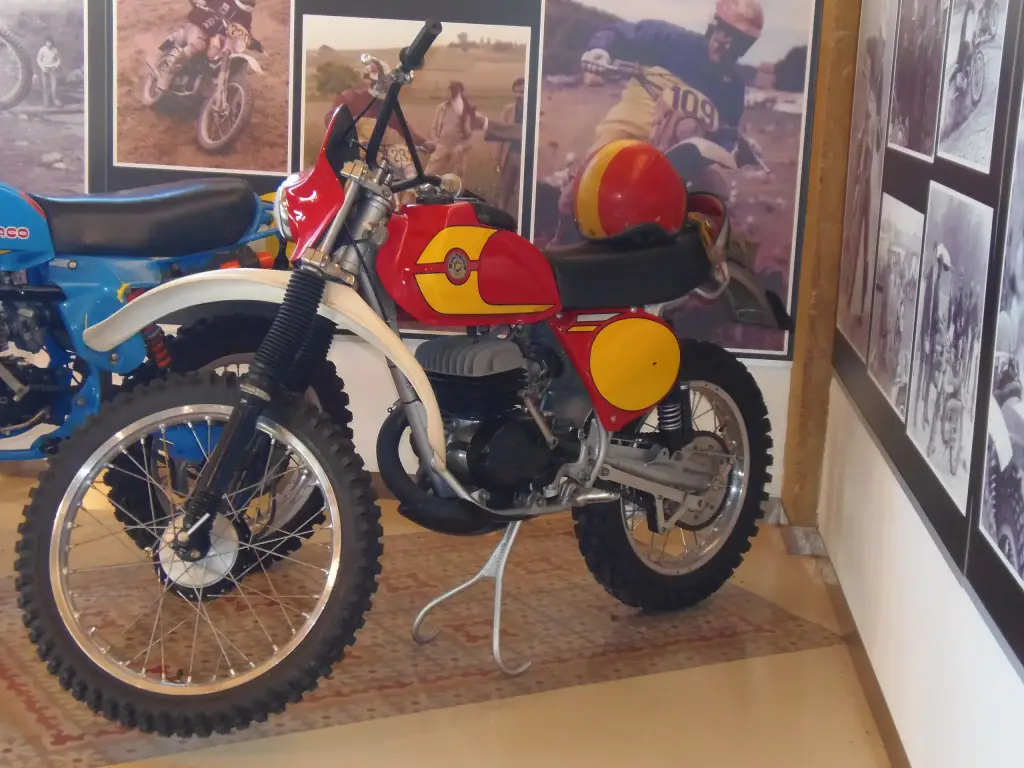
Bultaco Frontera versions
- Mk9 (1975): the first Frontera, in 250 and 360 cc, closely based on the Pursang.
- Mk10 (1976): 32 CV at 8,000 rpm, five-speed gearbox with longer ratios and a smaller frame.
- Gold Medal (1977): a road-registered version derived from the Pursang Mk10.
- Mk11 (1978): the most successful version, including the 370 cc racer used by Narcís Casas.
- Mk12 370 TT: a road-legal Pursang Mk12 Everts with lights and a larger silencer.
- Mk15 TT (1980): prototype shown to the press, never produced.
The Frontera replaced the Matador and shared its engine and chassis with the Pursang. More models are in the Bultaco collection.
Sources
- Bultaco Frontera, Catalan Wikipedia: history, versions, racing record