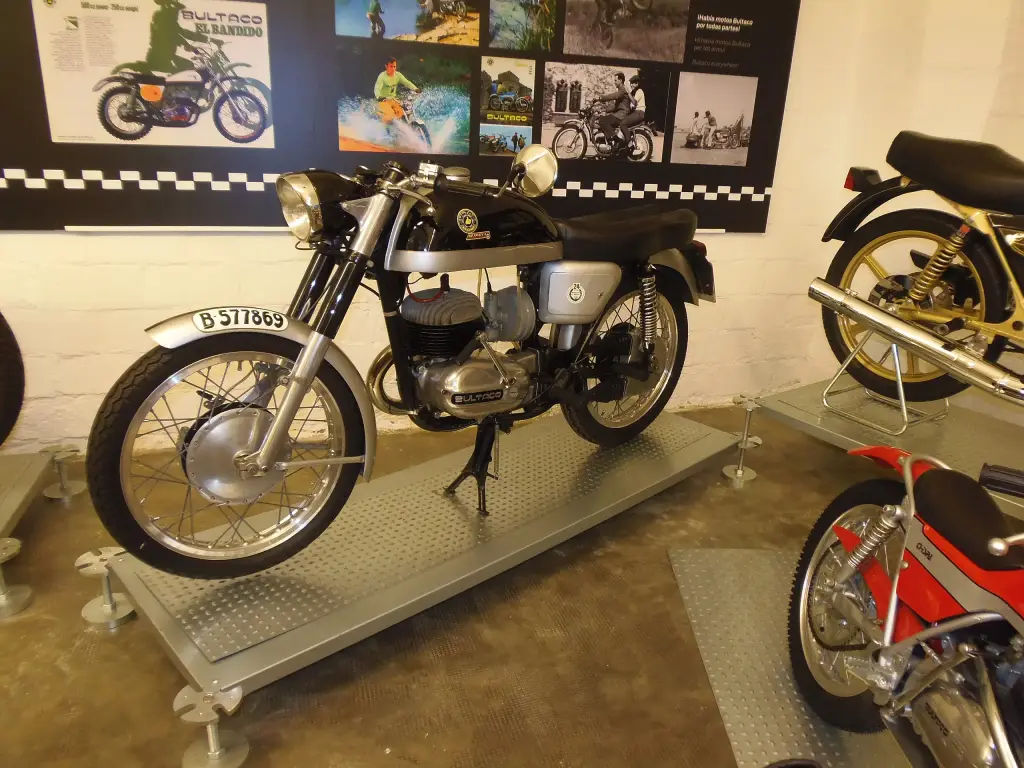
The Bultaco Metralla was the company’s sporting road motorcycle, built from 1962 to 1979. The second version, the 250 cc Mk2 of 1966, was described at the time as the fastest production 250 in the world and is often called the best road bike Bultaco ever made.
Bultaco Metralla at a glance
| Maker | Bultaco, Barcelona |
|---|---|
| Production | 1962–1979 |
| Type | sporting road motorcycle |
| First model | Metralla 62 (1962), 196 cc |
| Metralla 62 output | 20 CV at 7,000 rpm, 130 km/h |
| Mk2 (1966) | 250 cc, five-speed gearbox, over 160 km/h |
| Mk2 output | 27 CV |
| Mk2 production | eight years without major changes |
| GT 250 (1974) | touring version, 24 CV |
| GTS/GTA (1977) | Modelo 203, nicknamed “la amarilla” |
| Brakes | drum, disc on the final version |
| Frame | single cradle |
The Metralla has no English Wikipedia article; this page is based on the Catalan and Italian Wikipedia articles.
History of the Bultaco Metralla
After the successful Tralla 101 of 1959, one of the most powerful 125 cc bikes on the market, Bultaco looked for a presence in the quarter-litre class. In 1962, a year after launching the Bultaco 155, it put the Metralla 62 on sale with a 196 cc engine. Based on the excellent TSS Grand Prix racers, it had the sporting character inherited from the Tralla and was an immediate commercial success, laying the foundations of a range that stayed in production for more than fifteen years. Its engine gave 20 CV at 7,000 rpm and reached 130 km/h, remarkable figures for a machine of under 200 cc at the time, when the MZ 250 of 1961 produced 14 CV and stopped at 110 km/h. Part of the secret was said to be that the inlet and exhaust ports were already polished at the factory.
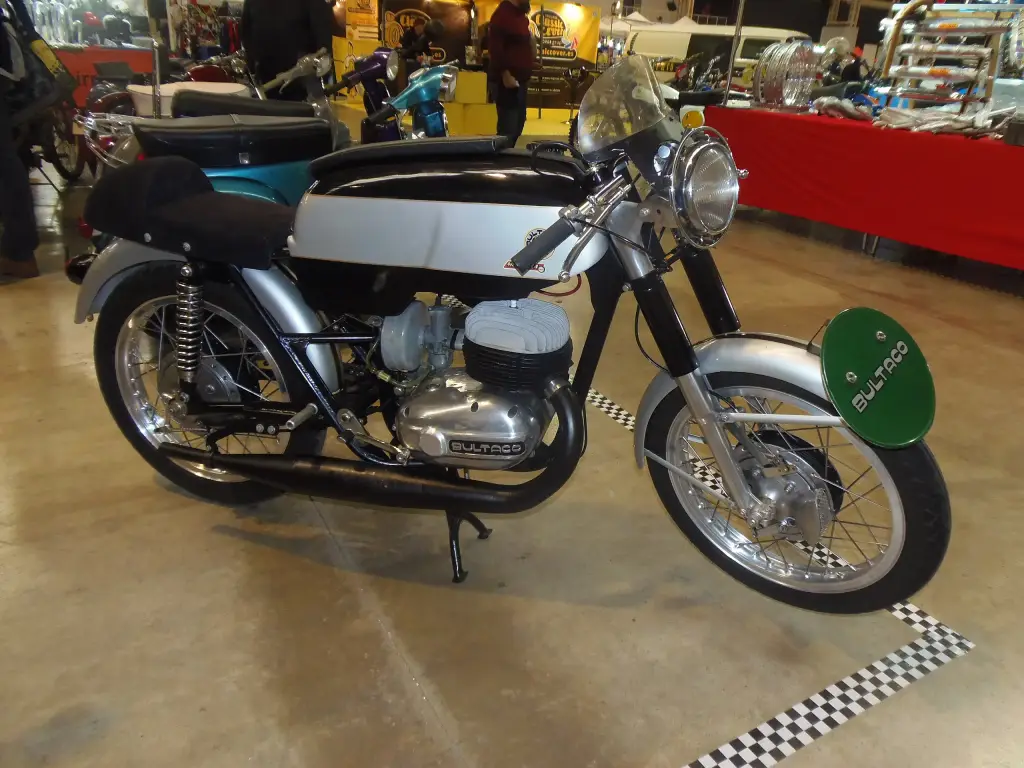
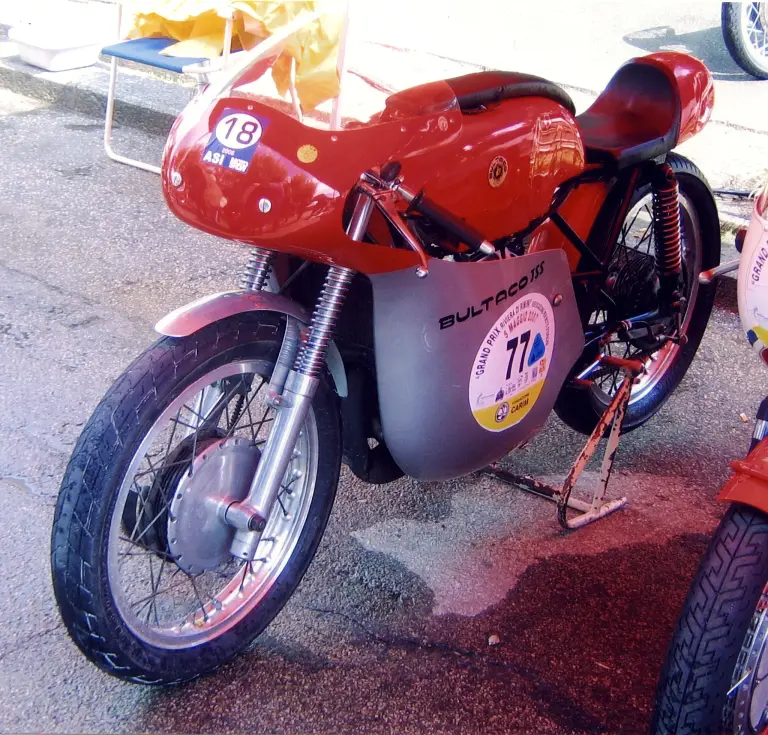
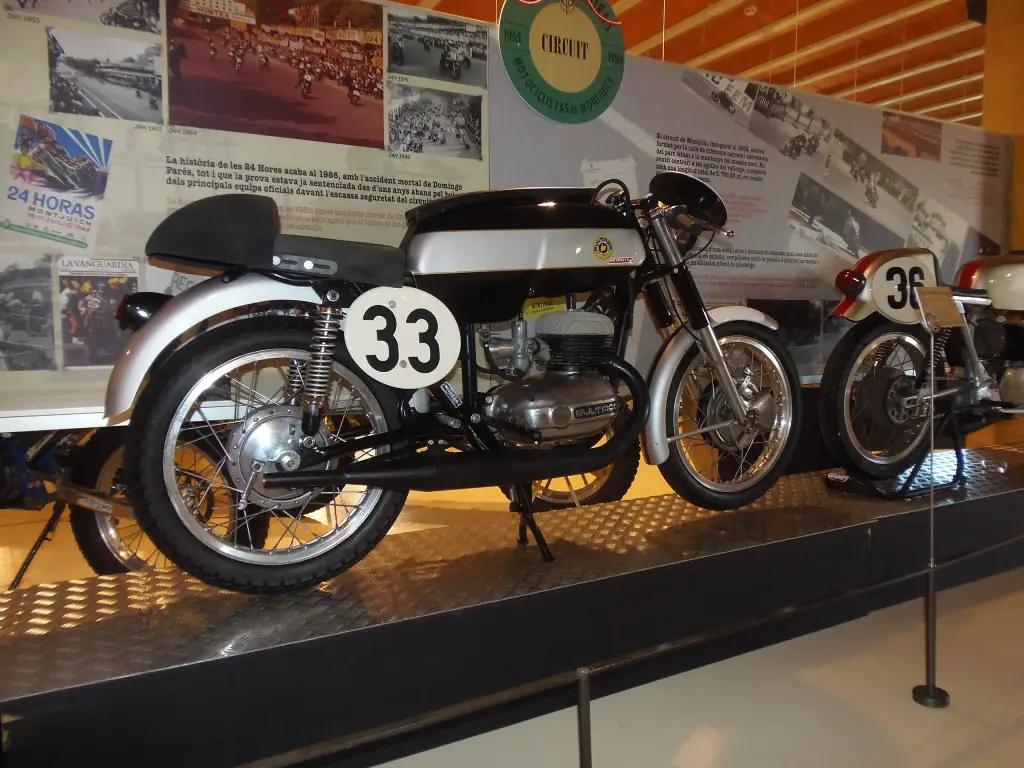
The sporting character of the Metralla 62 made it popular with private riders in the European championship and the Isle of Man TT, and it was surpassed by the second version, the Metralla Mk2 of 1966. With its unmistakable black finish, it had a five-speed gearbox for the first time, and its 250 cc engine and five speeds took it beyond 160 km/h, making it the fastest production 250 in the world. Its stability matched its speed, and the styling, with the characteristic flat-bottomed tank in black and silver, combined elegance and sportiness. Almost simultaneously Bultaco sold the Kit America, a set of competition parts with fairing, tank and tail, clip-on handlebars and engine preparation that made it almost unbeatable in production racing around the world.
At the 1967 Tourist Trophy, Bill Smith and Tommy Robb took first and second places in the up-to-250 cc Production class on Metralla Kit America machines, with times good enough to be beaten only by the first two finishers of the 500 cc Production race; Kel Cass was sixth on another Bultaco. The two winning Metrallas completed the race at an average of 142 km/h, and Smith set a new 250 cc lap record that stood until 1976. The last two versions changed the concept considerably. The Metralla GT 250 of 1974 was a strict touring bike with no answer to the Japanese multi-cylinders, and the Metralla GTS of 1977 was further still from the original sporting character, a comfortable and versatile machine for older riders. Production ended in 1979.
Design and features
- Grand Prix engine: derived from the TSS racers, with polished ports at the factory.
- Mk2 performance: 250 cc, five speeds and more than 160 km/h in 1966.
- Kit America: fairing, tank, tail, clip-ons and engine work for production racing.
- TT success: first and second in the 1967 Production 250 class at the Isle of Man.
Bultaco Metralla versions
- Metralla 62 (1962): 196 cc, 20 CV, 130 km/h, the basis of the range.
- Metralla Mk2 (1966): 250 cc, 27 CV, five-speed gearbox, over 160 km/h.
- Kit America: competition kit offered alongside the Mk2.
- Metralla GT 250 (1974): Modelo 142, tuned down to 24 CV and aimed at touring.
- Metralla GTS/GTA (1977): Modelo 203, the final version, known as “la amarilla”.
The Metralla engine came from the TSS racers, and the Lobito was the off-road model for younger riders. More models are in the Bultaco collection.
Sources
- Bultaco Metralla, Catalan Wikipedia: history, Mk2, Kit America, TT results
- Bultaco Metralla, Italian Wikipedia: models, power outputs, GT and GTS versions