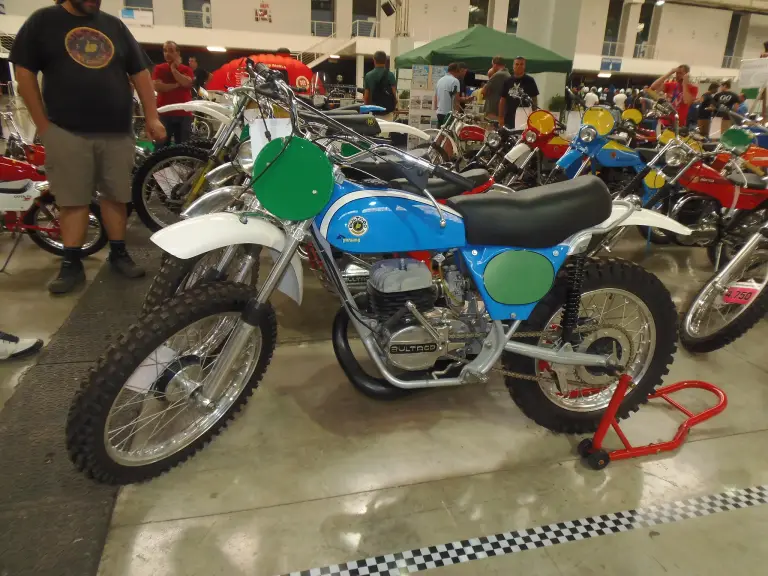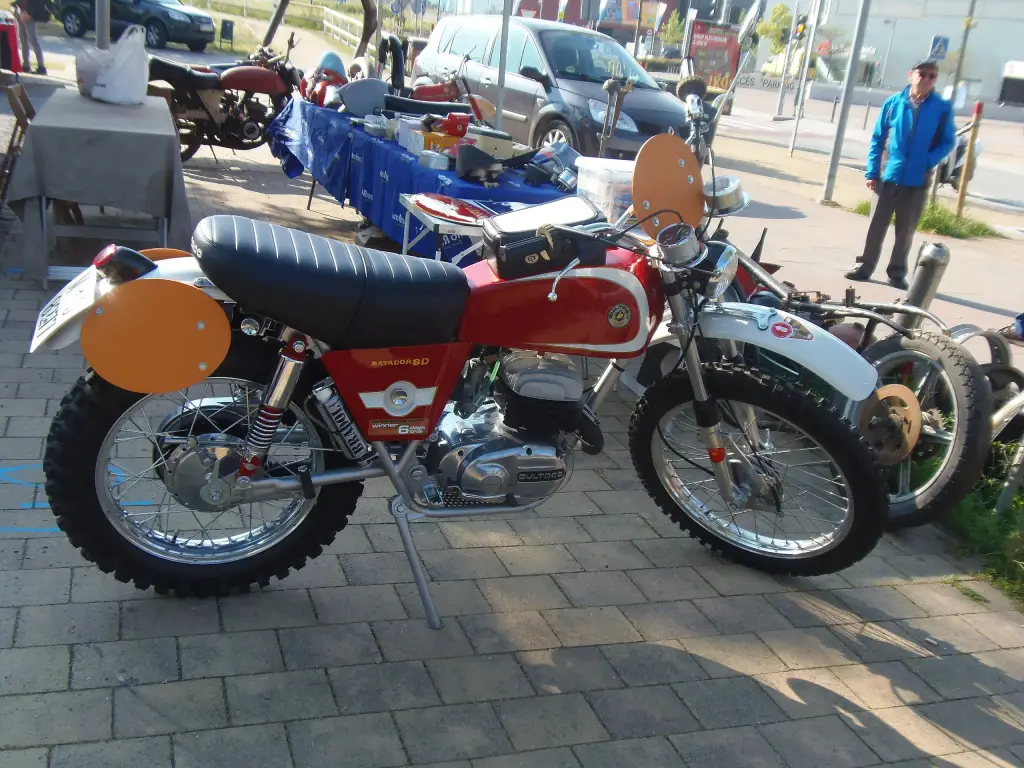
The Bultaco Matador was the factory’s enduro motorcycle for most of the 1960s and 1970s. Built from 1963 to 1979, it grew out of the Sherpa S that had won gold medals at the 1962 International Six Days Trial and became one of the most respected off-road bikes of its time.
Bultaco Matador at a glance
| Maker | Bultaco, Barcelona |
|---|---|
| Production | 1963–1979 |
| Type | enduro (“Todo Terreno”) |
| Origin | Bultaco Sherpa S of 1962 |
| Engines | 200 cc prototype, then 250 cc, 350 cc from 1975 |
| Frame | single cradle |
| Brakes | drum front and rear |
| Mk2 USA | 1965, 250 cc, the first series model |
| Six Days (SD) | from 1971, close to works specification |
| SD power | 28 CV at 7,000 rpm against 23 CV at 6,200 rpm for the Mk4 |
| Works prototypes | 30 CV at 8,000 rpm |
| End of production | 1979 |
The Matador has no English Wikipedia article; this page is based on the Catalan Wikipedia article.
History of the Bultaco Matador
Bultaco’s interest in what was then called “Todo Terreno” began in 1962, after Oriol Puig Bultó and José Sánchez won gold medals at the International Six Days Trial at Garmisch-Partenkirchen. They rode almost standard Sherpa S 175 machines without any assistance and became the first Catalans to take a gold medal there. Oriol Puig Bultó, nephew of the owner Francesc Xavier Bultó, went on to compete in ten Six Days events and win nine medals, five of them gold, and he was the main force behind the factory’s participation and the development of the future Matador.
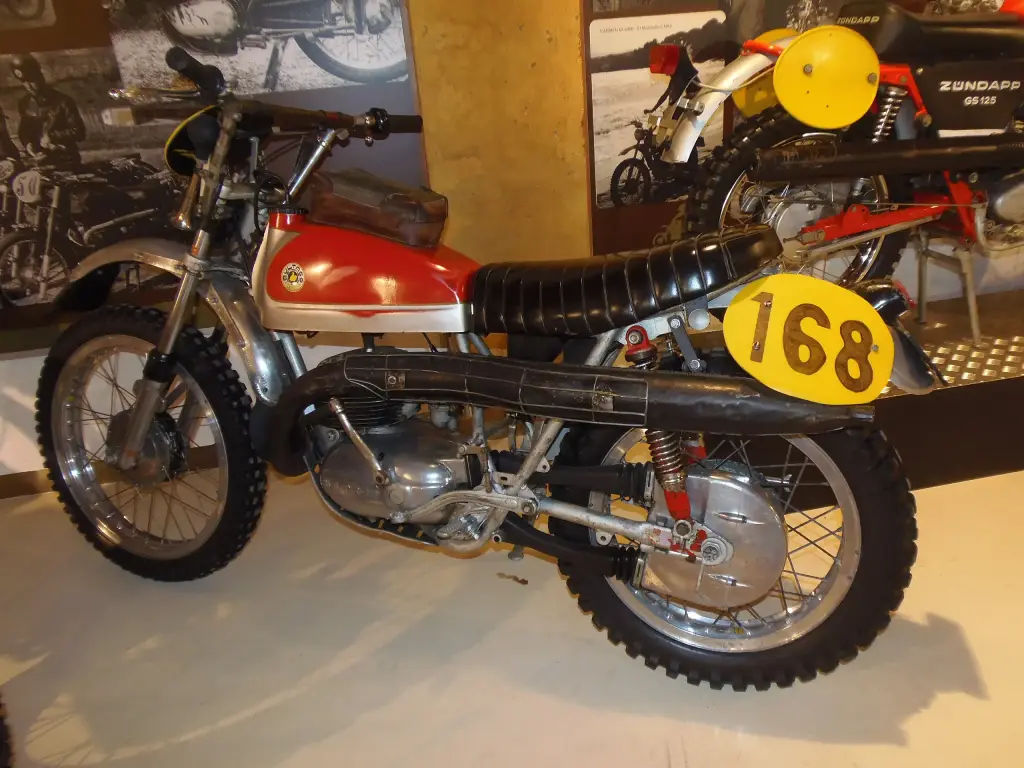
Starting from the 1962 Sherpa S, the company built a prototype called Matador with the engine enlarged to 200 cc and developed it in competition, including the ISDT. A short series of that first Matador was sold almost exclusively in the United States until the American distributors asked for changes and for the engine to be enlarged to 250 cc. The model then went into series production in 1965 as the Matador Mk2 USA and became a sales success, especially in America. In 1967 came the Mk3, an update with a simple, uncomplicated concept: raised intake and exhaust, a taller trials-style handlebar and good ground clearance, while the five-speed gearbox combined short lower gears for steep climbs with longer top gears for fast tracks. A kit called ISDT was offered for riders who wanted to compete seriously.
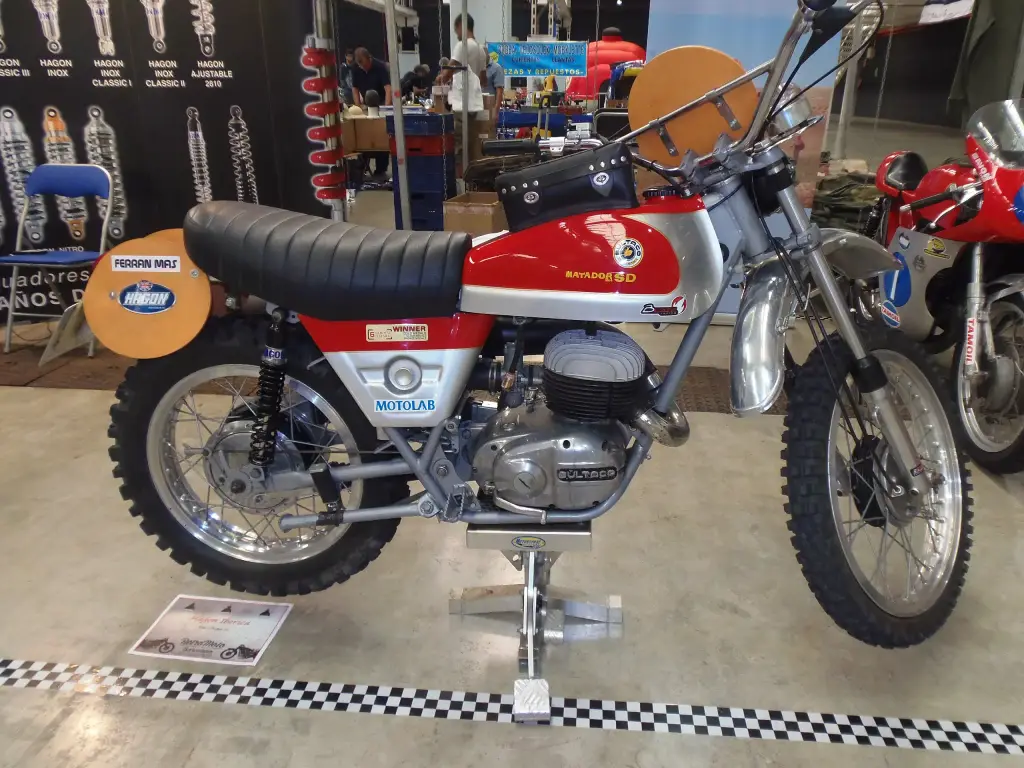
For the 1970 Six Days at El Escorial in Spain, Bultaco presented the Mk4, with a completely renewed engine and a stronger gearbox, new brakes and a larger, more comfortable seat. The following year came the SD, short for Six Days, a replica of the works bikes for the most committed privateers: a fuel tank with the filler on the left to leave room for a tool bag with a transparent pocket for the route map, a longer and bulkier exhaust, and a modified rear frame to carry it. The SD engine produced 28 CV at 7,000 rpm against 23 CV at 6,200 rpm for the original Mk4, close to the 30 CV at 8,000 rpm of the works prototypes. From 1975 the Mk9 moved to a 350 cc engine, and the Matador remained in production until 1979. Riders such as José Sánchez, Oriol Puig Bultó, Casimir Verdaguer and Narcís Casas won several Spanish championships on it.
Design and features
- ISDT pedigree: developed from the Sherpa S that won gold medals at the 1962 Six Days.
- Six Days replica: the SD of 1971 brought works specification, including the map-pocket tank, to private riders.
- Flexible engine: a reliable two-stroke single tuned for both climbing and fast tracks.
- Long career: from the 200 cc prototype to the 350 cc Mk9 of 1975, built for sixteen years.
Bultaco Matador versions
- Matador 200 prototype (1963): the original short-series machine sold mainly in the United States.
- Mk2 USA (1965): 250 cc series version, a big sales success in America.
- Mk3 (1967): raised intake and exhaust, taller handlebar, five-speed gearbox.
- Mk4 (1970): new engine, stronger gearbox, larger seat, presented at the El Escorial Six Days.
- SD (1971): Six Days replica with 28 CV at 7,000 rpm and a larger tank with a map pocket.
- Mk9 (1975): the final generation, with a 350 cc engine.
The Matador was replaced by the Frontera, and its trials cousin was the Sherpa T. More models are in the Bultaco collection.
Sources
- Bultaco Matador, Catalan Wikipedia: history, versions, racing record