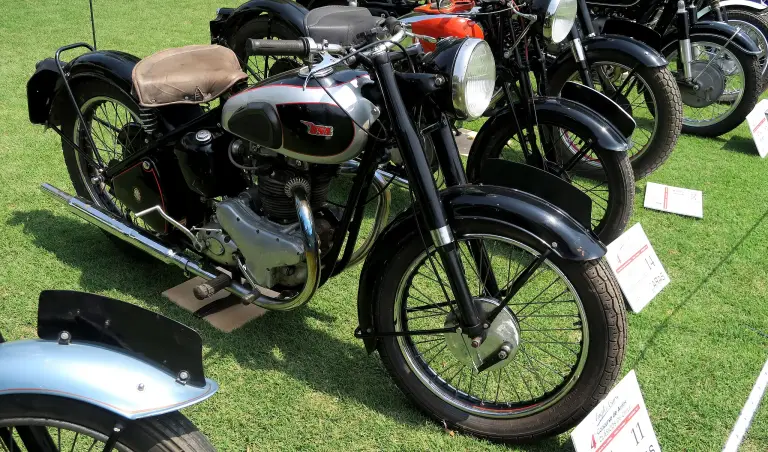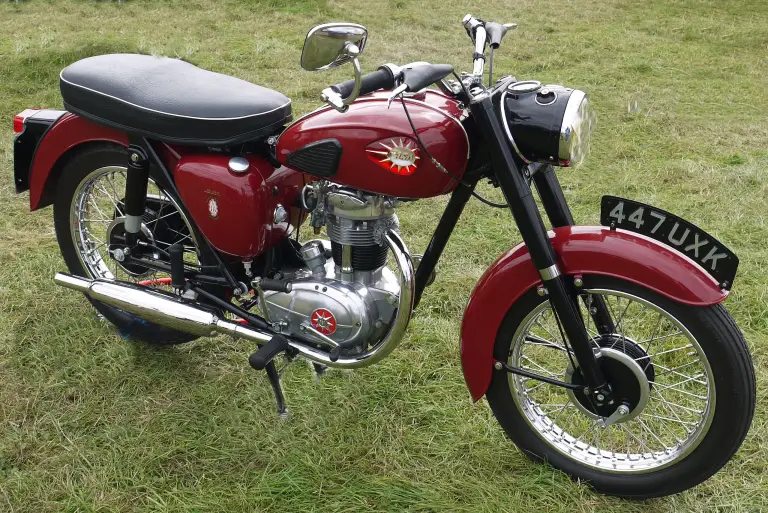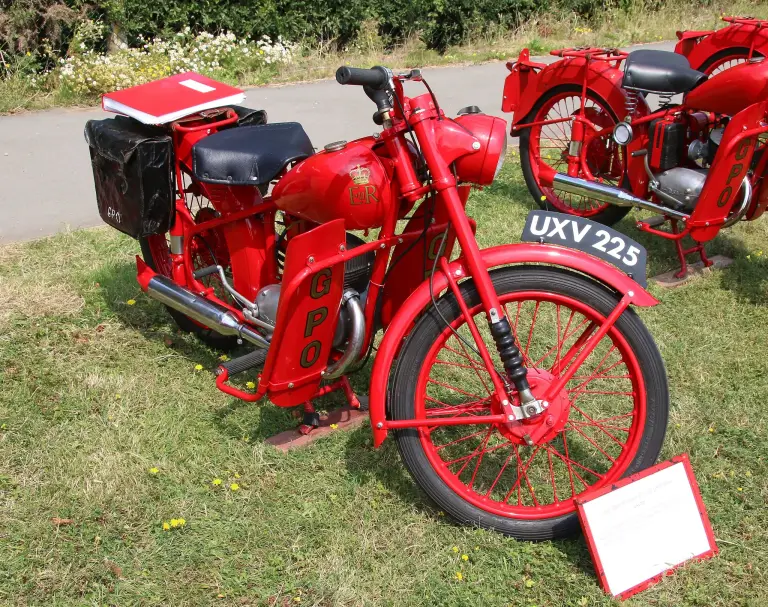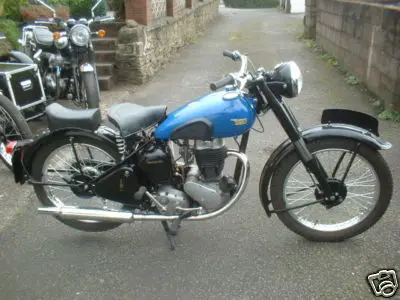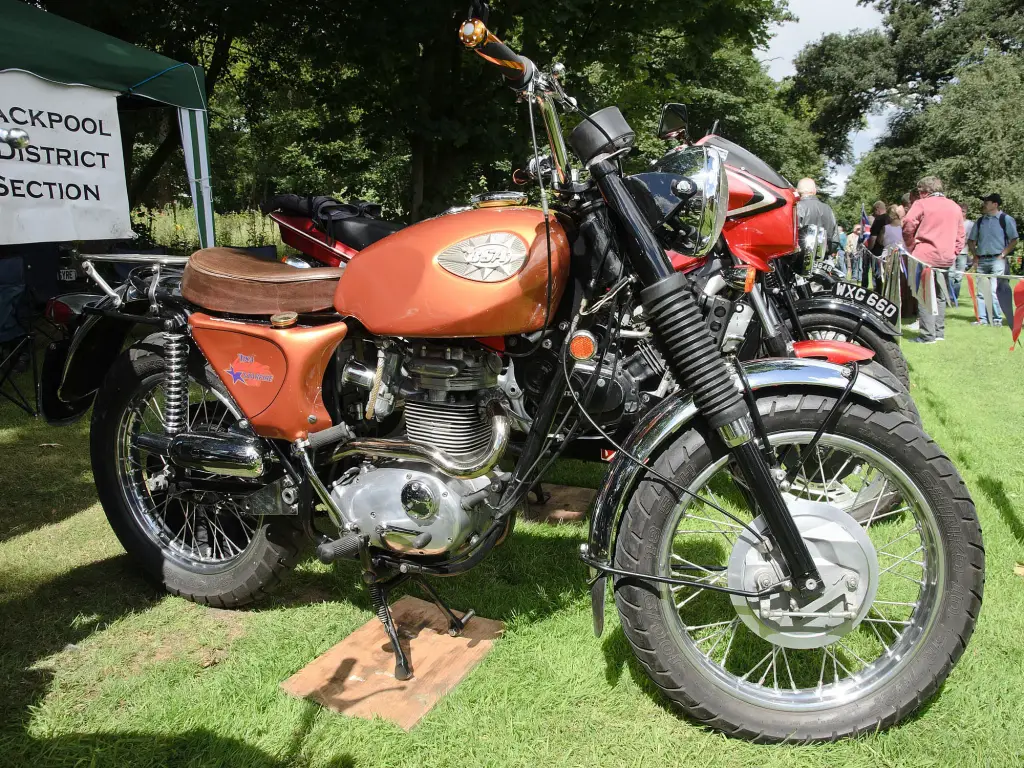
The BSA B25 was a series of 250 cc unit-construction single-cylinder OHV four-stroke motorcycles made by Birmingham Small Arms. Developed from the BSA C15, the machines were produced between 1967 and 1971, and the B25 was the fastest British production 250 of its time.
BSA B25 at a glance
| Maker | Birmingham Small Arms Company |
|---|---|
| Production | 1967–1971 |
| Engine | 247 cc unit-construction single, OHV four-stroke |
| Bore × stroke | 67 mm × 70 mm |
| Compression | 10:1 |
| Power | 26 bhp at 7250 rpm; 22.5 bhp on P34 models |
| Carburettor | Amal Concentric |
| Gearbox | four speeds, chain final drive |
| Electrics | 12 volt, regulated by a zener diode |
| First model | C25 Barracuda in the UK, B25 Starfire in the USA |
| Frame | single downtube splitting into a cradle; oil-in-frame from 1970 |
Based on one source, the English Wikipedia article on the B25.
History of the BSA B25
The B25 grew out of the C15. Its 247 cc engine kept the 67 mm by 70 mm bore and stroke but gained a new alloy barrel and cylinder head with square fins, with the pushrod tunnel cast into the barrel rather than fitted as a separate item, and tappet adjustment by eccentric rocker shaft. The inlet tract was opened up, bigger valves and the new Amal Concentric carburettor were fitted, the compression ratio went to 10:1 and a sports camshaft was used, giving 26 bhp at 7250 rpm and a free-revving engine that would run past 8,000 rpm. Unlike the later C15s with a roller big end, the B25 reverted to a plain big end and split conrod, which earned it a reputation for unreliability through big-end and conrod failures. A duplex chain drove a wet multi-plate clutch, and the all-welded frame was developed from the competition C15s, with a single downtube that split into two to form a cradle under the engine.
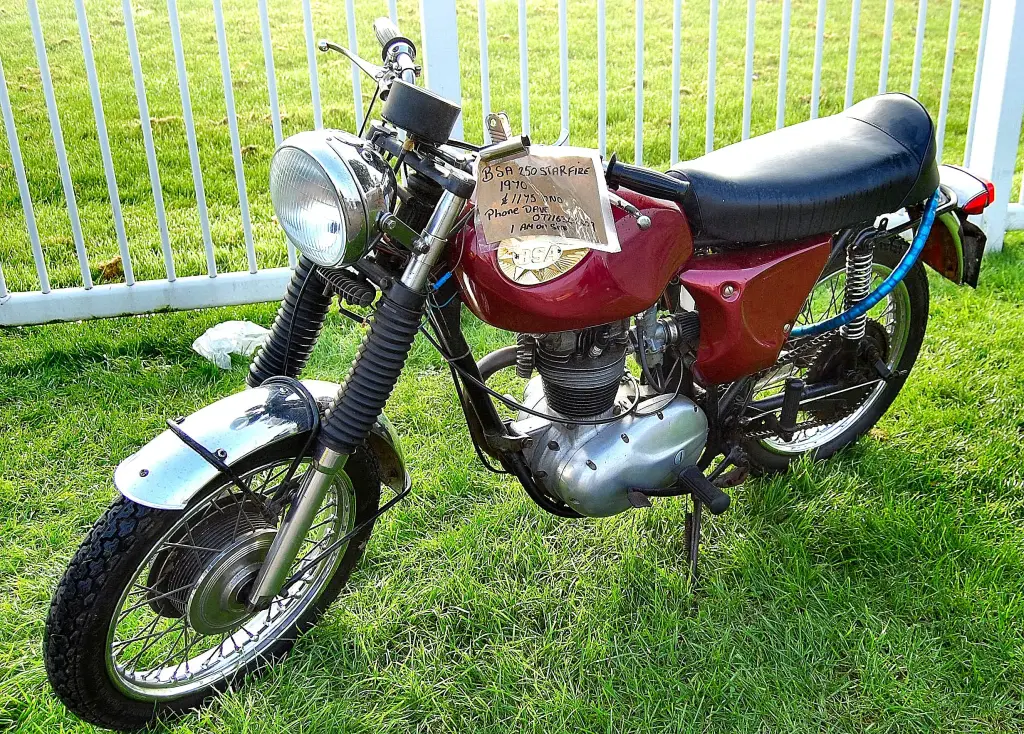
The first model of the series appeared in 1967 as the C25 Barracuda in Britain and the B25 Starfire in the United States, though US machines carried C25 frame and engine prefixes. It was a sportier replacement for the C15 and, at home, aimed at learner riders. Sharing much of its cycle parts with the 441 cc B44 Victor Roadster, it had a two-gallon fibreglass tank, a seat with a rear hump, two-way damped forks with rubber gaiters instead of the C15’s metal covers, exposed shock absorber springs, chrome mudguards and headlight shell and single-sided 7-inch drum brakes at both ends.
For 1968 the B25 Starfire name was used in all markets, with frame and engine numbers prefixed B25B. The machine gained a full-width 7-inch front brake and larger tanks: 2.5 US gallons for America and a steel 3.4 imperial gallons for Britain. In 1969, along with the rest of the BSA/Triumph range, it received a new 7-inch twin leading shoe front brake, plus cosmetic changes such as rubber knee pads on the tank and a chrome grab-rail; the US version got a high-level exhaust and black cylinder and head, and numbers were prefixed B25S.
The B25FS Fleetstar of 1969 was a less sporty version for fleet buyers such as the police, with compression reduced to 8.5:1 and power down to 21 bhp, painted valance mudguards, a conventional steel tank and options for fairings, leg guards and panniers; about 449 were built, some 250 of them sold to the police, and it kept its roadster styling when it was updated with the oil-bearing frame in 1971. The B25 Woodsman, a high-level exhaust variant for non-US markets, was withdrawn after only about ten machines.
In October 1970 BSA released the new range known as The Power Set, in which the singles project, code-named P34, covered the 250 cc B25 and a new 500 cc B50. The conrod was redesigned with a larger shoulder, which meant machining the crankshaft to clear it, a cast-iron-bodied oil pump replaced the zinc alloy item that distorted and lost oil pressure, and a full-flow paper oil filter was added to cut big-end failures. The barrel and head mating surfaces were enlarged with a new head gasket, rocker box studs grew, a thrust washer went between the clutch chainwheel and its mounting, the clutch hub took an extra plate and the rear engine mounting lug went to 75 mm. Power fell to 22.5 bhp. The new frame, shared with the B50, carried the oil in the top tube, and with it came a high-level lozenge-shaped box silencer.
Design and features
- Square-fin alloy top end: a new barrel and head gave the C15-based engine a modern look and a better inlet tract.
- 26 bhp and 8,000 rpm: the B25 was the fastest British production 250 of its day.
- 12-volt electrics: a step up from the C15’s 6-volt system, with a zener diode and large heat sink between the forks.
- Oil-in-frame P34: the 1970 update moved the oil supply into the top tube and shared cycle parts with the B50.
BSA B25 versions
- C25 Barracuda / B25 Starfire (1967): the launch model, named Barracuda in Britain and Starfire in America.
- B25 Starfire (1968–1969): the name used everywhere, with a full-width front brake and larger tanks.
- B25FS Fleetstar (1969): a softer, 21 bhp fleet machine; about 449 built, some 250 for the police.
- B25 Woodsman: a high-level exhaust version for non-US markets, of which only about ten were made.
- P34 oil-in-frame models (1970): the updated B25 with a stronger bottom end and 22.5 bhp.
The B25 replaced the BSA C15 and shared its cycle parts with the 441 cc B44 Victor; the larger B40 was the 350 cc member of the same family. More models are in the BSA collection.
Video: BSA Starfire 250 B25 Classic Motorcycle riding onboard
Video by ICMcycles on YouTube.
Sources
- BSA B25, English Wikipedia: engine, models, P34 update