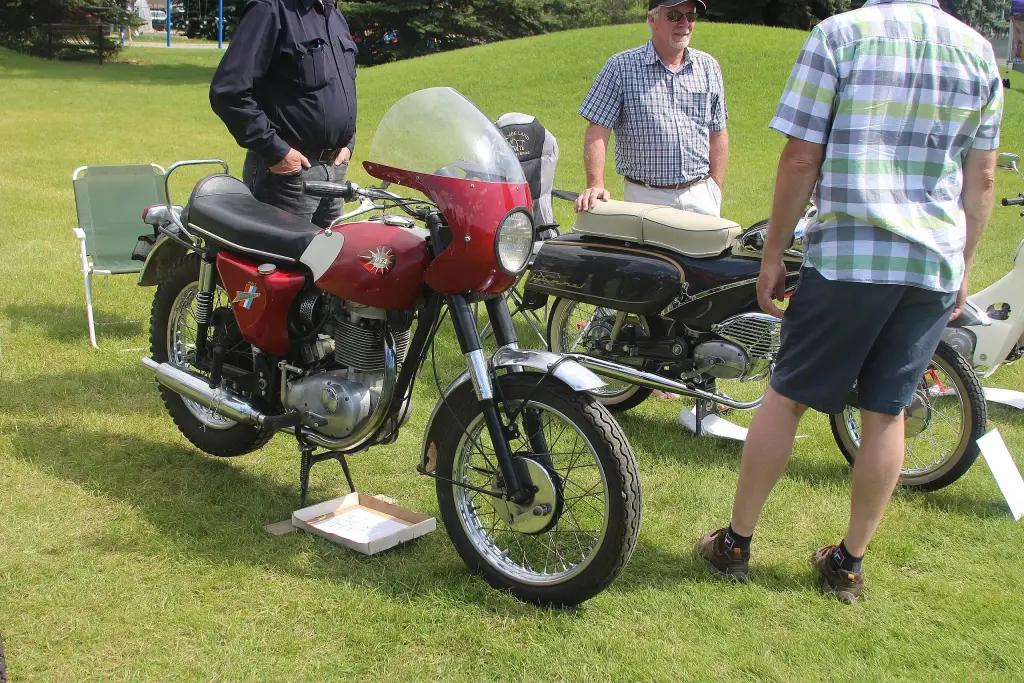
The BSA B44 was a series of 441 cc unit-construction single-cylinder OHV four-stroke motorcycles made by Birmingham Small Arms between 1966 and 1970. The machines were developed from the BSA world championship motocross machines, which were themselves based on the C15 and B40.
BSA B44 at a glance
| Maker | Birmingham Small Arms Company |
|---|---|
| Production | 1966–1970 |
| Engine | 441 cc unit-construction single, OHV four-stroke |
| Bore × stroke | 79 mm × 90 mm |
| Compression | 11.4:1 (GP), 9.5:1 (Enduro), 9.4:1 (Victor Roadster) |
| Power | 34 bhp (GP), 28–30 bhp (other models) |
| Racing success | Jeff Smith, 500 cc motocross world champion |
| Models | Victor GP, Victor Enduro / Victor Special, Victor Roadster / Shooting Star |
| Successor | BSA B50 |
Based on one source, the English Wikipedia article on the B44.
History of the BSA B44
In 1963 BSA began competing with a C15T fitted with the 343 cc B40 engine in various classes. Works rider Jeff Smith won the Scottish Six Days 350 cc cup that year and finished third in the 500 cc Motocross World Championship. Brian Martin, head of BSA’s competition department, began a feasibility study to enlarge the B40 engine, which was taken to 421 cc, thought to be the maximum reliable size.
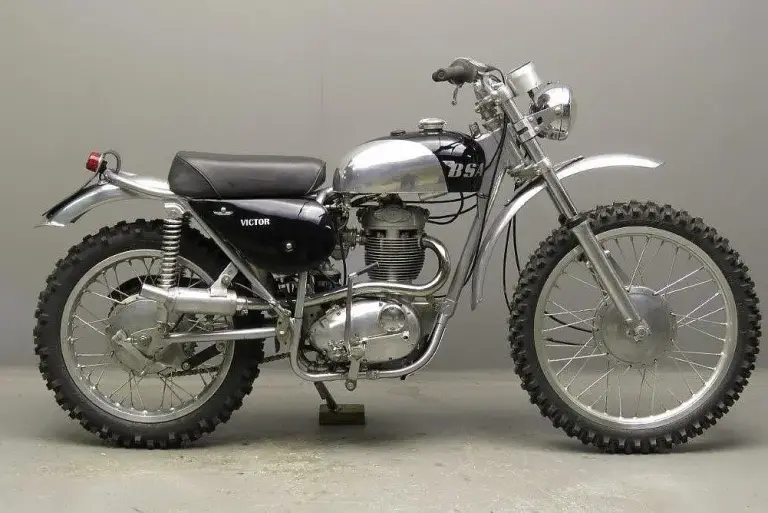
For the 1964 motocross season the engine was fitted in a lightweight frame that carried the oil in the top tube; the machine weighed 228 lb. Smith took it to three victories, and with three rounds to go the displacement was increased to 441 cc. He won the final three rounds and beat the winner of the two previous championships, the Swede Rolf Tibblin, to the title by a narrow margin. In 1965 Smith was dominant on the 441 and had the title sewn up halfway through the season; in the final race, the East German Grand Prix, he used a pre-production model of the forthcoming Victor GP and finished sixth.
The 441 cc engine, developed by the BSA Competitions Department, was based on the B40. Capacity came from lengthening the B40’s 70 mm stroke to 90 mm while keeping the 79 mm bore. To strengthen the bottom end the timing side main bearing changed from a plain bush to a ball bearing and the drive side from a ball to a roller bearing, and the B40’s cast-iron barrel gave way to an alloy item. Compression was 11.4:1 on the GP and was reduced to 9.5:1 on the Enduro by a plate below the barrel; in 1967 the Victor Roadster arrived with a square-finned barrel and head and 9.4:1 compression, and the Enduro took that specification in 1968. Power was 34 bhp for the GP models and 28 to 30 bhp for the rest. The GP used a frame derived from the works racers, while the other models used a frame developed from the C15 trials bikes.
On the strength of Jeff Smith’s two world championship victories BSA introduced a race replica at the 1965 Earls Court show, the B44 Victor GP, which was dropped in 1967 after around 500 were built. A road-legal on-off-road version with lights appeared in 1966 as the B44VE Victor Enduro in Britain and the B44VS Victor Special in the United States; from 1967 the Victor Special name was used everywhere, the fuel and oil tanks were alloy, and production continued until the model was replaced by the B50 Victor Trail in 1971.
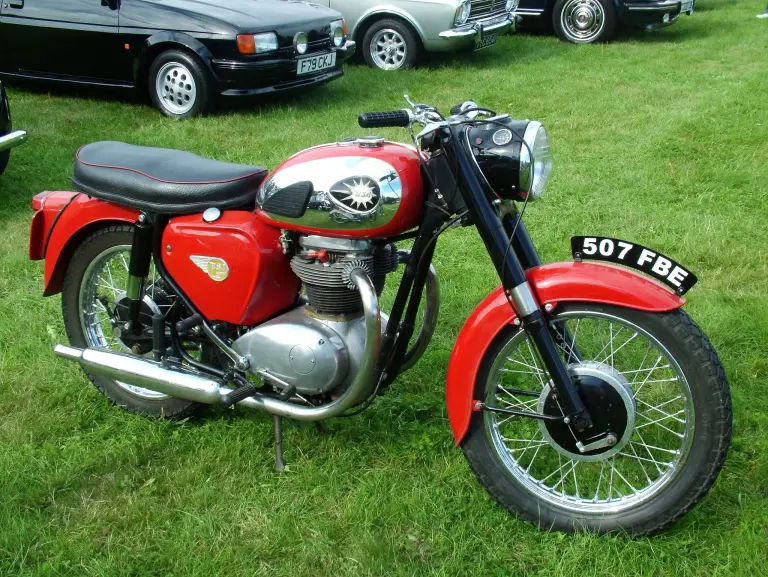
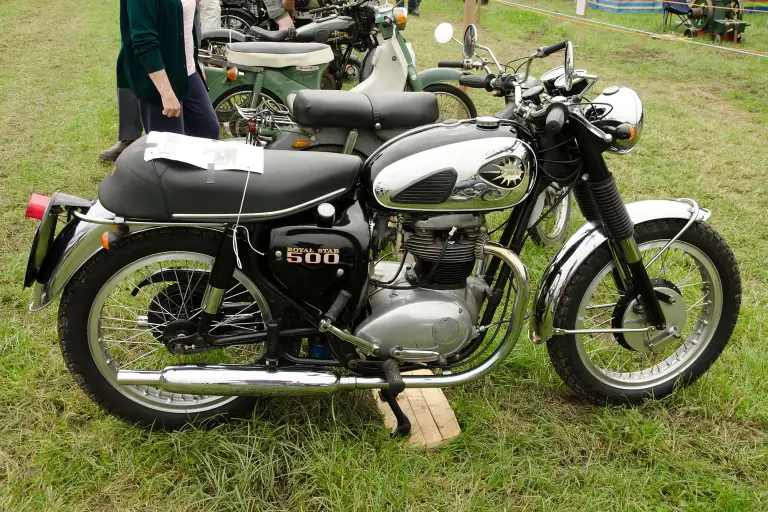
The roadster version was introduced in 1967 as the B44VR Victor Roadster in Britain and the B44SS Shooting Star in the United States, with fibreglass fuel and oil tanks and a 7-inch half-width front brake. From 1968 it was the Shooting Star in all markets, with steel tanks and a larger 8-inch front brake; a 7-inch full-width twin leading shoe front brake followed in 1969. It was discontinued when the 500 cc B50 models arrived in 1971.
Design and features
- Championship parentage: the 441 cc engine grew directly out of Jeff Smith’s title-winning motocross machines.
- Stronger bottom end: a ball bearing on the timing side and a roller bearing on the drive side replaced the B40’s plain bush and ball bearing.
- Alloy barrel: the cast-iron B40 barrel gave way to alloy, with square fins from 1967.
- Three characters: a pure racer in the GP, a lights-and-all trail bike in the Enduro and a roadster in the Shooting Star.
BSA B44 versions
- B44 Victor GP (1966–1967): the works-derived race replica, 34 bhp, about 500 built.
- B44VE Victor Enduro / B44VS Victor Special (1966): the road-legal trail version, known as the Victor Special everywhere from 1967.
- B44VR Victor Roadster / B44SS Shooting Star (1967): the roadster, with fibreglass tanks and a 7-inch front brake at first, then steel tanks and an 8-inch brake, then a 7-inch twin leading shoe brake from 1969.
The B44 was the sporting descendant of the BSA C15 and the 350 cc B40, and it shared cycle parts with the 250 cc B25. More models are in the BSA collection.
Sources
- BSA B44, English Wikipedia: racing background, engine, models