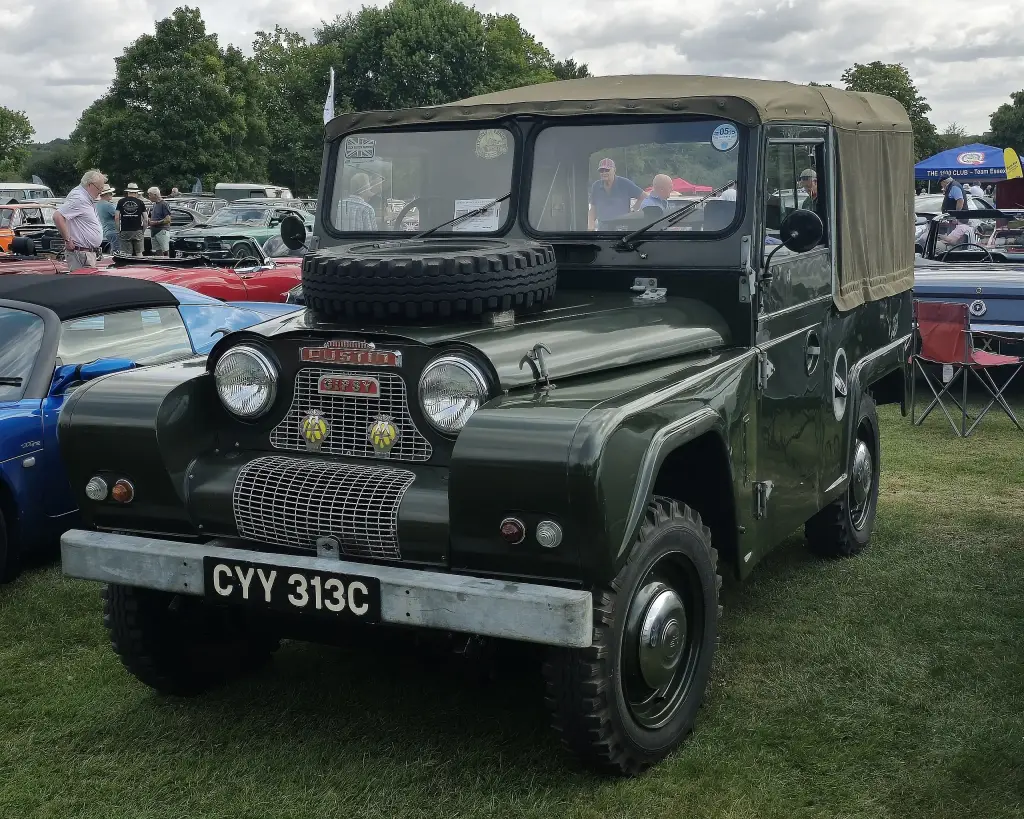
The Austin Gipsy is an off-road vehicle produced by Austin from 1958 to 1968. It was designed as a lower-cost replacement for the Austin Champ, to compete directly with Rover’s Land Rover. Like the Land Rover, it was aimed at both the civilian and military markets.
Austin Gipsy at a glance
| Produced | 1958 to 1968 |
|---|---|
| Sold | about 21,208 |
| Body | steel, unlike the Land Rover |
| Suspension | independent all round with “Flexitor” rubber springs by Alex Moulton; leaf springs later optional |
| Petrol engine | BMC 2,199 cc based on the A70 unit, 62 bhp (46 kW), 6.8:1 compression |
| Diesel engine | 2,178 cc, 55 bhp (41 kW) |
| Wheelbase | 90 in (2,300 mm) short; 111 in (2,800 mm) long from Series II |
| Rival | Land Rover |
This page is based on English Wikipedia only (a trusted source), so the facts were not cross-checked against a second source.
History of the Austin Gipsy
After the war the FV1800 Nuffield Mudlark, later the FV1801 Austin Champ, was designed as the first of the new CT series of soft-skin military vehicles for the British Army. It used the Rolls-Royce B40 engine, all-independent suspension based on Tracta joints and a 24V electrical system, but despite these features it was not popular or successful, being seen as over-complicated, a maintenance nightmare and expensive. The Gipsy was a reaction both to the failure of the Champ and to the success of the Land Rover.
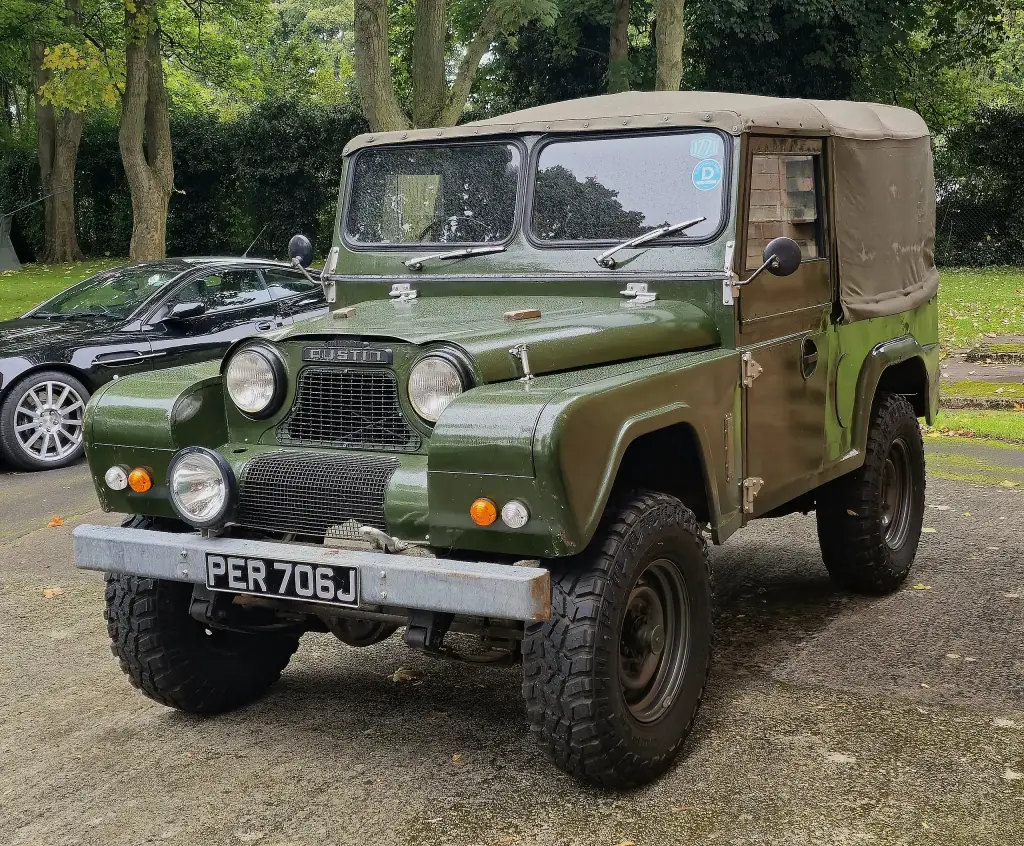
Both the Champ and the Gipsy were significantly different from the American Jeep, the Gipsy being much closer in design, appearance and price to the Land Rover. Unlike the Land Rover its bodywork was steel, and its sophisticated independent suspension using “Flexitor” rubber springs developed by Alex Moulton gave it the ability to travel at high speed over rough terrain.
Engines and end
It used a BMC 2,199 cc petrol engine based on the Austin A70’s, whose 6.8:1 compression ratio made it tolerant of low-octane fuel, and a 2,178 cc diesel was also offered. The Gipsy was first available on a 90-inch wheelbase, with a 111-inch long wheelbase from Series II. When BMC merged with Leyland to form British Leyland, the Gipsy and the Land Rover were produced by the same company; production of the Gipsy stopped after some 21,208 vehicles had been sold. It was also assembled from CKD packs in New Zealand.
Design and features
- Body: steel panels.
- Suspension: Flexitor rubber springs.
- Engines: BMC petrol or diesel.
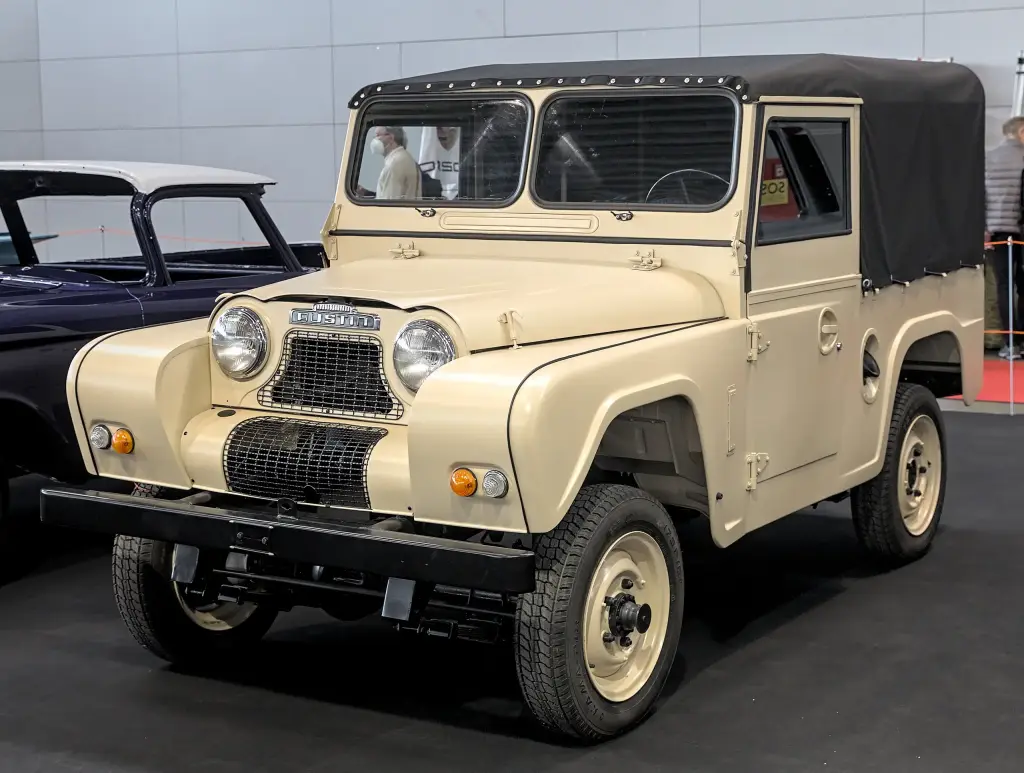
Austin Gipsy versions
- Short wheelbase (90 in).
- Long wheelbase (111 in), from Series II.
- Petrol and diesel.
More Austin cars are in our Austin collection, for example the Champ it replaced, the A70 whose engine it used and the FX4.
Austin Gipsy questions and answers
When was the Gipsy built?
From 1958 to 1968.
What was it meant to replace?
The Austin Champ, and to rival the Land Rover.
What was special about the suspension?
Independent all round with Flexitor rubber springs developed by Alex Moulton.
How many were sold?
About 21,208.
Was it built abroad?
It was assembled from CKD packs in New Zealand.
Video: Austin Gipsy Fire Engine (1961)
Video by British Pathé on YouTube.
Sources
- Austin Gipsy, English Wikipedia: history and design