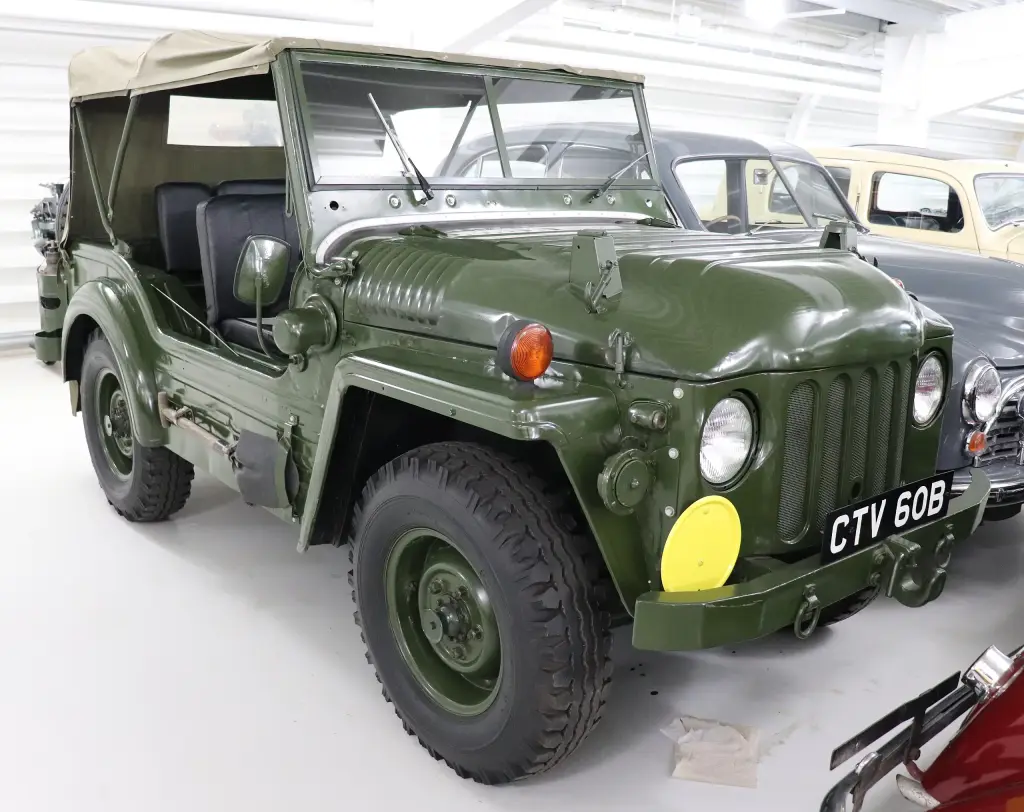
The Austin Champ was a military and civilian jeep-like vehicle made by the Austin Motor Company in the 1950s. The army version was officially known as “Truck, 1/4 ton, CT, 4×4, Cargo & FFW, Austin Mk.1”, but the civilian name “Champ” was universally applied to it. The majority went to the British Army.
Austin Champ at a glance
| Built | 1950s, by the Austin Motor Company |
|---|---|
| Official name | Truck, 1/4 ton, 4×4, CT, Austin Mk.1; Austin model WN1 |
| Contract | 15,000 vehicles; production at Cofton Hackett, Longbridge |
| First production vehicle | 1 September 1951 |
| Engine | Rolls-Royce B40, 2,838 cc four-cylinder |
| Suspension | designed by Alec Issigonis |
| Versions | Cargo and Fitted For Wireless (FFW) |
| Prototypes | Nuffield “Gutty” and Wolseley “Mudlark” |
This page is based on English Wikipedia only (a trusted source), so the facts were not cross-checked against a second source.
History of the Austin Champ
A British Army specification for a light truck was issued in the late 1940s, inspired by the Willys MB “Jeep” but able to perform in all theatres of operation. It was considered important that a British-made vehicle be produced to reduce reliance on American vehicles. A project to design a “Car 4×4 5 cwt FV1800-Series” was launched in 1947, and the Nuffield Organization built three prototypes known as the “Nuffield Gutty”; testing revealed serious shortcomings, and a team at the Fighting Vehicles Research and Development Establishment under Charles William “Rex” Sewell improved the design. The suspension was designed by Alec Issigonis, later of the Morris Minor and the Mini.
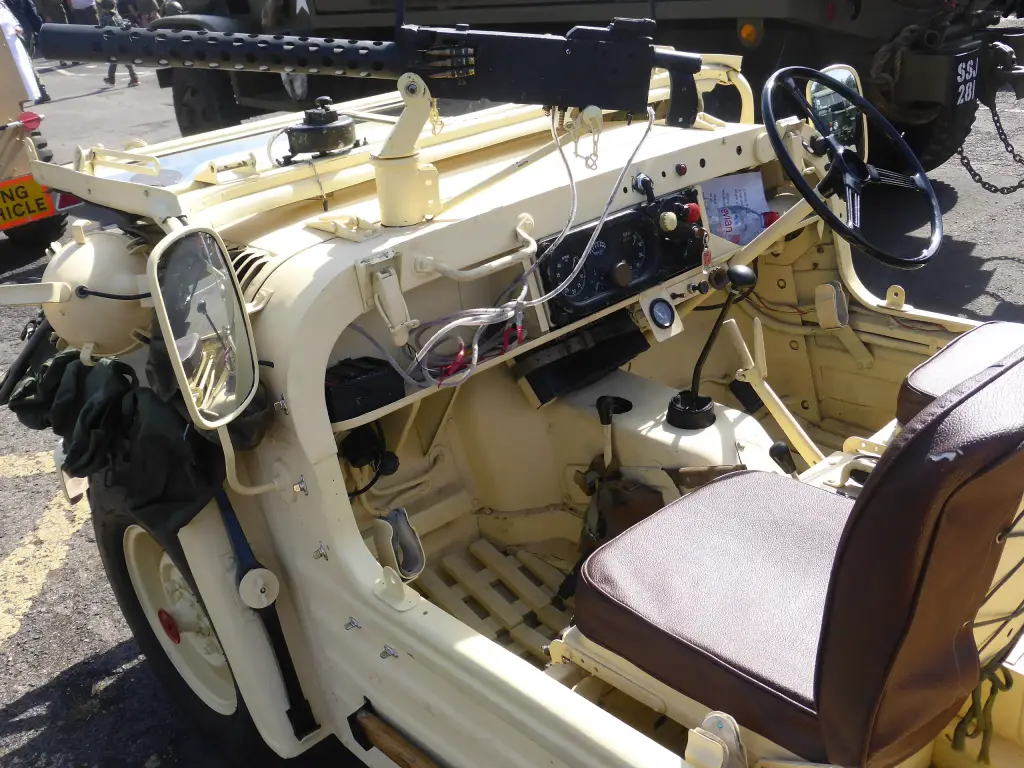
About 30 prototypes of the improved vehicle were built by Wolseley under the name “Wolseley Mudlark”, and the design was formalised as FV1801(a). Austin was awarded the contract for 15,000 vehicles, and a former aircraft factory at Cofton Hackett, next to the Longbridge plant, was fitted out for the work. The first production vehicle was completed on 1 September 1951.
Engine and versions
The Rolls-Royce-designed B40 four-cylinder engine of 2,838 cc was fitted, the smallest of the standardised B-Range engines. Approximately half of the contract was basic Cargo trucks and the rest were fitted with high-output generators and extra batteries to power radio equipment, known as “Fitted For Wireless” (FFW). Rolls-Royce built the engines for early vehicles; later ones used a virtually identical engine built under licence by Austin.
Design and features
- Drive: four-wheel drive, a quarter-ton truck.
- Engine: the Rolls-Royce B40.
- Suspension: designed by Issigonis.
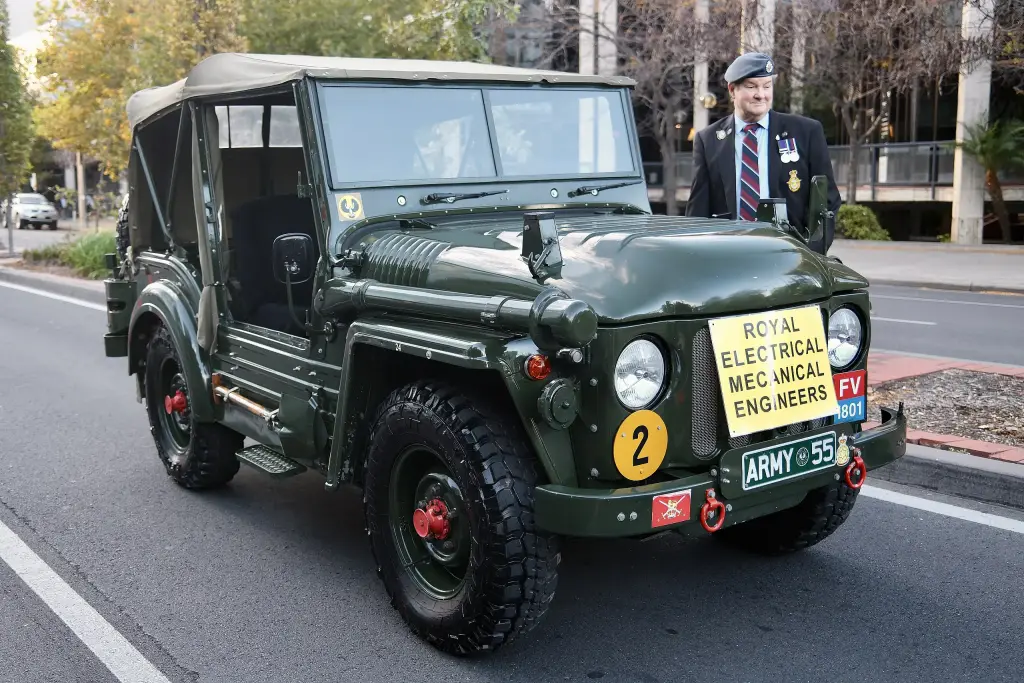
Austin Champ versions
- Cargo (WN1).
- Fitted For Wireless (FFW).
- Civilian Champ.
More Austin cars are in our Austin collection, for example the Gipsy, the K2 and the A40.
Austin Champ questions and answers
What was the Austin Champ?
A jeep-like 4×4 truck made by Austin in the 1950s, mostly for the British Army.
Who designed its suspension?
Alec Issigonis.
What engine did it have?
The 2,838 cc Rolls-Royce B40 four-cylinder.
When did production start?
The first production vehicle was completed on 1 September 1951.
What was FFW?
“Fitted For Wireless”, versions carrying generators and batteries for radio.
Video: Austin Champ Wading Test .wmv
Video by FV1601 on YouTube.
Sources
- Austin Champ, English Wikipedia: history and production