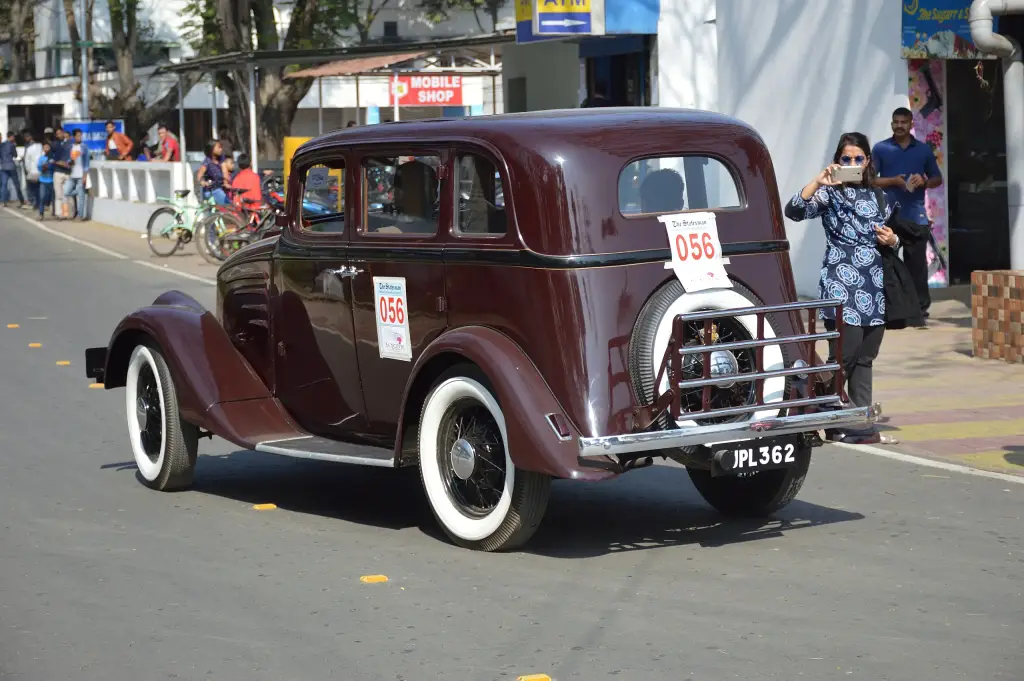
The Willys 77 was an American car sold from 1933 to 1942 by Willys–Overland in Toledo, Ohio. A development of the Willys Whippet, it cost under US$500 and was the cheapest American car of its era. The model range continued under the names Willys 37, 38, 48, Speedway and Americar until civilian production stopped in 1942.
Willys 77 at a glance
| Maker | Willys–Overland, Toledo, Ohio |
|---|---|
| Production | 1933–1942 |
| Predecessor | Willys Whippet |
| Engine | 145 cu in (2,380 cc) four-cylinder |
| Power | 48 hp (36 kW) |
| Wheelbase | 100 in (2,500 mm) |
| Price | under US$500 |
| Fuel consumption | 25 mpg (9.4 l/100 km) |
| Top speed | 65 mph (105 km/h) |
| Later names | Willys 37, 38, 48, Speedway, Americar |
| Sales | 12,800 in 1933; 13,234 in 1934; 10,644 in 1935 |
Numbers come from the English article; the German page supplies the year-by-year model history.
History of the Willys 77
Willys–Overland went into receivership in the same year the 77 was introduced, but production continued. The car had a 145 cu in (2,380 cc) four-cylinder engine at the front producing 48 hp, a wheelbase of 100 inches (2,500 mm) and a price below US$500, which made it the cheapest American car of its era; it returned 25 miles per gallon. Its top speed of 65 mph (105 km/h) made it a popular base for racing cars.
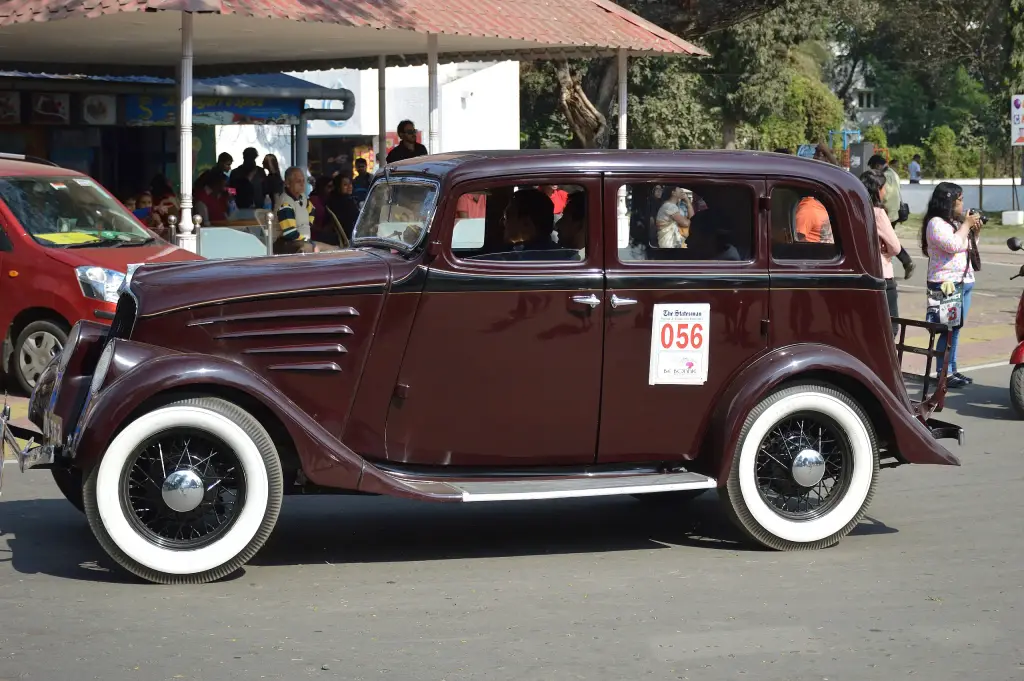
The 1933 range comprised a two-seat and a four-seat two-door coupé and a four-door sedan, each also available in better-equipped Custom form for about $20 more. A pickup joined the range in 1934, when the four long bonnet louvres became five short ones and the split grille gained a mesh; the 77 then became Willys’ only model line. In 1935 only the coupé and the sedan remained, and for 1936 the sedan could be ordered as a DeLuxe for $40 more.
For 1937 the range was restyled with a forward-leaning alligator bonnet, horizontal grille bars in body colour and headlamps set into the front wings, and renamed Willys 37. The Willys 38 of 1938 gained a rocket-shaped radiator emblem, and the 1939 Willys 48 added Speedway models and was briefly sold under the traditional Overland name. The 1940 Speedway had a flatter bonnet with the grille below it and, for the first time, a DeLuxe estate. In 1941 the car became the Willys Americar with a 63 hp engine and a wheelbase of 2,642 mm, and the shortened 1942 model year ended in February with a chromed grille.
The 1933–1936 coupés and pickups were also very popular gassers, the 1933 Model 77 best known of all. A tuned 77 averaged 65.2 mph (104.9 km/h) over 24 hours on the Muroc Dry Lake, and only 12,800 cars were sold in 1933, 13,234 in 1934, 10,644 in 1935, and 30,825 in the company’s final year.
Design and features
- Lowest price: under US$500 made the 77 the cheapest American car of the period.
- Economy: 25 miles per gallon from the 145 cu in four.
- Racing base: a tuned car averaged 65.2 mph for 24 hours at Muroc Dry Lake.
- Gasser pedigree: the 1933–1936 coupés and pickups were favourite drag-racing cars in later years.
Willys 77 versions
- Willys 77 (1933–1936): two- and four-seat coupés, a four-door sedan and, from 1934, a pickup.
- Willys 37 (1937): restyled alligator bonnet, headlamps in the wings.
- Willys 38 (1938) and Willys 48 (1939): new emblem, Speedway versions and briefly the Overland name.
- Willys Speedway (1940): flatter bonnet with the grille below it, DeLuxe estate added.
- Willys Americar (1941–1942): 63 hp, longer wheelbase, Plainsman versions.
- Gasser coupés: 1933–1936 cars converted for drag racing.
The 77 replaced the Whippet in the Willys-Overland range and paved the way for the wartime Willys MB. The later Aero was Willys’ next passenger car line. More cars are in the Willys collection.
Sources
- Willys 77, English Wikipedia: engine, price, economy, racing, sales
- Willys 77, German Wikipedia: year-by-year model history, body styles, later names