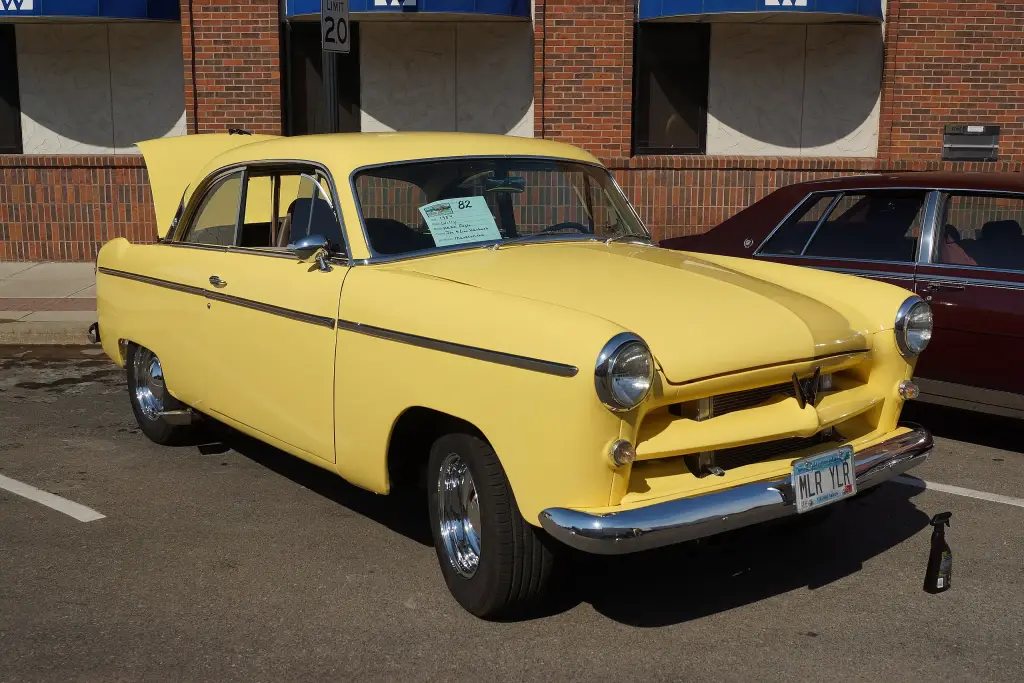
The Willys Aero was a line of passenger cars built first by Willys-Overland and then by Kaiser-Willys from 1952 to 1955 in Toledo, Ohio, and in Brazil from 1960 to 1971. Designed by Phil Wright and engineered by Clyde Paton, it was Willys’ first post-war passenger car. A total of 91,377 were built in the United States and 116,967 in Brazil.
Willys Aero at a glance
| Maker | Willys-Overland, later Kaiser-Willys |
|---|---|
| Production | 1952–1955 in the USA; 1960–1971 in Brazil |
| Design | Phil Wright; engineering by Clyde Paton |
| Bodies | two- and four-door sedans, two-door hardtop |
| Wheelbase | 108 in (2,743 mm), two-door |
| Engines | F4-134 Hurricane, L6-161 Lightning, F6-161 Hurricane, L6-226 Super Hurricane |
| Gearbox | three-speed manual; Hydramatic optional from August 1953 |
| US production | 91,377 |
| Brazilian production | 116,967 |
| US models | Lark, Wing, Falcon, Ace, Eagle, Bermuda, Custom |
| Brazilian models | Aero, 2600, Itamaraty, Executivo |
US production and models come from both articles; the Brazilian chapter is summarised from the same two pages.
History of the Willys Aero
The Aero was launched in 1952 as Willys’ first post-war passenger car. For that year the names Eagle, Wing and Ace were used for cars with the six-cylinder F-head Hurricane engine, while the Aero-Lark had the six-cylinder flathead Lightning. All 1952 cars had a two-piece split windshield; Eagles and Aces had a three-piece wraparound rear window, while Larks and Wings had a smaller one-piece window. Owners bought the cars for their fuel economy and found acceleration very good, thanks to the best power-to-weight ratio among American production cars; two-door owners complained about access to the rear seat, and many thought the cars cost too much.
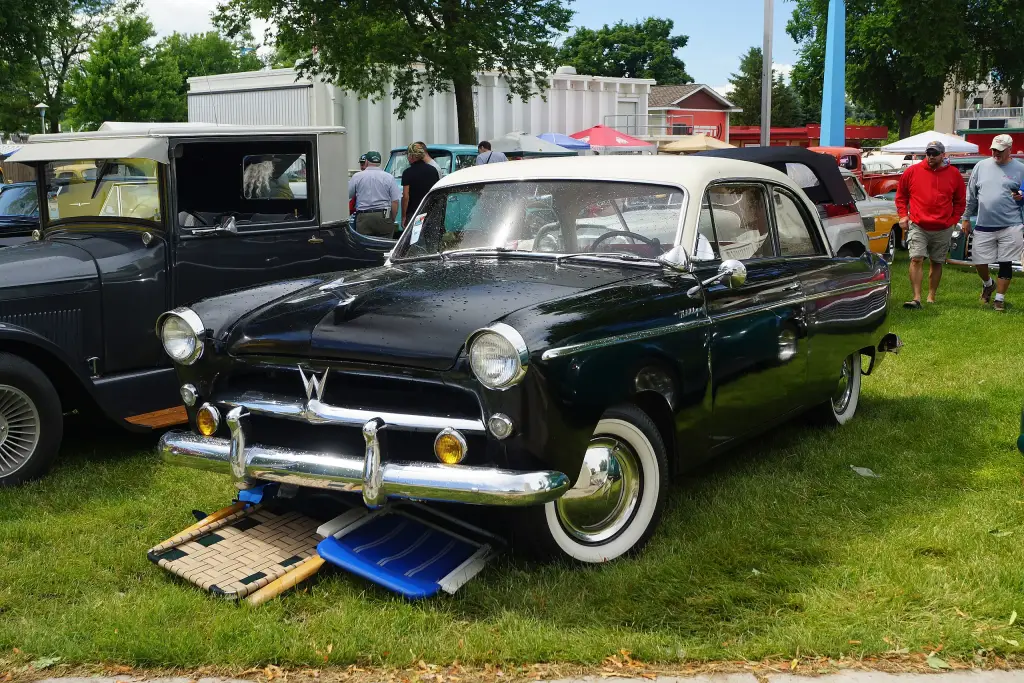
For 1953 the Wing was dropped and replaced by the Aero-Falcon with the Lightning engine. All 1953 cars were two- or four-door sedans except the Eagle, a two-door hardtop; Aces and Eagles received one-piece windshields, and a Dual-Range Hydramatic from General Motors became optional in August 1953. The 1954 model year was the most complicated: only the Lark, Ace and Eagle survived, some cars were re-serialled 1953 models with 1954 trim, and some Aces and Eagles received the Kaiser Super-Hurricane engine. The regular run brought wraparound one-piece windshields and rear windows, a new instrument panel, larger taillights and hooded headlight bezels. For 1955 there were two- and four-door Ace sedans, renamed Custom during the run, and the two-door hardtop Bermuda; production in the United States ended that year when Henry J. Kaiser decided to concentrate on Jeeps.
The tooling was kept in case it could be used overseas, and production restarted in Brazil in 1960, encouraged by a government keen to build a domestic car industry. The Brazilian Aero was at first close to the 1955 American car, with a four-door body only and the 2.6-litre six of 90 hp. A thorough revision in autumn 1962 brought a new body and 110 hp, and 1966 added the luxury Itamaraty and the long Executivo. A 3.0-litre engine of 132 hp followed in 1967, the year Ford took over Willys do Brasil; the Aero was built until 1971, when the Brazilian Ford Maverick replaced it. Brazilian production totalled 116,967 cars.
Design and features
- Power-to-weight: the 1952 Aero had the best power-to-weight ratio among US production cars.
- Economy: a 1979 road test of an Aero-Lark DeLuxe recorded 28 mpg in combined driving.
- Unit body: an all-welded body on a 108-inch wheelbase.
- Engine bay: sized for the Continental straight six, leaving room for small-block V8 swaps.
- Yearly model changes: a new names and trim almost every season.
Willys Aero versions
- Aero Lark: the base model with the flathead six, 75 hp, a four-door from 1953 and 90 hp in 1954.
- Aero Wing (1952): a better-equipped two-door with 90 hp.
- Aero Falcon (1953): replaced the Wing.
- Aero Ace: the best-equipped sedan, with a one-piece windshield from 1953 and the 226 engine in 1954.
- Aero Eagle: the two-door hardtop.
- Bermuda (1955): the hardtop that replaced the Eagle.
- Aero Heavy Duty (1953): a four-door Lark variant, 186 built.
- Brazilian models: Aero, 2600, Itamaraty and Executivo, 1960–1971.
The Brazilian luxury version is described in the Willys Itamaraty article. The Aero followed the Willys 77 as Willys’ passenger car, and the company also built the Jeepster. More cars are in the Willys collection.
Sources
- Willys Aero, English Wikipedia: US models, engines, production totals, Brazil
- Willys Aero, German Wikipedia: model descriptions, power outputs, Brazilian history