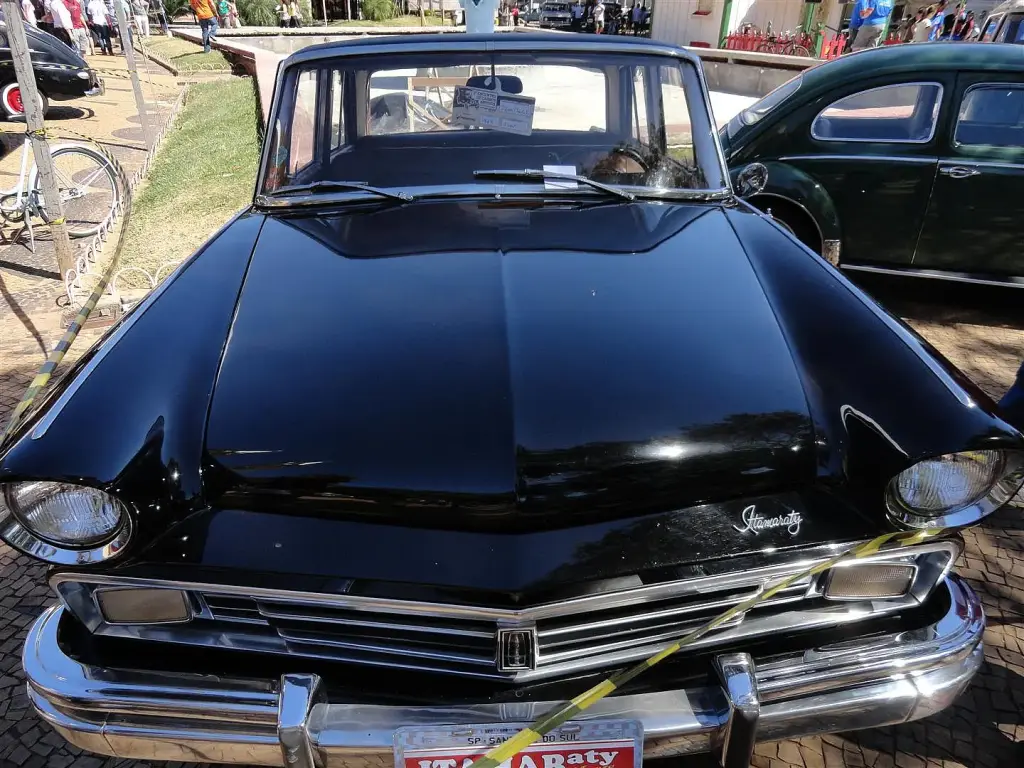
The Willys Itamaraty was launched in 1966 as the most sophisticated version of the Brazilian Aero Willys 2600. Named after the Itamaraty Palace, the seat of Brazil’s foreign ministry, it added chrome, a new grille and lights, a solid jacaranda dashboard, leather seats and a radio, and it used a 3-litre six. Production ended in 1971.
Willys Itamaraty at a glance
| Maker | Willys-Overland do Brasil |
|---|---|
| Production | 1966–1971 |
| Based on | Aero Willys 2600 |
| Engine | 3.0-litre six, 132 hp (140 hp under Ford) |
| Body | four-door sedan |
| Trim | extra chrome, new grille and lights |
| Interior | jacaranda dashboard, leather seats, radio |
| Name | Itamaraty Palace, Brazil’s foreign ministry |
| Limousine | Itamaraty Executivo, 27 built |
| Executivo production ended | 13 August 1969 |
| Ford takeover | 1967 |
Based on the Portuguese article on the Itamaraty and the Brazilian section of the English article on the Willys Aero.
History of the Willys Itamaraty
The Itamaraty was launched in 1966 as the most sophisticated version of the Aero Willys 2600. It was named after the Itamaraty Palace, the headquarters of the Ministry of Foreign Affairs, as an allusion to the sophistication and glamour of Brazilian diplomacy. The model brought more chrome, a new front grille and new tail lights, and inside a solid jacaranda dashboard, leather seats and a radio. Mechanically it gained a 3-litre engine of 132 hp, quoted at 140 hp under Ford management, when the jacaranda was replaced by a plastic imitation.
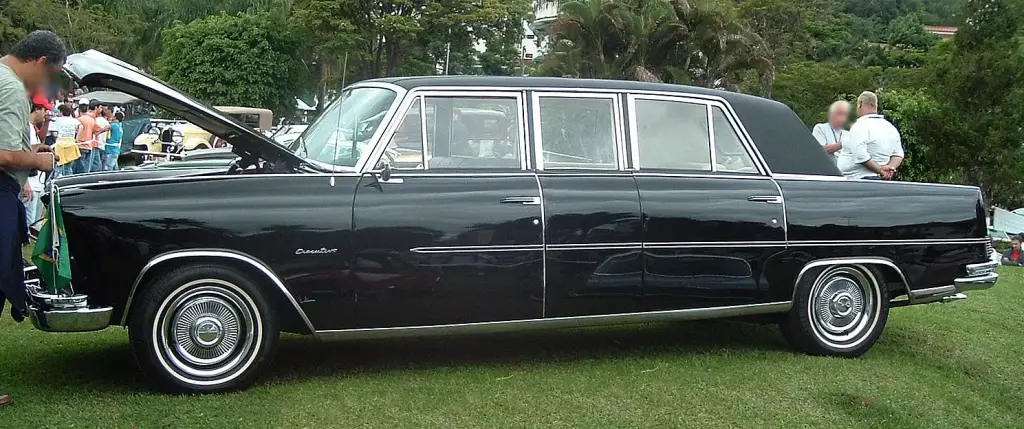
The model served as the basis for the first Brazilian limousine, the Willys Itamaraty Executivo. The idea came from Willys president William Max Pearce, and the design was made by the Catalan José Maria Ramis Melquizo of the company’s styling department. The aim, clear from the name, was to serve the presidency of the republic; in 1967 the first car was delivered to President Castelo Branco. Built by hand alongside the Karmann-Ghia, the Executivo came in two forms. The Standard offered five places behind the driver, three on the rear bench and two on small folding seats, a radio, a cartridge tape player, air conditioning and a small plate for the owner’s name. The Executivo Especial had four places behind, giving up one rear seat for a central console with a Sony voice recorder, a shaver, a cartridge compartment, interior light controls and a cigar lighter. Twenty-seven were built, two of them prototypes, and production ended on 13 August 1969.
Production of the Itamaraty ended in 1971, together with that of the Aero-Willys, after Ford had taken over Willys do Brasil in 1967.
Design and features
- Top of the Aero range: more chrome, a new grille and new tail lights.
- Three-litre six: 132 hp, raised to 140 hp under Ford.
- Luxury interior: solid jacaranda dashboard, leather seats and a radio.
- Executive limousine: the hand-built Executivo for the presidency.
- Diplomatic name: taken from the palace of Brazil’s foreign ministry.
Willys Itamaraty versions
- Itamaraty sedan (1966–1971): the standard luxury four-door.
- Ford-era Itamaraty: 140 hp and a plastic dashboard imitation.
- Itamaraty Executivo Standard: five places behind the driver, radio, air conditioning.
- Itamaraty Executivo Especial: four places behind, central console with recorder and shaver.
- Executivo prototypes: two of the 27 cars built.
The Itamaraty was the luxury version of the Willys Aero. The other Brazilian model of the marque is the Interlagos sports car, and the American side is covered by the Willys MB. More cars are in the Willys collection.
Sources
- Willys Itamaraty, Portuguese Wikipedia: launch, equipment, Executivo limousine
- Willys Aero, English Wikipedia: Brazilian production, model range