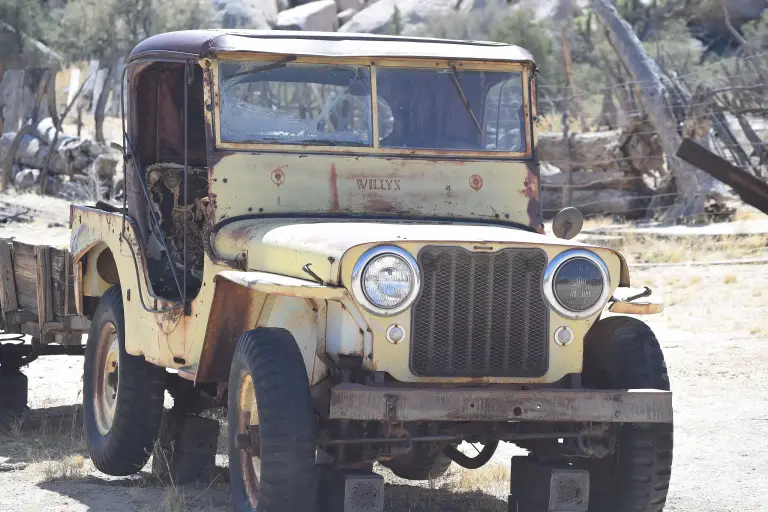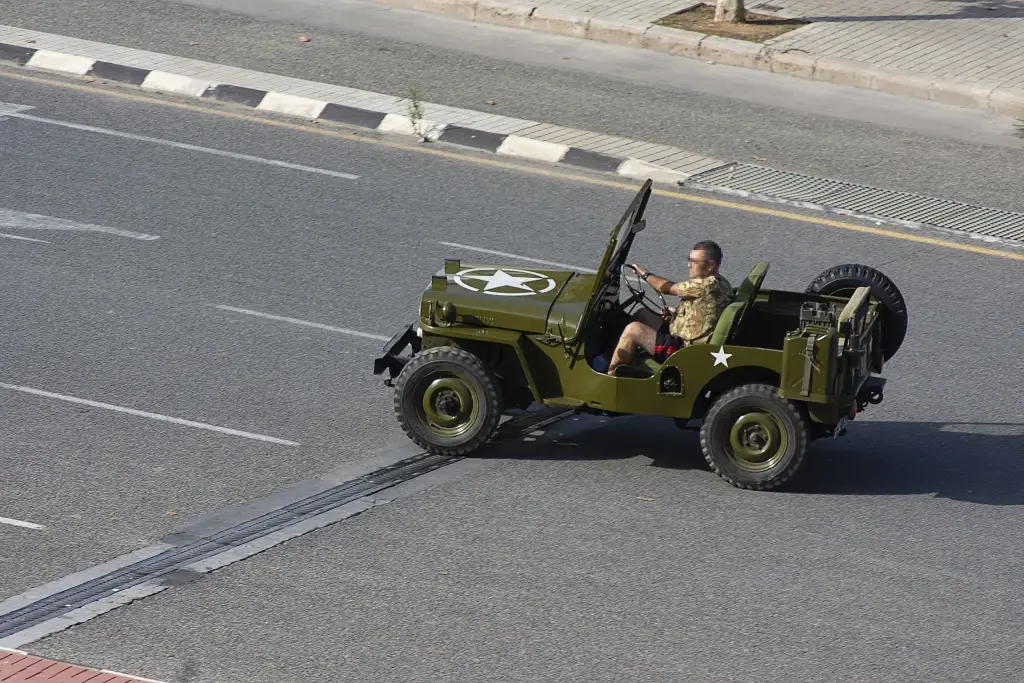
The Willys M38, formally the 1/4-ton 4×4 Utility Truck M38 or Willys MC, was a quarter-ton military light utility vehicle made by Willys between 1949 and 1952. It replaced the wartime Willys MB and Ford GPW and was the military version of the civilian Jeep CJ-3A. About 50,000 were built, and Ford of Canada made 2,300 M38-CDN jeeps for the Canadian army in 1952.
Willys M38 at a glance
| Maker | Willys-Overland |
|---|---|
| Production | 1949–1952 |
| Predecessor | Willys MB and Ford GPW |
| Based on | Jeep CJ-3A |
| Wheelbase | 80 in (2.03 m) |
| Length | 132 15/16 in (3.38 m) |
| Weight | 2,625 lb (1,191 kg) empty |
| Payload | 1,200 lb (544 kg) on road |
| Engine | 134.2 cu in (2,199 cc) four, 60 hp |
| Electrical system | 24-volt, waterproof |
| Gearbox | T-90 three-speed; Dana 18 transfer case |
| Built | about 50,000 |
The two articles agree on the technical description but give about 50,000 and over 60,000 built respectively.
History of the Willys M38
The M38 replaced the wartime MB and Ford GPW in production from 1949. It was the military version of the then-current civilian Jeep CJ-3A, but differed in many ways: a reinforced frame and suspension, a waterproof 24-volt electrical system, and a sealed vent system for the engine, transmission, transfer case, fuel system and brakes. Some M38s served in the Korean theatre, although most jeeps used there were remanufactured World War II cars. Ford of Canada built about 2,300 M38-CDN jeeps for the Canadian armed forces in 1952, and the M38A1 replaced the M38 that year.
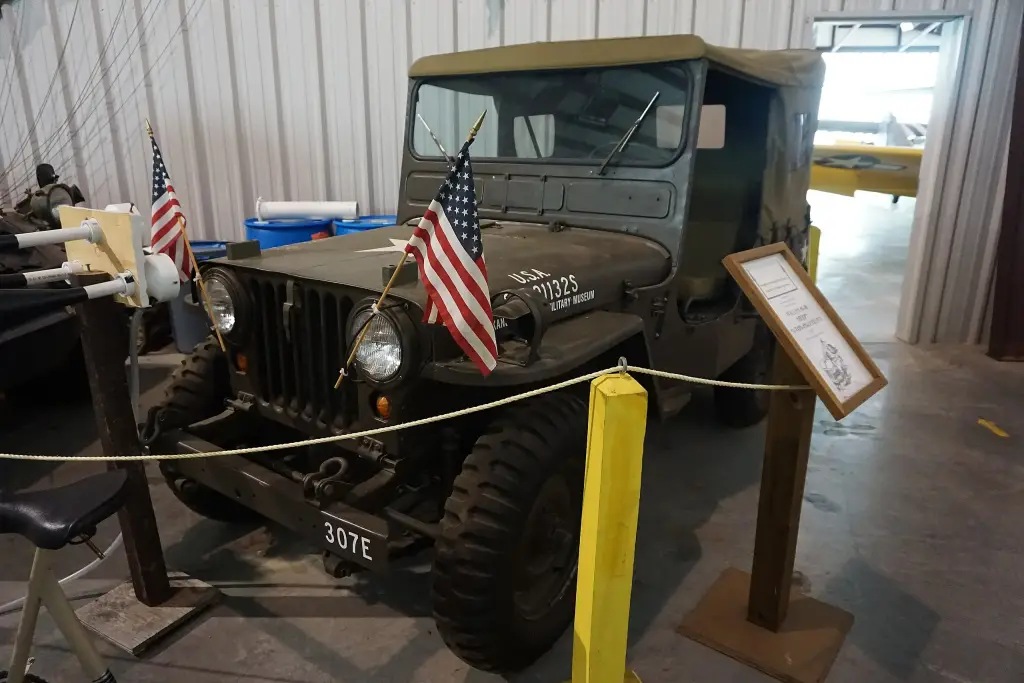
The M38 kept most of the MB’s body, frame and engine, but there were visible differences. The windshield was one piece and could no longer be folded forward for firing, with a bolted flap below the glass. Headlights protruded behind guard wires instead of being recessed, the pioneer tools moved from the driver’s side to the passenger side, and the fuel filler was moved outside on the driver’s side instead of under the seat. One of the two 12-volt batteries sat under a flap between the bonnet and the windshield, the handbrake lever moved to the left of the steering wheel, the tyres grew to 7.00-16, and a tailgate carried the spare wheel. A 24-volt slave socket was fitted on the right wing.
Underneath, the M38 used a full-floating Dana 25 front axle and a semi-floating Dana 44 at the rear, with the L-head 134.2 cu in engine, a T-90 gearbox and a Dana 18 transfer case. A few jeeps received a power take-off winch, but it was not used in regular production because of the extra weight and maintenance. The whole air intake and axle system were vented to allow operation under water, the ignition and electrics were waterproof, and the driver could close the engine vent valves from a dashboard pull switch to pressurise the block before fording. The technical manual TM 9-804 describes the vehicle as a general-purpose carrier for reconnaissance, command and liaison duties.
Design and features
- Waterproof 24-volt electrics: two 12-volt batteries in series and sealed ignition.
- Fording equipment: sealed venting, pressurised engine and a deep-water kit.
- Reinforced chassis: a stronger frame and suspension than the CJ-3A.
- Military details: protruding guarded headlights, lifting shackles and a tailgate spare carrier.
- Field equipment: pioneer tools on the passenger side and an optional PTO winch.
Willys M38 versions
- M38 (Willys MC), 1949–1952: the standard quarter-ton military Jeep.
- M38-CDN: 2,300 cars built by Ford of Canada for the Canadian army in 1952.
- M38 with PTO winch: a small number fitted with a transmission-driven winch.
- M38A1 (Willys MD): the successor introduced in 1952.
The M38 succeeded the Willys MB and was based on the civilian Jeep CJ. Willys also built the station wagon for military and civilian use. More cars are in the Willys collection.
Sources
- Willys M38, English Wikipedia: specifications, differences from the MB, production
- Willys M38, German Wikipedia: fording system, technical manual description