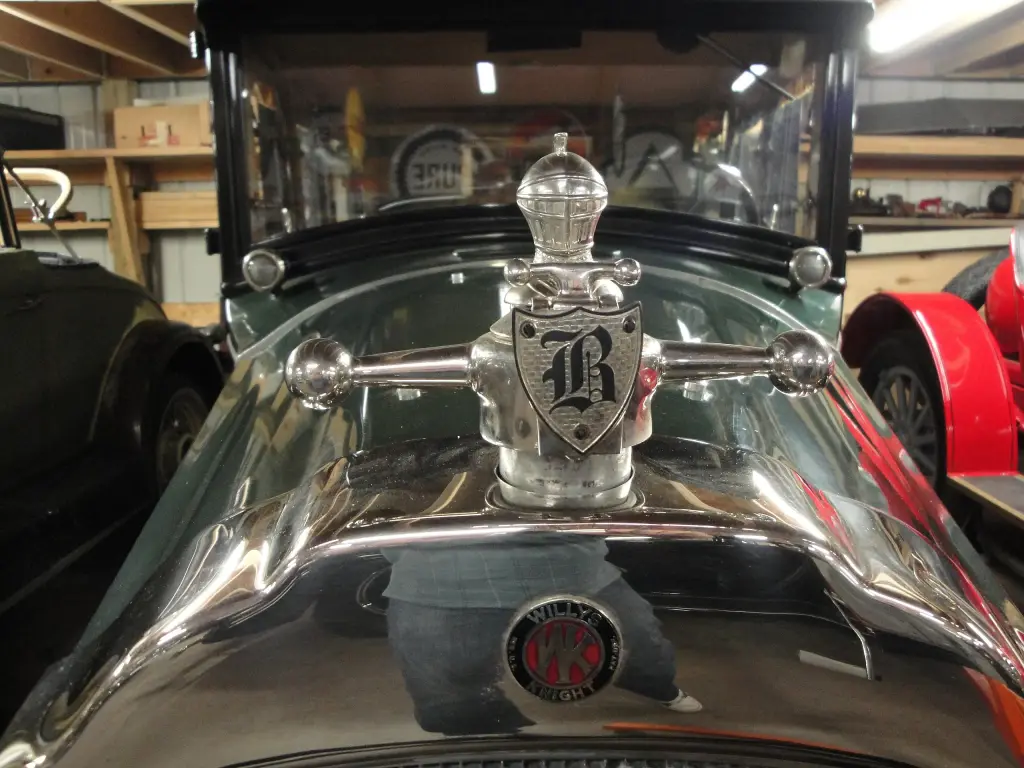
Willys-Knight was an automobile produced between 1914 and 1933 by the Willys-Overland Company of Toledo, Ohio. It used the Knight sleeve-valve engine, generally in four- and six-cylinder form, and for a time it was one of the most successful makes in the Willys empire. Production ended in 1932, when the company in receivership concentrated on the cheap Willys 77.
Willys-Knight at a glance
| Maker | Willys-Overland, Toledo, Ohio |
|---|---|
| Production | 1914–1933 |
| Origin | Edwards Motor Car Company, bought in 1913 |
| Engine | Knight sleeve-valve, four and six cylinders |
| V8 | sleeve-valve V8 from 1917 to 1919 |
| Assembly | Elyria, Ohio, then Toledo from 1915 |
| Price | from about US$2,500 |
| Volume | about 50,000 cars a year after 1922 |
| Sister make | Stearns-Knight of Cleveland |
| Production ended | November 1932, model year 1933 |
Based on the English and German Wikipedia articles; the German page gives 1920 rather than 1919 as the end of the V8.
History of the Willys-Knight
John North Willys bought the Edwards Motor Car Company of Long Island, New York, in 1913 and moved the operation to Elyria, Ohio, where he owned a plant that had previously built the Garford automobile. Production began with a four-cylinder model priced in the $2,500 range. Willys-Knight used the Knight sleeve-valve engine, generally in four- and six-cylinder forms. In 1915 assembly moved to Toledo, Ohio, although the engines continued to be made in Elyria, and in 1917 Willys-Knight introduced a sleeve-valve V8, sold until 1919.
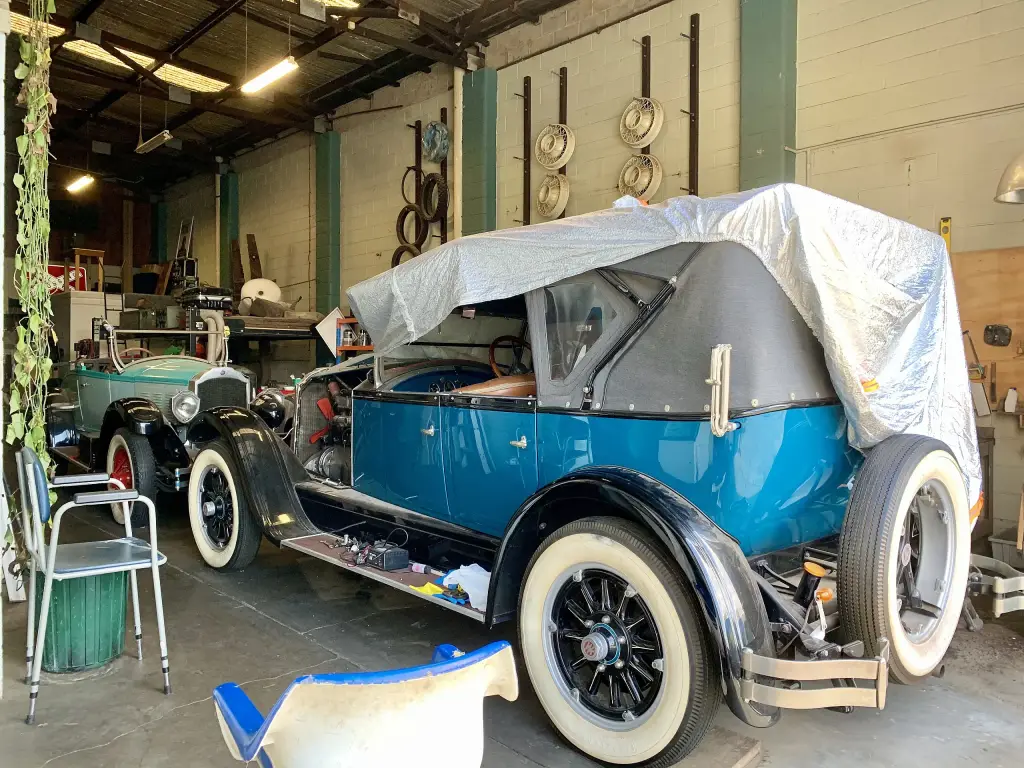
After 1922 Willys-Knight averaged about 50,000 cars a year. Willys also purchased Stearns-Knight of Cleveland, Ohio, which used the same Knight engine, making that marque the crown jewel in his growing automotive empire. The cars were known for the smoothness and quietness of the sleeve-valve engine, which replaced poppet valves with sliding sleeves. Publicity came from unusual places: seven Willys-Knight vehicles, including two large trucks and a touring car, were used on the Martin and Osa Johnson photographic safari in the remotest areas of Africa.
Willys-Knight production ended in November 1932, in the 1933 model year, when the company, in receivership, stopped building higher-priced cars and focused instead on the inexpensive but durable Willys 77. The Knight licence itself dated from 1913, and the sleeve-valve engine had been the basis of the Willys luxury range for nearly two decades.
Design and features
- Sleeve-valve engine: the Knight design gave smooth, quiet running without poppet-valve noise.
- Four, six and V8: a wide range of cylinder counts through the years.
- Luxury positioning: cars from about $2,500, well above the cheapest American models.
- African safari: seven Willys-Knight vehicles were used on the Martin and Osa Johnson expedition.
- Sister make: Stearns-Knight used the same engine and joined the Willys empire.
Willys-Knight versions
- Four-cylinder Willys-Knight (from 1914): the original model at about $2,500.
- Six-cylinder cars: the mainstay of the range in the 1920s.
- Sleeve-valve V8 (1917–1919): a short-lived eight-cylinder model.
- Stearns-Knight: a separate Cleveland make using the same engine.
Willys-Knight was replaced in the Willys range by the cheap Willys 77. The parent company is described in the Willys-Overland article, and the later passenger car was the Aero. More cars are in the Willys collection.
Sources
- Willys-Knight, English Wikipedia: origin, engines, production, safari
- Willys-Knight, German Wikipedia: prices, model years, end of production